404

404

PAGE NOT FOUND

Unfortunately the page you are looking for is not available.

Back to Home

Unique in Fukushima

Nicchu Line Weeping Cherry Blossoms
Nature & Scenery

Nicchu Line Weeping Cherry Blossoms

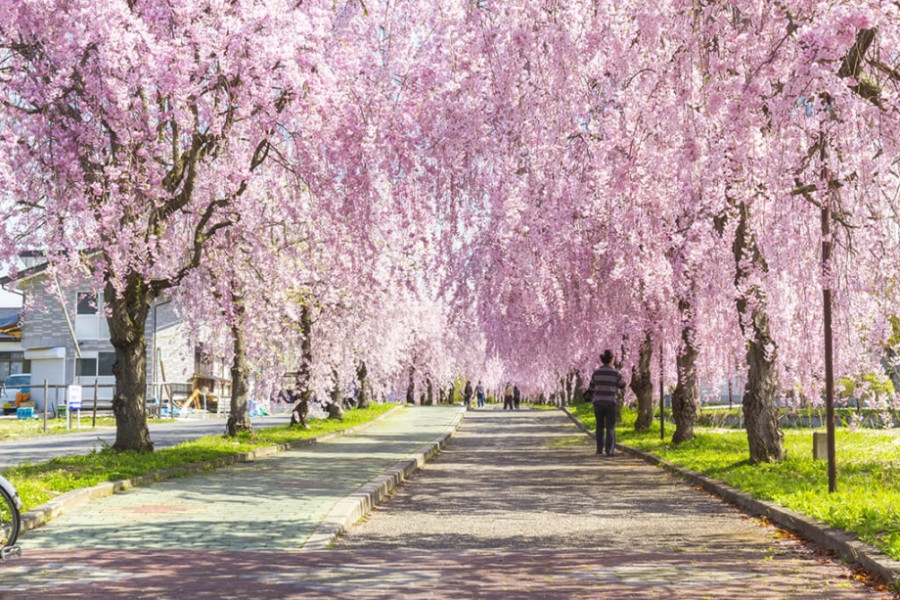
The Nicchusen cherry blossoms in Kitakata City follow a three-kilometer section of the former Nicchu Line railway. Once running between Kitakata and Atsushio Onsen, part of the line has been converted into a walking and cycling path. Each spring, rows of cherry trees along the path draw visitors to see them in bloom, usually around Golden Week in late April or early May.The length of the path allows people to enjoy the blossoms at their own pace. Even when some areas are busy, it is easy to find quieter spots for photos or a break. Visitors often walk the full route, stopping at different points to take in the changing scenery.Along the way, there are several features of interest. An old steam locomotive, once used on the Nicchu Line, remains on display at the midpoint and has become a popular photo spot. The path also runs past houses, rice fields, and farmland, giving a glimpse of the everyday landscape of Kitakata.Different types of cherry trees can be seen, from weeping varieties to those with pale or darker blossoms. With open areas to sit and rest, many people bring food or drinks to enjoy a picnic under the trees, making the Nicchusen cherry blossom path a relaxed way to experience spring in Fukushima.
Ogawasuwa Shrine's Weeping Cherry Blossom
History & Culture

Ogawasuwa Shrine's Weeping Cherry Blossom

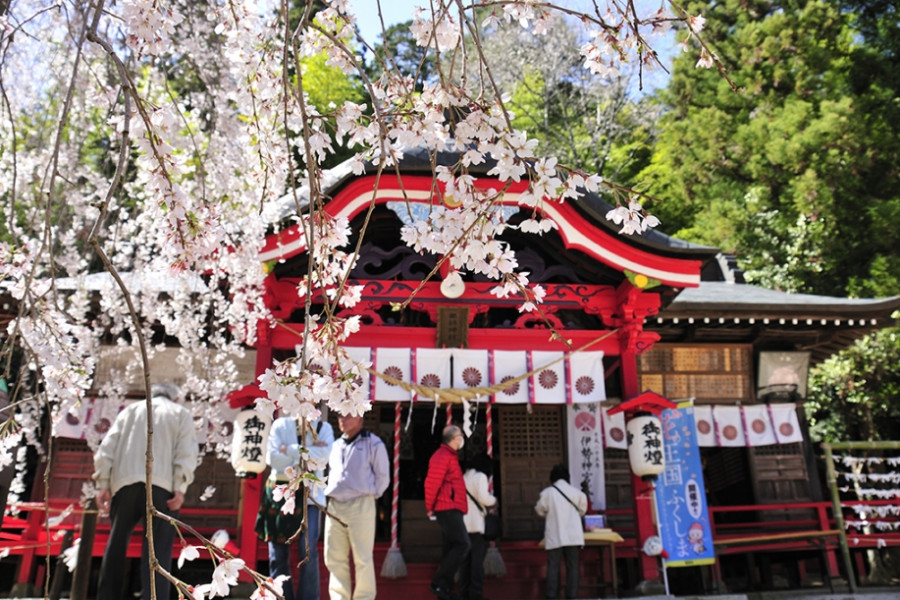
Selected by Iwaki City as a Natural Monument, the great weeping cherry tree is over 500 years old. The flowers bloom slightly earlier than those of Yoshino cherry trees, and are lit up by traditional Japanese lanterns in the evenings of cherry blossom season. Stretching even further down than the roots, the weeping branches of the tree give it an extremely beautiful appearance.Illuminations run throughout cherry blossom season; please be aware the shrine can get crowded in the evenings.

Miharu Takizakura
Nature & Scenery

Miharu Takizakura

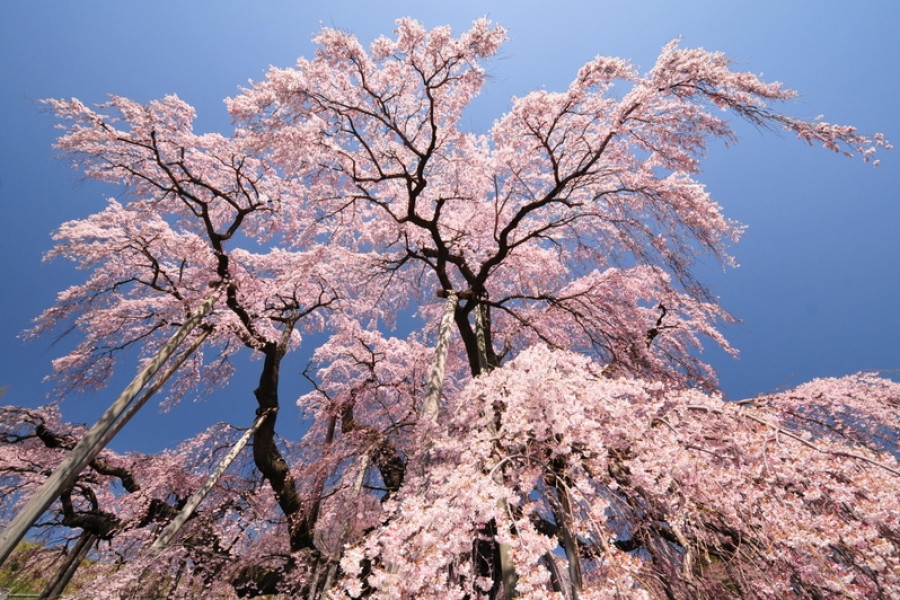
Miharu is a small town in central Fukushima Prefecture. The town’s name means “three springs” and it is easy to see how it got such a name. With cherry, plum, and peach trees blossoming in spectacular displays every spring, it is almost as if spring has tripled! But the most famous of the trees in Miharu is the Miharu Takizakura tree, which is a nationally recognized Natural Monument.Over ten centuries old, the beautiful Miharu Takizakura is a flowering cherry tree that spreads out in all directions and makes for a breathtaking vista. The cascading blankets of blossoms are how this tree got the name takizakura, or “waterfall cherry tree.” It is even one of the “three great cherry trees” of Japan (along with Usuzumizakura in Gifu and the Jindaizakura in Yamanashi Prefecture).Miharu Takizakura sits in a sakura hollow in order to protect it from the elements while providing excellent drainage. The heavy boughs of the tree are supported by wooden beams and lend to its elegant form. The Miharu Takizakura begins blooming from mid-April. During the day the sight is whimsical, but visit in the evening and you’ll be treated to an almost haunting beauty as the tree is illuminated.Aside from this huge cherry tree (over 12 meters tall and 18 to 22 meters in spread), the area is also blessed with various wildflowers, including cherry and rapeseed flowers. But, of course, the Miharu Takizakura is what the annual 200,000 visitors are there to see. The view from the base of the sakura is considered to be the most beautiful and the Miharu Takizakura often ranks as the best sakura tree in all of Japan.

Top