Yuyu Land Hanawa Dahlia Park

Yuyu Land Hanawa Dahlia Park

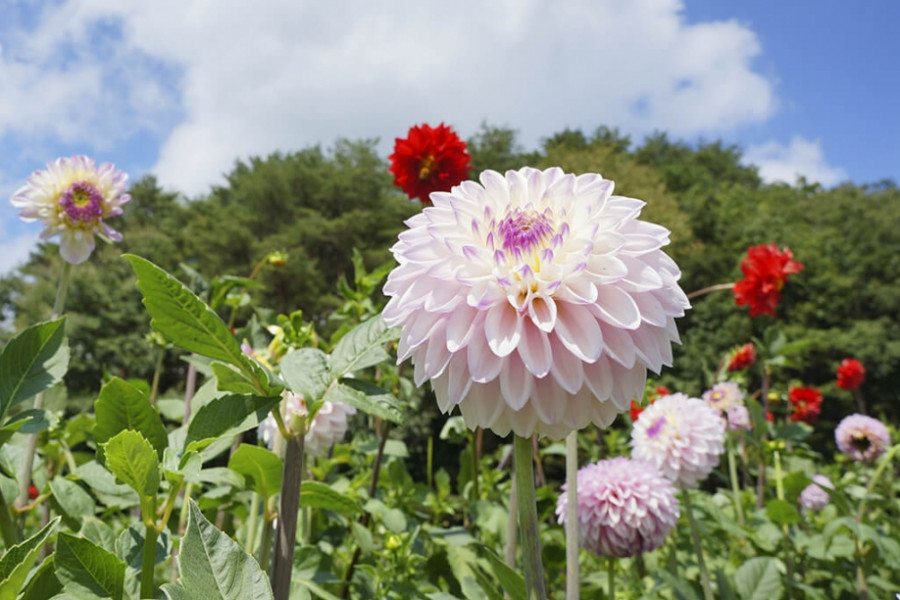
Yuyu Land Hanawa Dahlia Park is located within Yuyu Land Hanawa hot spring and accommodation facility. 300 kinds of 5000 dahlias bloom in approximately 7000 ㎡ site from summer to autumn at the Dahlia Park. Hanawa Town is home to 18 small dahlia gardens including 4 located in elementary and junior high schools. The best time to visit in order to see these flowers is between August and October. An annual dahlia festival is held in Hanawa Town every year to celebrate these vibrant flowers.

Venue Details

Venue Details
Websitehttp://www.yuyu-land.com(Japanese)
Contact

Yuyu Land Hanawa

(+81) 247-43-3000

yoyaku@yuyu-land.com/

Best Season
  • Summer
  • Autumn
Opening Hours

Yuyu Land Hanawa's opening hours are 8:00 am - 5:00 pm

Only open during August and October when the dahlia are in bloom

ParkingParking is available for 130 cars and 5 buses
Entrance FeeDuring dahlia season, entrance to the Dahlia Park costs 350 yen per person
Accommodation details

Pets: Not allowed

Related infoBest Season for Dahlia: August to October
Access Details
Access21 Tateishi, Yujimata, Hanawa Town, Higashishirakawa District, Fukushima Pref. 963-5533
View directions
Getting there

By Car:

  • 70 min from Shirakawa I.C. exit off the Tohoku Expressway
  • 80 min from Naka I.C. exit off the Joban Expressway

By Train:

  • 20 min taxi ride from Iwaki-Hanawa Station on the JR Suigun Line.

Pick-Up Service:

  • Available for overnight guests staying at Yuyu Land Hanawa.
  • Service available from Shinshirakawa Station. (Reservation is necessary in advance.)
  • For the reservation and more information, please contact the facility in English by e-mail (yoyaku@yuyu-land.com)

Nearby

The World Glassware Hall
Gourmet & Shopping

BRITOMART

BRITOMART is a stylish and rural shopping and restaurant complex in Miharu Town, Tamura district. It makes for the perfect place for a pit stop, or to take a coffee or lunch break if you’re visiting nearby tourist attractions, such as the Miharu Takizakura or the Koriyama Museum of Art. Its many wooden storefronts blend wonderfully with the surroundings.BRITOMART includes a bakery, a coffee shop, an interior shop, a restaurant, a home and garden shop, and more. Relax and enjoy the natural environment in the heart of Miharu, a beautiful rural town in central Fukushima prefecture, known for having splendid displays of flowers in the spring, and thousands of sakura trees.

The World Glassware Hall
Nature & Scenery

Mt. Azuma-Kofuji

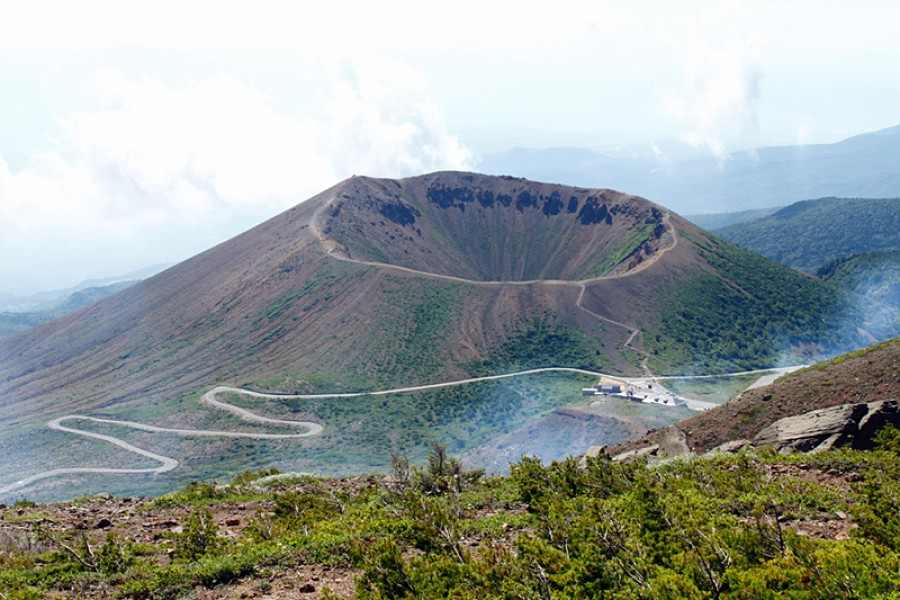
There is a special bus running from Fukushima Station to the Jododaira plateau while the mountain is open. Please visit the Jododaira Sky Access page for more details.Every year in spring, as the snow melts away, it leaves behind the shape of a giant white rabbit on the side of Mt. Azuma-Kofuji. This is called the “seeding rabbit”, and it signals to the people of Fukushima that the farming season has come.From April to November each year, you can experience the beauty of the awe-inspiring natural landscape of Mt. Azuma-Kofuji.Mt. Azuma-Kofuji is an active volcano with an appealing symmetry to it and a soft conical shape; because of these classic features, it was named Kofuji ('little Fuji'), after the iconic Japanese mountain.Thanks to its volcanic ground, the area has given birth to many nearby onsen areas perfect for relaxing, such as Tsuchiyu Onsen and Takayu Onsen.Mt. Azuma-Kofuji is a great destination for those who decide to drive through the area as the Bandai-Azuma Skyline happens to pass just below the crater of Mt. Azuma-Kofuji. Along the roadway is the Jododaira Visitor Center, which offers visitors a place to park, rest up, get a snack, and maybe even buy souvenirs. It is the perfect spot to take a break and explore one of the many short hiking routes to stretch out your muscles after a long car ride. From there, it is just a short hike up to the crater, and there are plenty of other great trails. Circle the crater of Mt. Azuma-Kofuji on a relaxed 40-minute walk and—if you are lucky—enjoy gorgeous views of Fukushima City, Mt. Bandai, and the Urabandai area. But do watch your step as the ground can be uneven and even slippery on grey days. The mountain is open from spring to autumn every year.

The World Glassware Hall
Nature & Scenery

Doaidate Park

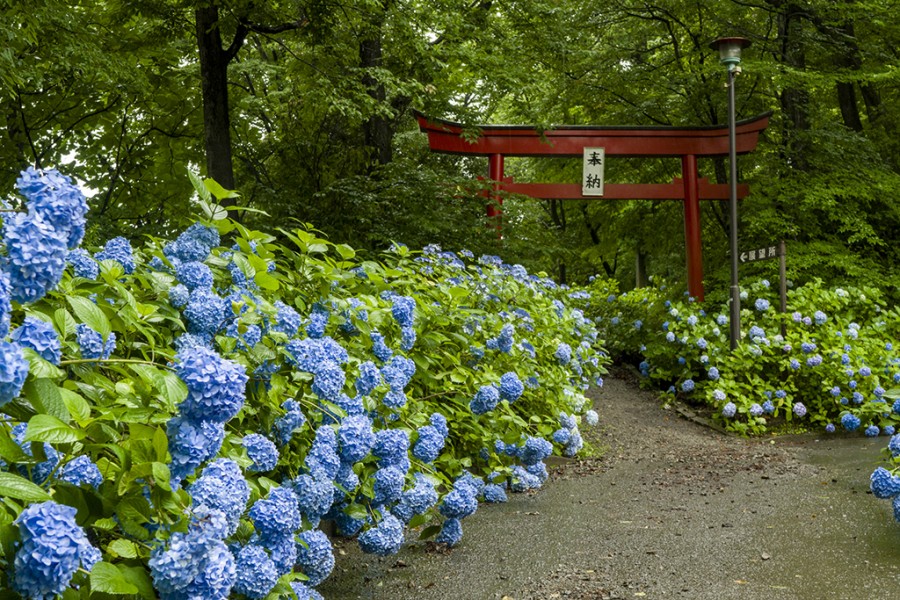
Approximately 5,000 colorful hydrangeas bloom here every summer. Nicknamed by locals as 'Hydrangea Alley', this is a great place for relaxing or taking photos. Doaidate Park routinely makes lists of best places to see hydrangeas in Tohoku every year thanks to its sheer number of bushes and tranquil atmosphere.There is also a play park for children and an old shrine within the park grounds, while the west side of the park offers excellent views over Mt. Adatara.Parking is available for roughly 40-50 cars by the slope leading to the park entrance.In an average year, the best time to see hydrangeas fully in bloom is between the end of June and beginning of July.

The World Glassware Hall
Nature & Scenery

Mt. Adatara

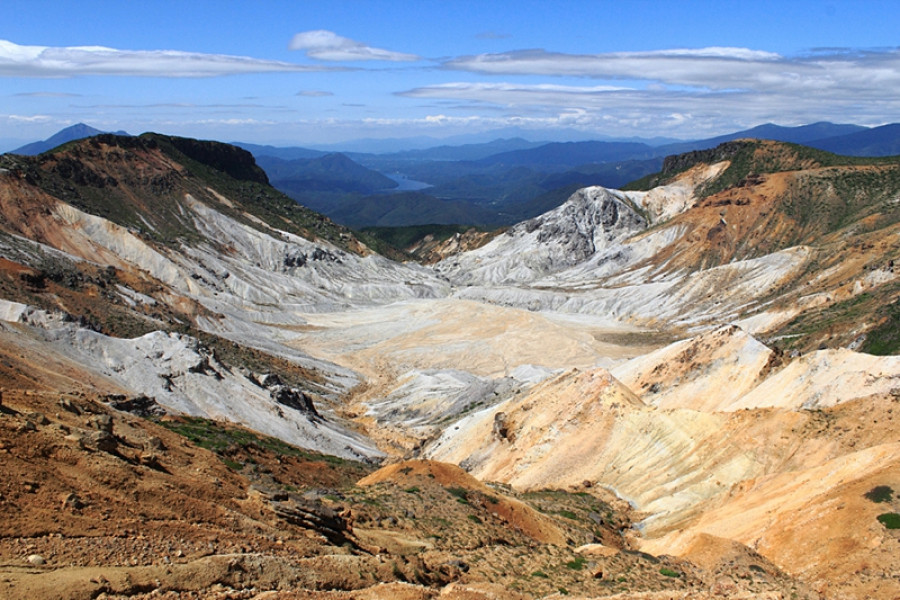
Mt. Adatara is actually made up of multiple active volcanoes that form a broad mountain. It last erupted in 1996. Poems in the book Chieko-sho by Kotaro Takamura (1883-1956) helped make the mountain famous.The summit of Mt. Adatara stands at an altitude of 1700 m, stretching about 9 kilometers in a north-to-south direction. Views of Mt. Adatara are lovely in and of themselves, but the views that visitors have of the surrounding area once they reach the summit are breathtaking. Chosen as one of Japan’s top 100 mountains, as well as one of the top 100 mountains for flowers, a view spot at an altitude of 1300 m can be accessed by gondola lift. This means that it is relatively easy to climb even for beginners.On summer evenings, a light-up event inspired by the Milky Way and the flowers of Mt. Adatara is held, gracing those scaling the mountain by a gondola lift with a spectacular view. In autumn, visitors are afforded a stunning view of autumn leaves making it a popular place for scenic momiji-gari (autumn leaf viewing).Kurogane-goya Mountain Lodge, which closed in August 2023, was a rest stop for visitors and served as lodging for longer hikes. The lodge’s public hot spring facility used naturally-sourced, cloudy hot spring water. The lodge is being torn down in 2025 and will be rebuilt anew for roughly a 2028 re-open.

You might also like

Mogi Station
Nature & Scenery

Mogi Station

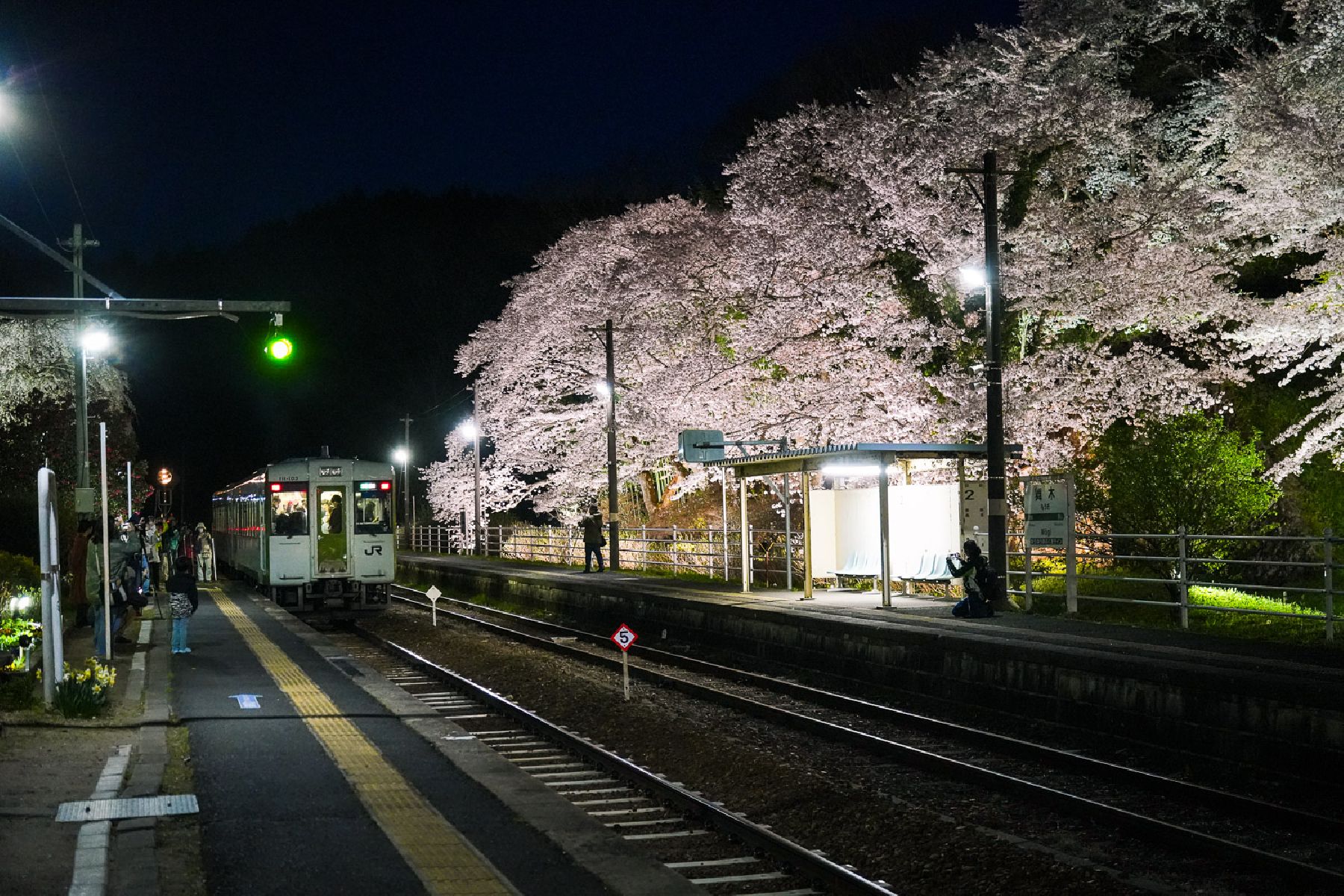
Mogi Station is a small, unassuming train stop that transforms drastically in spring. Every year around mid-April, the bank of over 30 cherry trees south of the station bursts into full bloom, turning the area into a picturesque array of pink, white and blue. The blossoms are illuminated at night once darkness falls, drawing visitors and photographers from across the region.Only the final train of the day, arriving at 21:30 from the direction of Miharu, pulls into platform two, with the background of the blooming cherry trees. For many photographers and train enthusiasts, this is the shot they visit to get. Despite its modest size, Mogi Station has quietly earned its place as one of the most photogenic, if lesser-known, hanami spots in the region.

Ja no Hana Gardens
Nature & Scenery

Ja no Hana Gardens

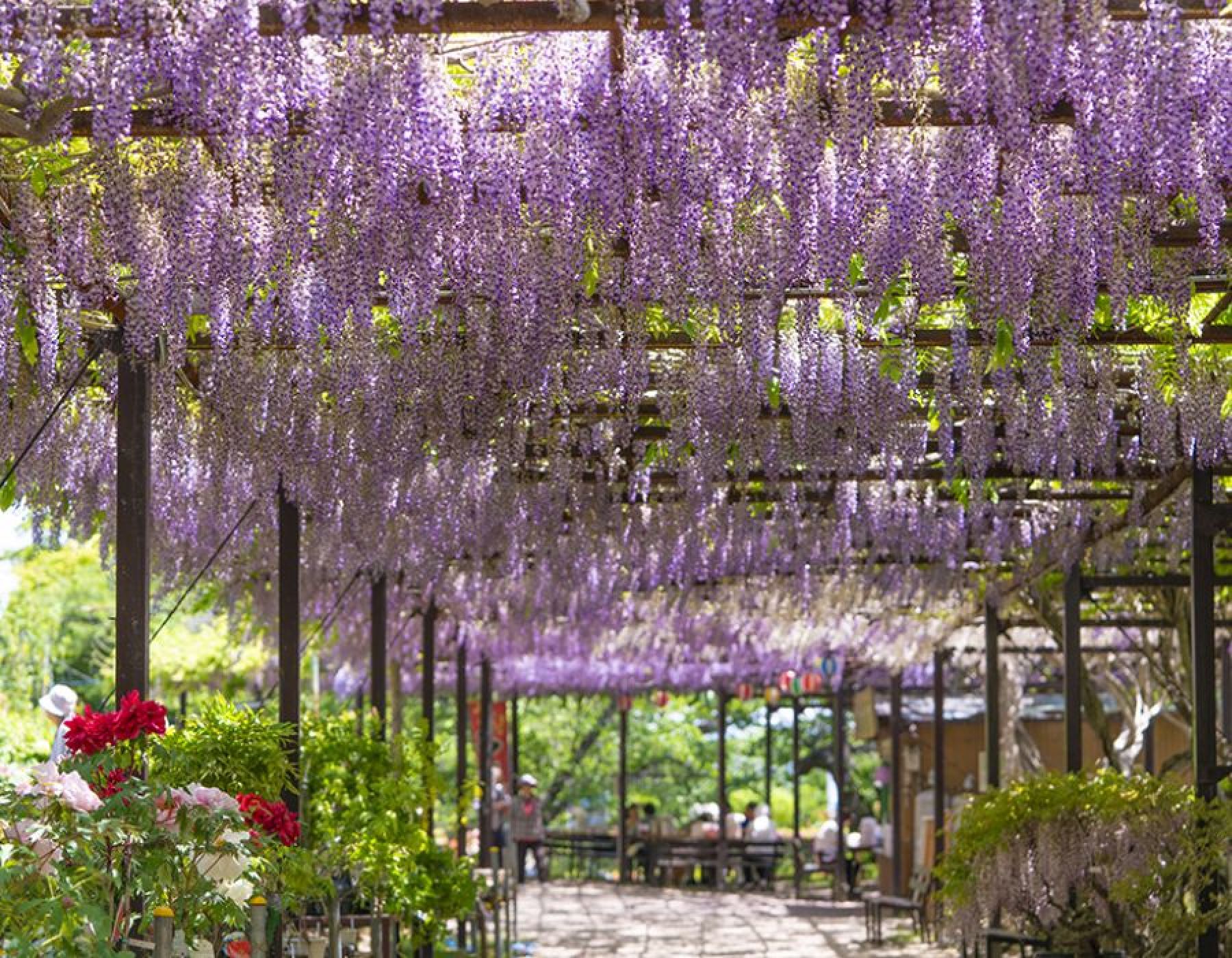
The Ja no Hana Gardens (蛇の鼻) are located in Motomiya, in the central area of Fukushima. From spring to autumn, this vast park -- six times the size of Tokyo Dome -- features a display of natural wonders like cherry blossoms, wisteria, roses, hydrangeas, water lilies, and autumn leaves. It is particularly famous for its 500-year-old wisteria tree that typically blooms in May, and its rows of over 500 maple trees that make for a stunning sight in autumn.There is also a historical residence, Ja no Hana-goten (Ja no Hana mansion), which is a registered tangible cultural property of Japan. Built in 1904, the impressive residence has intricate wooden carvings in the front entrance, and houses artworks and calligraphy works, often housing exhibitions. Visitors can enter the house and look at the artwork up close.Best season: Cherry blossoms: Early to late April Tulips: April to early May Peonies: Early to mid May Japanese wisteria: Early to late May Azaleas: Early to mid May Roses: Most varieties reach their peak around late May; from then until November, other varying kinds might be in bloom Water lilies: June to July Autumn leaves: Late October to November

Hanamomo-no-Sato Park
Nature & Scenery

Hanamomo-no-Sato Park

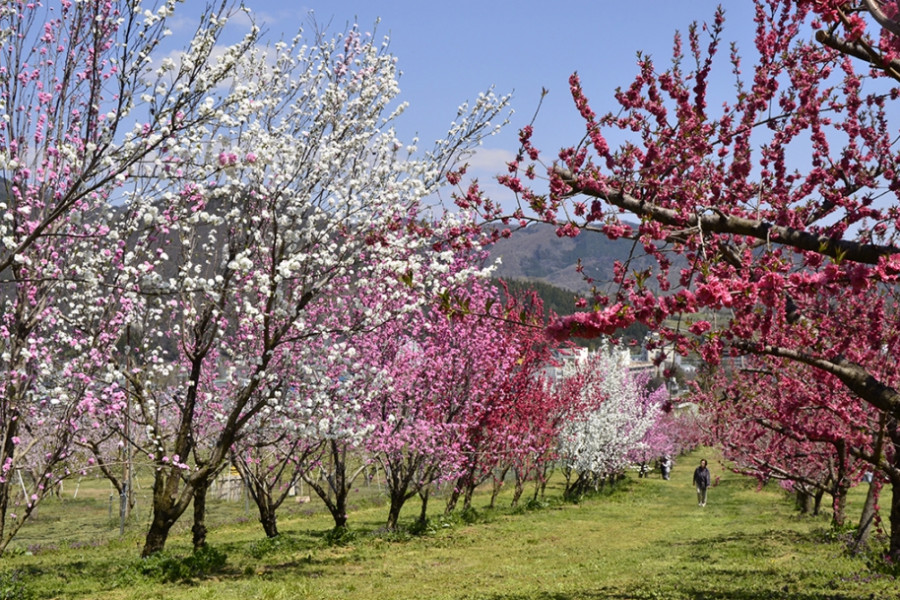
From early April right up to the start of May, 40 varieties of blossoming peach trees present a feast for the eyes for visitors to Hanamomo-no-Sato Park. There are over 300 peach trees spread across the 8,000 square meters of land. From blossoms with a single layer of petals, to the elaborate Yae-zakura and Kikuzaki Sakura flowers, there is a huge variety in the shapes and colours of cherry blossoms to be discovered and enjoyed at Hanamomo-no-Sato Park. As well as being free to visit, Hanamomo-no-Sato Park is conveniently located; just 20 minutes on foot from Iizaka Onsen Station.

Top