The Grave of the Matsudaira Family

The Grave of the Matsudaira Family

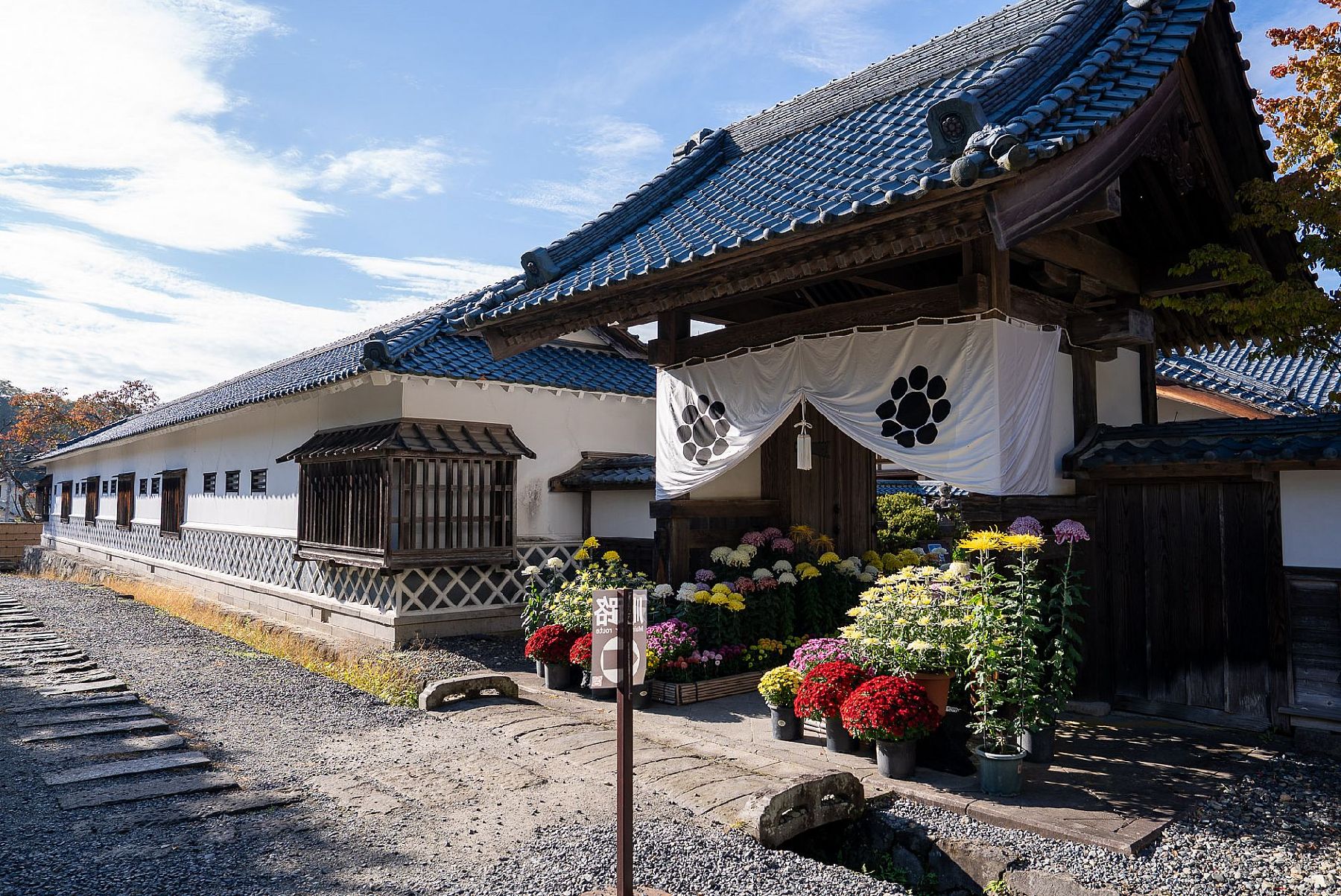
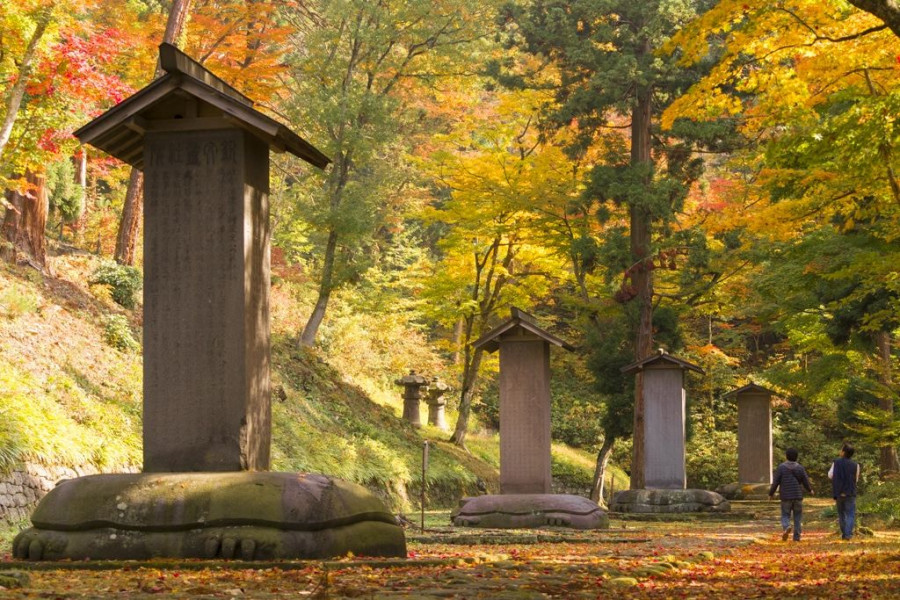
The gravesite was constructed in 1657 when Masayori, the heir of the first Aizu lord Hoshina Masayuki, passed away. Tombs for the second lord Masatsune through the ninth lord Takamori, as well as their wives and children, stand side by side. A Buddhist funeral was conducted for the second lord, but the Shinto style was used for all the other lords. This gravesite is one of Japan’s top daimyo family graves, and is known for its history and scale. The Grave of the Matsudaira Family has also been nationally recognized as an Important Historic Site.

Venue Details

Venue Details
Websitehttp://samurai-city.jp/en/sightseeing/1278
Contact

Aizu-Wakamatsu Tourism Bureau

(+81) 242-39-1251

Best SeasonAll Year
ParkingNone
Entrance FeeFree
Access Details
AccessIshiyama, Higashiyama-machi, Aizu-Wakamatsu City, Fukushima Pref. 965-0813
View directions
Getting there

By Train: Take the Haikara-san or Akabe sightseeing loop bus from Aizuwakamatsu Station (JR Ban-etsu West Line) and alight at Innai bus stop. Then walk for 5 min.

Nearby

The World Glassware Hall
Museums & Galleries

Morohashi Museum of Modern Art

This museum, which opened in June 1999, is located a short walk from the Goshiki-numa Ponds, which is one of the most scenic spots in Fukushima Prefecture.Morohashi Museum of Modert Art houses a collection of about 350 of the works of Salvador Dali, the master Spanish surrealist artist, including paintings, prints, and sculptures, as well as about 40 works by such impressionist and post-impressionist artists as Cézanne, Renoir, Chagall, Picasso, and Van Gogh. About 100 works out of this collection are on permanent exhibition, including 37 works of sculpture by Dali. The scale of this collection is unparalleled in the world and really is worth seeing.

The World Glassware Hall
History & Culture

Sazaedo Temple

Sazaedo is a Buddhist temple built in 1796. Its architecture is similar in shape to the shell of a horned turban (‘sazae’ in Japanese), hence its name "Sazaedo". The inside of the temple consists of a double-helix slope, meaning that visitors who come to pray will not meet anybody coming from the opposite direction. This one-way system makes Sazaedo extremely unique.In 1995, it was appointed as a National Important Cultural Property, and in 2018 it was showcased in Michelin Green Guide (1 star, interesting place to visit).

The World Glassware Hall
History & Culture

The Warehouses of Kitakata

In the Meiji and Taisho eras, Kitakata City experienced a boom in the construction of kura (traditional Japanese storehouses). There are approximately 4,200 still left in the city today. While these were used both as storehouses for businesses in the brewing and lacquerware industries, the building of a kura has traditionally been considered among Kitakata locals as a great symbol of status, and a source of pride.In the Mitsuya District, the rows of brick storehouses are reminiscent of rural Europe, whereas in the Sugiyama district, they have roofs that take the appearance of helmets. Visitors can see a range of kura and other traditional buildings at Kitakata Kura-no-Sato museum, or enjoy exploring the kura of the city on foot or by bike.See here for a 1 day itinerary for visiting Kitakata City.Check out a map of the kura located around Kitakata City.

The World Glassware Hall
Hot Springs

Yanaizu Onsen

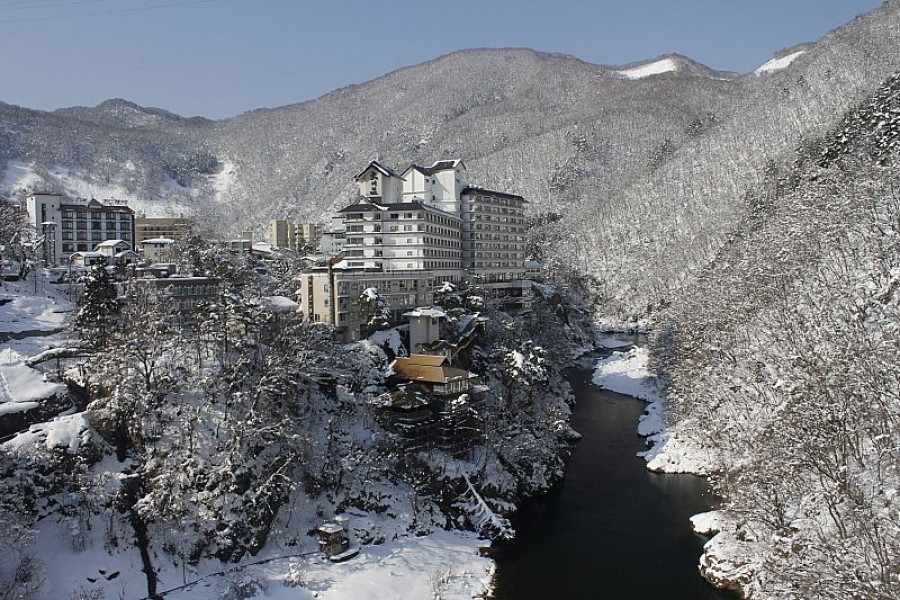
Yanaizu is a rural temple town that has flourished thanks to the renowned Enzoji Temple.Many lodges were built in Yanaizu Town for travelers taking part in temple pilgrims. Many of these lodges have been repurposed as onsen ryokan inns.Yanaizu Town is now the largest onsen town on the Tadami River. Visitors come from far and wide to be enchanted by the fine river mists found on the Tadami River in the early summer, and the brilliantly-colored leaves in the autumn.See here for a English information pamphlets provided by Yanaizu Town.

You might also like

Enzoji Temple
History & Culture

Enzoji Temple

A symbolic temple of Aizu, Enzoji was built about 1,200 years ago in 807.Fukuman Kokuzo Enzoji Temple (Enzoji Temple for short) was built by Tokuichi Daishi, a noted priest from the Aizu region. The main hall of the temple rises high above a huge crag. From here, the Tadami River can be viewed flowing magnificently through the town.You can also see the various views of each season, with cherry blossoms in spring, mist over the river in summer, red maples in autumn, and snow in winter.The temple has many highlights, such as a treasure house and monuments in memory of poets, inscribed with their poems and haiku.The temple is dedicated to Fukuman Kokuzo Bosatsu (the Bodhisattva of wisdom). There are many legends associated with the temple. For example, one legend tells of how when Kobo Daishi threw wood shavings from the statue of Kokuzo Bosatsu into the Tadami River, they immediately turned into countless Japanese dace fish.Another story is about how a red cow helped with the difficult construction of the temple - a story that led to the widespread acceptance of the "akabeko" red cow as an important symbol of Fukushima.One more story is that of Nanokado Hadaka Mairi ("Naked Man Festival" at Nanukado Temple). The legends are many and varied.

Ouchi-juku
History & Culture

Ouchi-juku

Take a journey to the past in Fukushima Prefecture’s Ouchi-juku area. This isolated village boasts thatched-roof houses and natural streets making you feel at one with the people who lived here hundreds of years ago.Nestled in the southwestern mountains of Fukushima, Ouchi-juku is a great spot to visit thanks to its unique charm and history. This village was established under the post station system of the Edo period, and played a vital role as a rest stop for travelers.In 1981, the well-preserved streets of Ouchi-juku led to it being designated as an Important Preservation District for a Group of Traditional Buildings. It isn’t difficult to see why—the village looks as it did during its heyday. And with no telephone or electric wires above ground, the view from the top of the hill overlooking the village is marvelous.It is a picturesque village where you can lose yourself to the flow of time. The traveler’s road that used to run through this village was called the Shimotsuke Kaido Route, or the Aizu Nishi Kaido Route.Ouchi-juku not only connected Aizu to Nikko, it also connected Aizu-Wakamatsu to Imaichi, a post town on the Nikko Kaido Route in Tochigi Prefecture. This road was frequented by many travelers as well as by the processions of feudal lords who had to travel to and from Edo periodically.Travelers of the Edo Period rested at the inns of Ouchi-juku to relieve their fatigue. Nowadays, festivals and events help draw in new visitors. The annual Snow Festival in February turns Ouchi-juku into a pretty candlelit scene.Visit in July to see a procession of dancers dressed in traditional Edo Period costumes, and you might even get to wear a happi (festival attire jacket) and join the locals in their celebrations!And when you’re feeling hungry be sure to try some of the local specialties, which include negi soba (fresh buckwheat noodles eaten using a green onion), stick-roasted char fish, and more.Please be aware that some restaurants are closed on Wednesdays, so lunch availability may be reduced.

The Warehouses of Kitakata
History & Culture

The Warehouses of Kitakata

In the Meiji and Taisho eras, Kitakata City experienced a boom in the construction of kura (traditional Japanese storehouses). There are approximately 4,200 still left in the city today. While these were used both as storehouses for businesses in the brewing and lacquerware industries, the building of a kura has traditionally been considered among Kitakata locals as a great symbol of status, and a source of pride.In the Mitsuya District, the rows of brick storehouses are reminiscent of rural Europe, whereas in the Sugiyama district, they have roofs that take the appearance of helmets. Visitors can see a range of kura and other traditional buildings at Kitakata Kura-no-Sato museum, or enjoy exploring the kura of the city on foot or by bike.See here for a 1 day itinerary for visiting Kitakata City.Check out a map of the kura located around Kitakata City.

Aizu Hanko Nisshinkan
History & Culture

Aizu Hanko Nisshinkan

Aizu Hanko Nisshinkan was the highest-level learning institution of its time. It was established in 1803 by the Aizu Domain to foster Japan's next generation of talented samurais.Children of samurai families entered this school at the age of ten and worked on academic studies and physical exercises to instill both physical and mental discipline.The property, covering about 26,500 square meters in area, used to house such facilities as a martial arts training hall, an astronomical observatory, and Suiren-Suiba Ike, Japan's oldest swimming pool.During the late Edo Period, the school turned out a great deal of excellent talent, including the legendary group of young warriors, the Byakkotai. The facilities, which were burned down during the Boshin War, have been rebuilt faithful to their original design. They now function as a hands-on museum that features exhibits of the magnificent architecture of the Edo Period and dioramas of school life as it used to be.Visitors can enjoy practicing some of the essential disciplines of the samurai, including tea ceremony, Japanese archery, meditation, and horseback riding, as well as experiencing hand painting an akabeko (red cow), a traditional good-luck charm of Aizu.Make a reservation : https://nisshinkan.jp/reservation*Since the website is in Japanese, we recommend that you use Google Translate or other translation functions to make reservations. 

Top