Tadami River Bridge No. 1 Viewpoint

Tadami River Bridge No. 1 Viewpoint

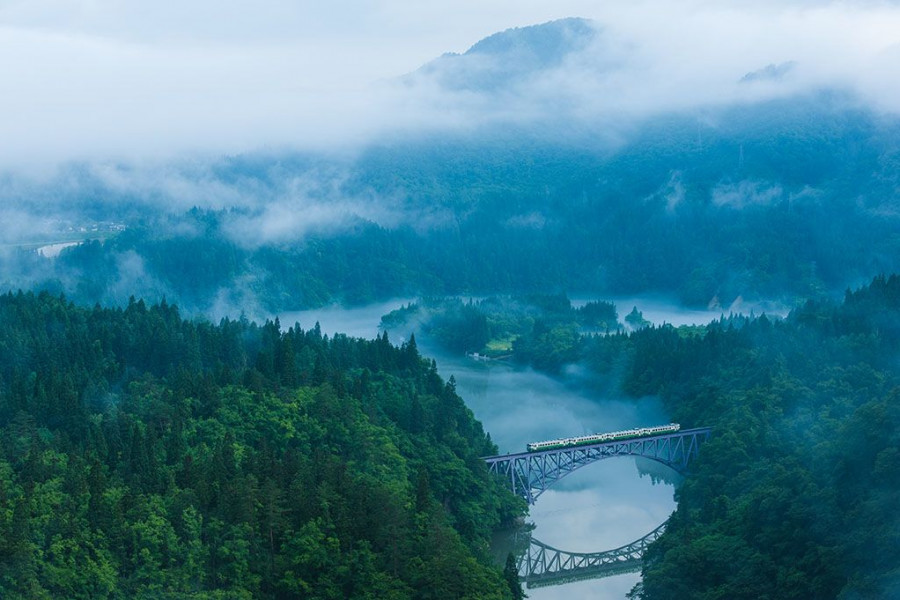
A panoramic view of the arch bridge stretches over the Tadami River. On clear winter days, the bridge is reflected in the river, surrounded by deep, glistening snow. Spring's fresh leaves, summer's lush greenery, autumn's red leaves... the view changes each season.

Venue Details

Venue Details
Websitehttps://tadami-line.jp/
Contact

Mishima Town Tourism Association

(+81) 241-48-5000

Best SeasonAll Year
ParkingParking available at the Michi-no-Eki Ozekaido Mishima-juku
Entrance FeeFree to visit
Access Details
AccessKawai, Mishima, Onuma District, Fukushima Prefecture 969-7515
View directions
Getting there

By Car: 20 min drive from the Aizu-bange I.C. exit off the Ban-etsu Expressway.

By Public Transport: 10 min walk from Michi-no-Eki Ozekaido Mishima-juku, which can be reached via bus or taxi from Aizu Miyashita Station.

Mapcode for Car GPS: 397 200 863*03

Useful Links

Guide to Visiting the Famous Tadami River Bridge Viewpoint

Tadami Line: 5 Sights You Shouldn't Miss

Michi-no-Eki Ozekaido Mishima-juku (Roadside Station)

5 Reasons to Visit Mishima Town

Related trips

    1. Nature

      Explore the Heights of Aizu

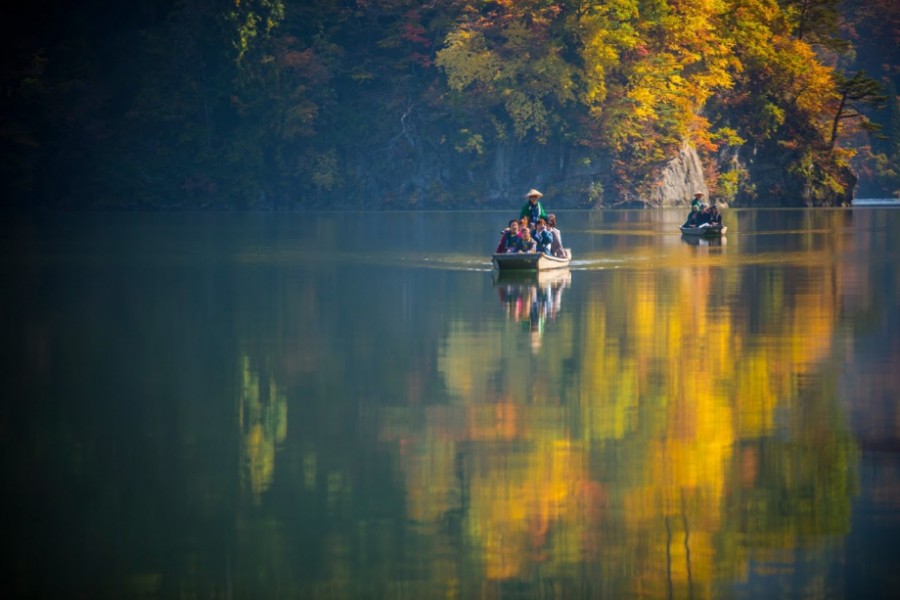
      It’s time to visit the dizzying heights of Aizu on this one-day tour that can be enjoyed any time of the year. Travel by train to Aizu-Wakamatsu Station and make your way for Michi-no-Eki Ozekaido Mishima-juku (Roadside Station). At this countryside road stop, you’ll find snacks, local handicrafts and produce galore, not to mention fantastic paulownia wood crafts. Be sure to pick some up. From Michi-no-Eki Ozekaido Mishima-juku (Roadside Station), take a short 10-minute walk to the lookout point for the Tadami Bridge. This is the number one place to look out at the bridge from and you’ll be entranced by the scenery - time your trip right and you might be able to see the Tadami Line train passing over it. The majestic mountains almost seem to hug the bridge and the landmark makes a beautiful contrast against a backdrop of nature. After you’ve finished bridge-watching, head south to ride a ferryboat across a jagged ravine at Mugenkyo no Watashi. The splendor of the natural craggy rocks and trees that cling to them will astound you from your seat at water level. Get a sense of size of these beautiful mountains and cliffs.

      Explore the Heights of Aizu
      1. Nature

        Ultimate Tadami Line Winter Tour

        This tour itinerary, combining bus and train travel on one ticket, allows visitors to explore the best spots along the famous Tadami Line, showcasing breathtaking winter views and rich local heritage. On this tour, you’ll visit the historic Enzoji Temple, home to the famous ‘akabeko’ legend, and visit a museum showcasing local folk art. You’ll also capture stunning photos from the viewpoint above the Tadami River Bridge and learn about the fascinating history of the river area, before taking a ride on the iconic Tadami Line train itself. A traditional meal made from local ingredients is included in the price. Tickets can be purchased on the Fukushima Travel website. Tour Details: Dates: Saturdays between January 18, 2025 - March 23, 2025 Price: ¥6,820 for adults (¥6,200 + 10% processing fee), ¥5,720 for children (¥5,200 + 10% processing fee) Includes: Bus ticket, Tadami Line train ticket from Aizu-Kawaguchi to Aizu-Yanaizu, lunch fee, Japanese guide Departure/Arrival: Aizu-Wakamatsu Station (guests at Higashiyama Onsen can disembark there)
        1. Nature

          Tadami Line Summer Tour

          Discover the stunning scenery of the historic Tadami Line on this exclusive, limited-time summer tour. Combining both bus and train travel, this journey gives you a chance to snap photos at the most iconic viewpoints and soak in the beauty of the region from the comfort of a train carriage. Highlights include visits to two of Oku-Aizu’s most breathtaking sights: the dramatic Tadami River Bridge No.1 and the dreamlike river valley of Mugenkyo, where you’ll glide through the landscape on a traditional wooden ferry boat. If ferry seats fill up, or you'd prefer something else, a relaxing soak in the hot spring at Hayato Onsen is offered instead. With the entire region blanketed in lush emerald green during summer, it's the perfect time for unforgettable views and photographs. The tour also includes a delicious lunch stop at the Yanaizu roadside station ‘Hotto’, where you’ll choose from local specialties like ramen, udon, or katsudon. There’s even a chance to taste or purchase traditional sake from a local shop. A guide will accompany you throughout the day (Japanese language only). Tickets can be purchased from the Fukushima Travel website. Please note the tour may be modified or canceled in the event of extreme weather or other unavoidable circumstances. Adult tickets (junior high school student and above): 7,450 yen (6,700 yen with a 750yen processing fee) Children (elementary school students or below): 5,120 yen (4,600 yen with a 520yen processing fee) Tour runs weekends and holidays from June 22 – August 31, 2025 Note: Some dates and activities may vary – please check details in advance.

Nearby

The World Glassware Hall
Museums & Galleries

Morohashi Museum of Modern Art

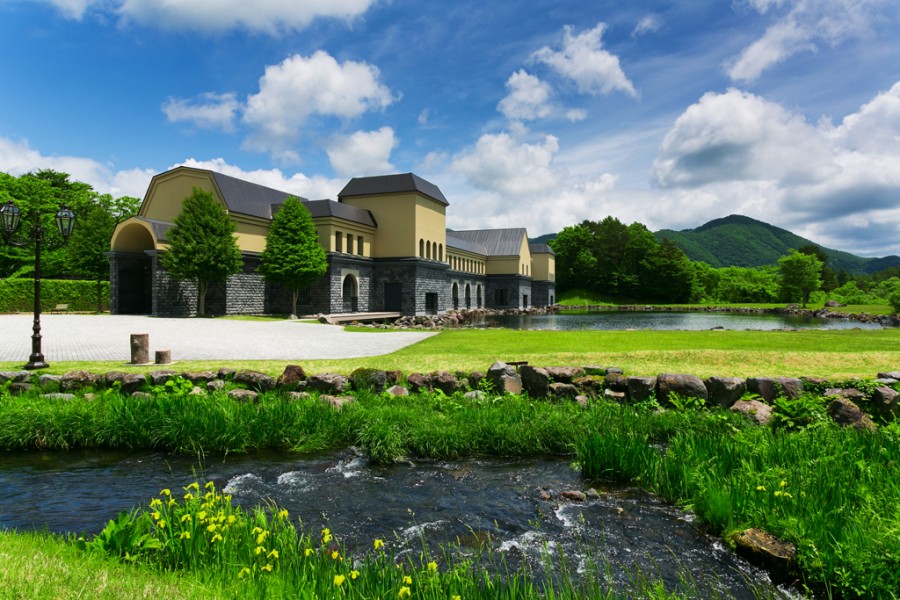
This museum, which opened in June 1999, is located a short walk from the Goshiki-numa Ponds, which is one of the most scenic spots in Fukushima Prefecture.Morohashi Museum of Modert Art houses a collection of about 350 of the works of Salvador Dali, the master Spanish surrealist artist, including paintings, prints, and sculptures, as well as about 40 works by such impressionist and post-impressionist artists as Cézanne, Renoir, Chagall, Picasso, and Van Gogh. About 100 works out of this collection are on permanent exhibition, including 37 works of sculpture by Dali. The scale of this collection is unparalleled in the world and really is worth seeing.

The World Glassware Hall
History & Culture

Sazaedo Temple

Sazaedo is a Buddhist temple built in 1796. Its architecture is similar in shape to the shell of a horned turban (‘sazae’ in Japanese), hence its name "Sazaedo". The inside of the temple consists of a double-helix slope, meaning that visitors who come to pray will not meet anybody coming from the opposite direction. This one-way system makes Sazaedo extremely unique.In 1995, it was appointed as a National Important Cultural Property, and in 2018 it was showcased in Michelin Green Guide (1 star, interesting place to visit).

The World Glassware Hall
Gourmet & Shopping

Tsurugajo Kaikan

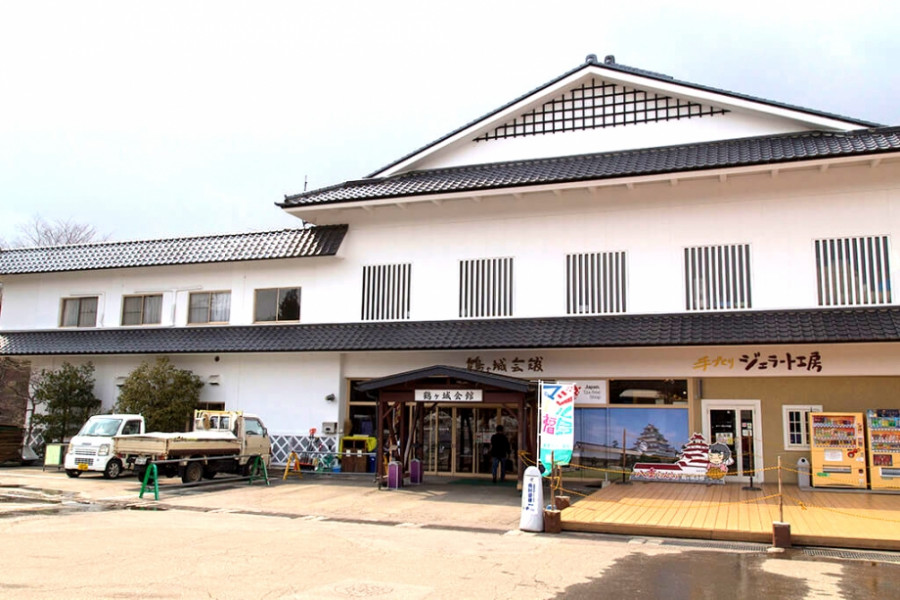
Tsurugajo Kaikan is a shopping complex next to Tsurugajo Castle. Here you can try local cuisine, from Wappa Meshi and Sauce Katsudon, to soba noodles and Kitakata Ramen. The French restaurant "Racines" is also on the premises, so that both Japanese and western-style cuisines can be enjoyed in one location. The restaurants have seating for approximately 1,000 guests.The first floor contains a tax-free shop that sells local Aizu goods and souvenirs, from ready-to-cook Kitakata Ramen, soba noodles, Japanese pickles, and sweet treats, to traditional crafts like Akabeko lucky red cow.You can even try painting your own akabeko cow (a traditional folk toy which is said to bring luck), and take it home as a souvenir of your trip. Painting an akabeko takes about 30 minutes, and a reservation is required for groups. The parking area accommodates full-size buses as well as personal vehicles.  

The World Glassware Hall
Gourmet & Shopping

Fruit Land Kita-Aizu

Fruit Land Kita-Aizu is the name of the JA Aizu West Agriculture Center. Fruit Land Kita-Aizu serves as a local hub giving information on a number of nearby orchards in Kita-Aizu Town, Aizu-Wakamatsu City. The orchards that make up Fruit Land Kita-Aizu provide visitors with delicious fruit-picking experiences, which can be tried throughout the year. Please enjoy the delicious fruit that Aizu has to offer, and take in the beauty of its nature at the same time.

You might also like

Shibuki-gori (Naturally-forming ice sculptures)
Nature & Scenery

Shibuki-gori (Naturally-forming ice sculptures)

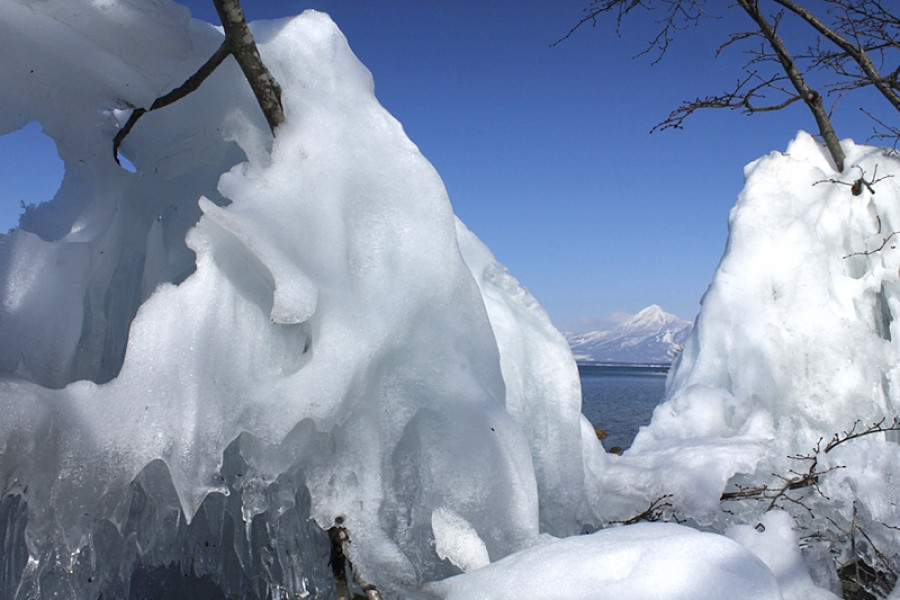
If you head to Tenjinhama beach on Lake Inawashiro in the depths of winter, through the trees at its south towards the mouth of the Nagase river, you will see the "shibuki-gori" natural ice sculptures. Lake water is picked up by strong winds from the west, and meets the trees on the coastline. There it creates a very unusual phenomenon with a beauty that rivals the "juhyo" (ice-covered trees) seen at the tops of mountains. Local peoples and visitors alike never tire of these sights. You can also see other shapes formed by ice here, such as ice drifts and the prominent "Omiwatari" cracked, rising ice on the beach and lake surface. Please note that Shibuki-gori are natural ice sculptures, and therefore their appearance and size change by the day. Please check before visiting.

Nicchu Line Weeping Cherry Blossoms
Nature & Scenery

Nicchu Line Weeping Cherry Blossoms

The Nicchusen cherry blossoms in Kitakata City follow a three-kilometer section of the former Nicchu Line railway. Once running between Kitakata and Atsushio Onsen, part of the line has been converted into a walking and cycling path. Each spring, rows of cherry trees along the path draw visitors to see them in bloom, usually around Golden Week in late April or early May.The length of the path allows people to enjoy the blossoms at their own pace. Even when some areas are busy, it is easy to find quieter spots for photos or a break. Visitors often walk the full route, stopping at different points to take in the changing scenery.Along the way, there are several features of interest. An old steam locomotive, once used on the Nicchu Line, remains on display at the midpoint and has become a popular photo spot. The path also runs past houses, rice fields, and farmland, giving a glimpse of the everyday landscape of Kitakata.Different types of cherry trees can be seen, from weeping varieties to those with pale or darker blossoms. With open areas to sit and rest, many people bring food or drinks to enjoy a picnic under the trees, making the Nicchusen cherry blossom path a relaxed way to experience spring in Fukushima.

Kannon-numa Forest Park
Nature & Scenery

Kannon-numa Forest Park

Kannon-numa Forest Park (観音沼森林公園) is a picturesque natural area in the Minamiaizu District of Southern Fukushima Prefecture.A wide variety of vegetation, flowers, and birds can be found at Kannon-numa Forest Park. There are nine walking trails, each offering unique sights. The main trail covers about 1.2 km and goes around the Kannon-numa swamp, which is one of the main highlights of the park. The park becomes transformed in each season, with cherry blossoms in spring and hydrangeas in the summer, and it is particularly popular with visitors during the autumn. The colorful trees reflected on the swamp’s waters make for a lovely sight, making it one of the main autumn attractions in the area. The best time to visit to see the autumn foliage is typically from late October to early November. There is also a shrine, Dake Kannondo, believed to have been built over 1,000 years ago.Located about 35 minutes from Ouchi-juku by car, this park is the perfect place to bask in the natural wonders of Shimogo Town. 

Top