Oze National Park

Oze National Park

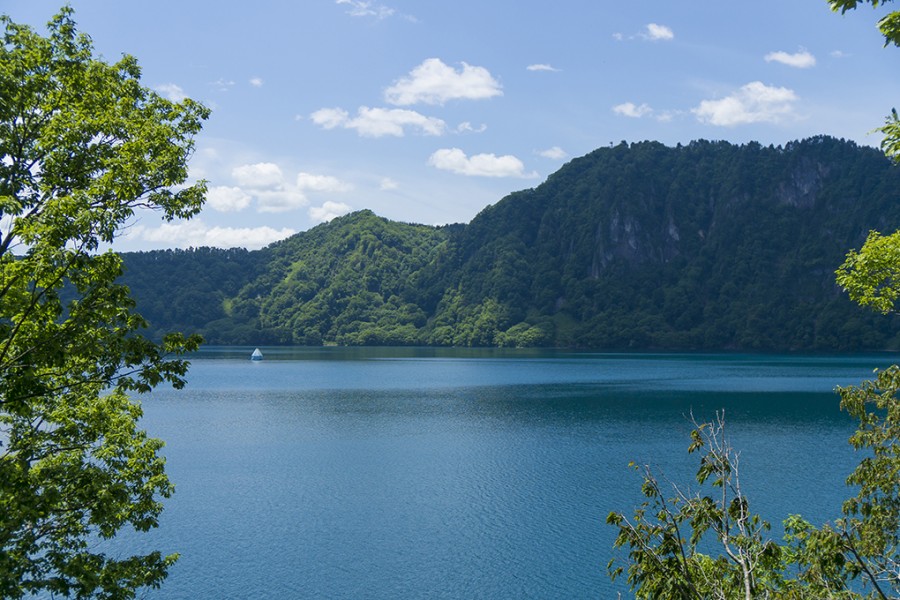
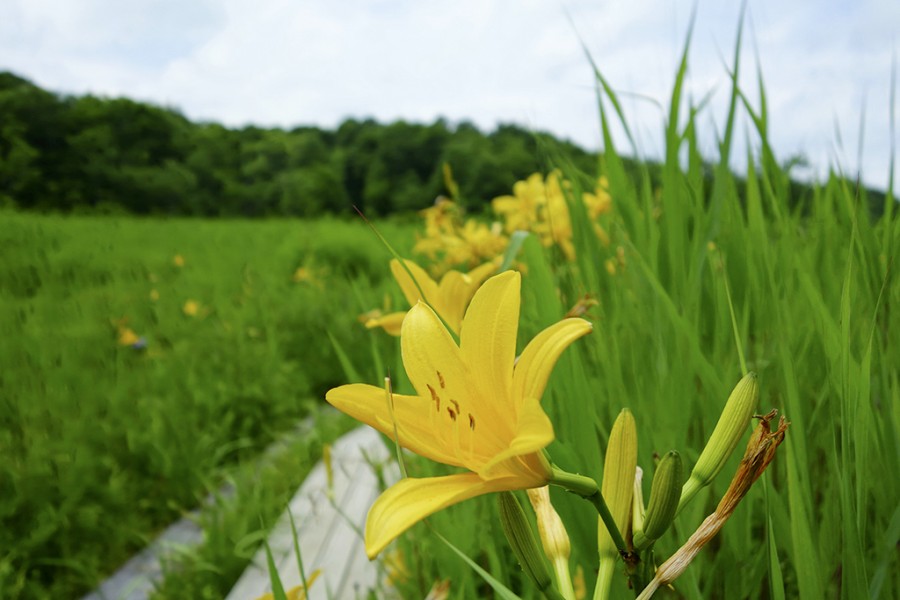
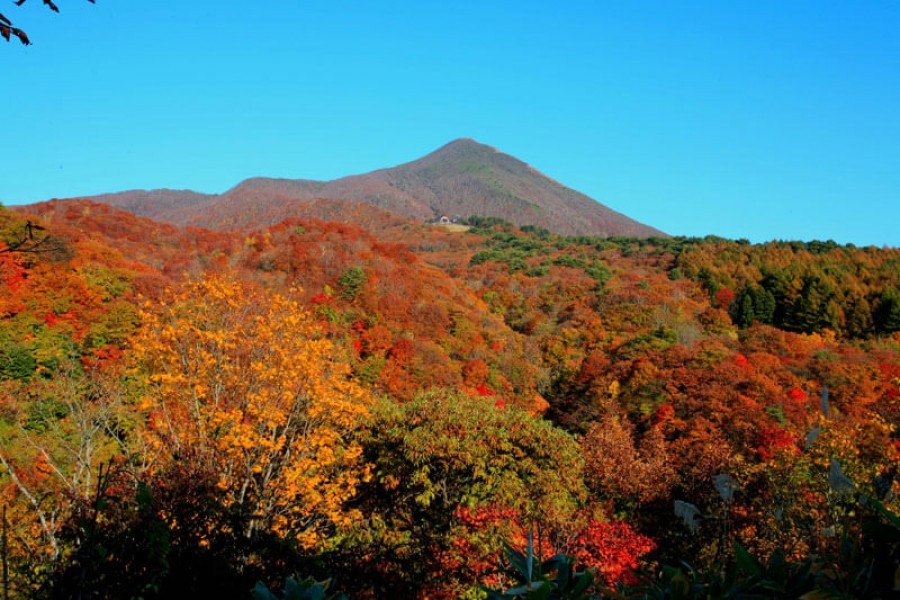
Oze is home to a plethora of beautiful flowers. These include the Asian skunk cabbage that blossoms in the marshes as the snow melts, and the bright yellow of the Nikko Kisuge, which is reflected in the marshes just when the surrounding mountains become green. The nature of Oze is symbolized by its beautiful flowers, and together with the mountains, lakes, marshes, rivers, forests, and wildlife that lives in this region, create a stunning sight. Chozo Hirano opened up the area around 100 years ago, and because of the protection of its magnificent nature up until now, Oze has become a symbol of nature conservation in Japan. The beautiful nature of Oze presents a different face throughout the seasons, and all continue to charm us. 

Key points of the sightseeing spot/ recommended points for tours:  In order to both preserve the precious nature of Oze, and to be able to come face-to-face with its splendor, we recommend that you visit on weekdays, and take your time to encounter the nature of Oze. Oze has the Ozenuma Visitor Center and the Oze-Yamanohana Visitor Center as locations from which you can both appreciate Oze's nature, and learn about the environment. At the visitor center, you can learn from displays that explain in an easy-to-understand the formation of the nature in Oze, points to see, and the most up-to-date information about the natural environment. This lets you more fully enjoy the appeal of the nature of Oze.

Visits are even more enjoyable when you know more; therefore we recommend visits with a guide who can tell you more about the nature and charm of Oze. We urge visitors to make use of the certified guides who have a wealth of knowledge about Oze's nature, culture, and history, and who can ensure your visit is safe.
Venue Details

Venue Details
Websitehttp://www.pref.fukushima.lg.jp/w4/oze/en/
Contact

The Oze Preservation Foundation

(+81) 27-220-4431

Best Season
  • Summer
  • Autumn
Opening Hours

Note that from early Nov. to late Mar., roads will be closed due to heavy snows.

Related infoFor more information about hiking in Oze National Park (including information about parking lots, mountain lodges, hiking trails and more) please check out the links below.

<a href="http://www.pref.fukushima.lg.jp/w4/oze/en/">- Fukushima Prefecture's Oze National Park Access Website</a>

<a href="https://www.oze-fnd.or.jp/en/rg/">- Oze Preservation Foundation Site</a>
Access Details
AccessHiuchigatake, Hinoemata Village, Minamiaizu District, Fukushima Pref. 967-0531
View directions
Getting there

Oze National Park is a huge park with many trailheads.

Reaching the Numayama-toge Pass Trailhead for Ozegahara Marsh or Mt. Hiuchigatake via Ozenuma:

  • You can reach this trailhead by bus from Aizukogen-Ozeguchi Station (Aizu Railway Line) via a 2 hour bus ride (Aizu Bus Co.)
  • The trailhead location and address is shown above.

To the Komagatake-tozanguchi Trailhead:

  • This trailhead can be reached directly from Hinoemata Onsen Town.

Nearby

The World Glassware Hall
History & Culture

Mt. Iimoriyama

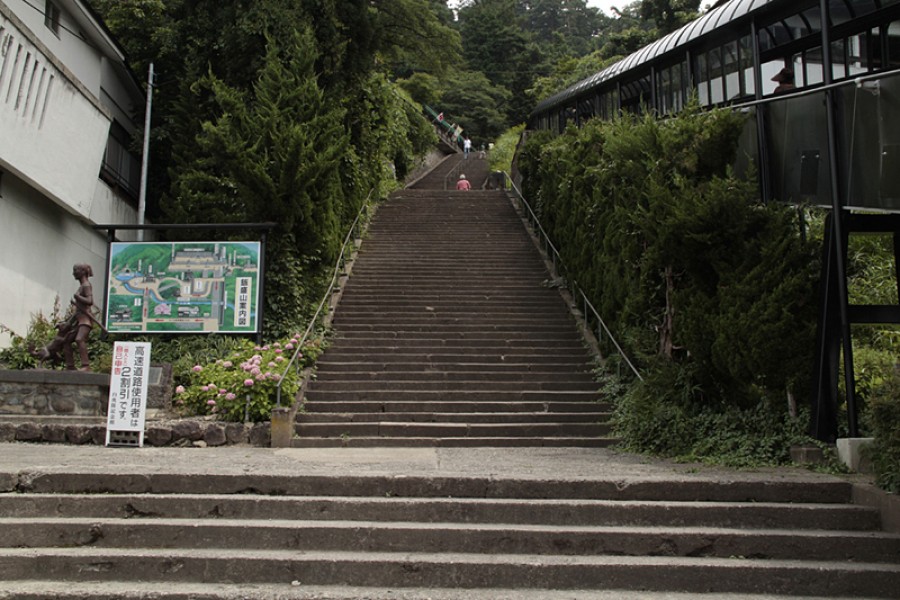
Located less than 4km from Tsurugajo Castle in Aizu-Wakamatsu, Fukushima, Mt. Iimoriyama has had a difficult and somewhat dark past. But despite it’s history, the natural beauty of the place remains untarnished. There are many local food stalls set up near the base of the hill, so it’s a good idea to have a snack before you begin the ascent up the stone steps. Also at the bottom is the Byakkotai Memorial Hall; it’s located next to the path up the mountain so it’s easy to find. Inside, guests can observe various artifacts of war and learn about some of Aizu's history.Visitors have two choices to get to the top of the hill: hike up the 183 steps to the summit for free; or pay 250 yen to ride the escalator up (150 yen for children). At the summit stand the nineteen graves of the Byakkotai, White Tiger Corps. The story of these young teenage samurai-in-the-making is legendary in Aizu-Wakamatsu City, and all around this prefecture. The Byakkotai boys were part of the defence against the military forces sweeping through the country during the 1868 civil war. They remained loyal to the leader of their domain and Shogun.On an autumn day during the one-month-long siege on their city, the boys had retreated to Mt. Iimoriyama. From the top of this hill, they caught sight of what they assumed to be Tsurugajo Castle set on fire - a sure sign that the war was lost. In response, they did what they had been taught was the honourable course of action, and took their own lives. In fact, the castle had not been set on fire, and the war was not yet lost. One boy was unsuccessful in his attempt, and was saved by a local woman traversing the hills. His life was saved and his story has become the history we know today. Visitors to Mt. Iimoriyama can stand in the same spot as the boys looking out over the city, or pay respects at the various memorials.The gravesite at the top of Mt. Iimoriyama was built in remembrance of those nineteen boys. Their story resonated with the leaders of the Axis Powers of World War II; near the gravesite are two historic landmarks donated by Nazi Germany and Italy. Down the northern side of the mountain are Uga-shindo, a shrine built in the late seventeenth century which deified a white snake as a god of abundance and fertility. There is also a lovely temple shaped like a turban shell, Sazaedo Temple, that visitors can actually go inside.

The World Glassware Hall
History & Culture

Mitsuya District Warehouses & Climbing Kiln

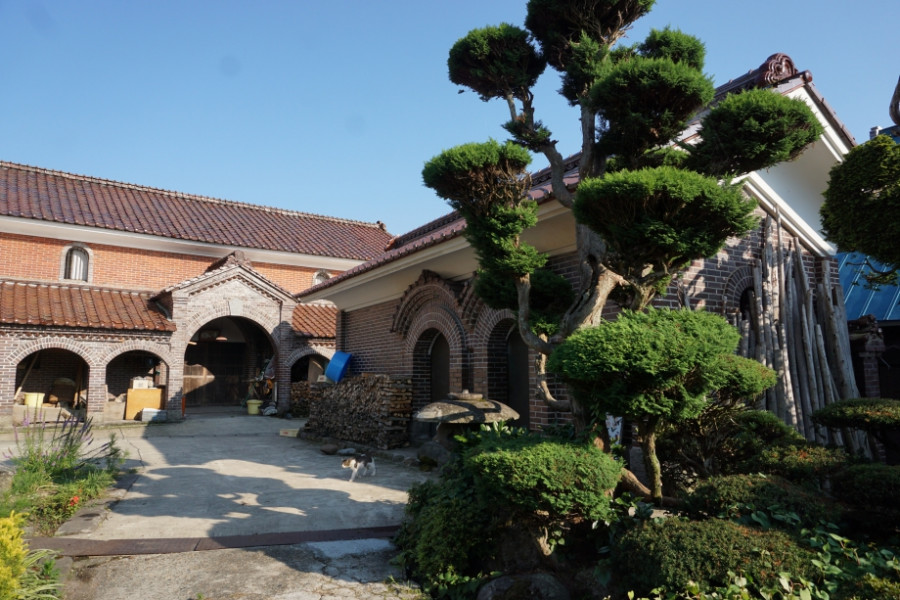
Be transported back to the elegant Taisho Period at Kitakata’s Mitsuya District. Kitakata is famous as being a town of charming red brick kura (Japanese warehouses). The rich texture and distinctive color of the warehouse bricks are an integral part of Kitakata’s townscape. In the year Meiji 23 (1890), the connecting kilns of Mitsuya District were opened. As well as roof tiles, bricks made here were also painted a deep red color, giving the area a unique atmosphere and classic scenery. The area was registered as an Industrial Modernization Heritage Site by the Ministry of Economy, Trade and Industry. The large red brick climbing kiln, located inside the Wakana Family's home, is truly a sight to behold. This district has even been written about on the Michelin Travel website.

You might also like

Shibuki-gori (Naturally-forming ice sculptures)
Nature & Scenery

Shibuki-gori (Naturally-forming ice sculptures)

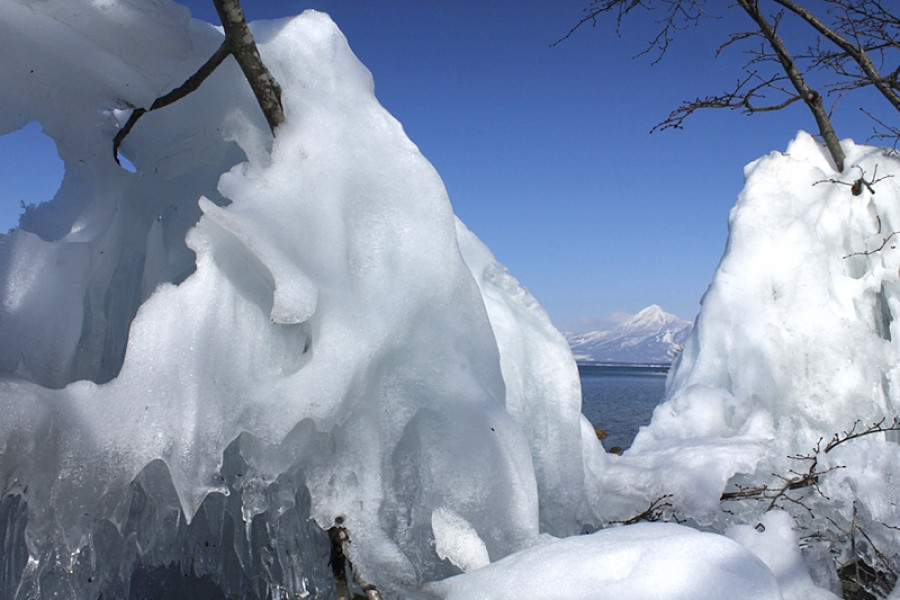
If you head to Tenjinhama beach on Lake Inawashiro in the depths of winter, through the trees at its south towards the mouth of the Nagase river, you will see the "shibuki-gori" natural ice sculptures. Lake water is picked up by strong winds from the west, and meets the trees on the coastline. There it creates a very unusual phenomenon with a beauty that rivals the "juhyo" (ice-covered trees) seen at the tops of mountains. Local peoples and visitors alike never tire of these sights. You can also see other shapes formed by ice here, such as ice drifts and the prominent "Omiwatari" cracked, rising ice on the beach and lake surface. Please note that Shibuki-gori are natural ice sculptures, and therefore their appearance and size change by the day. Please check before visiting.

Bandaisan Gold Line
Nature & Scenery

Bandaisan Gold Line

The Bandaisan Gold Line road connects Bandai Kogen, a highland rich with lakes diverse in shapes and size, and various alpine plants, and the Aizu area, which has an immensely rich and fascinating history. This submontane sightseeing road offers diverse views of Mt. Bandai (known in Japanese as 'Bandai-san') and can lead visitors to either the mountain's rugged caldera or to the picturesque Lake Inawashiro. Visitors can discover new hidden gems every time they explore the Gold Line by car, making it a very popular spot to return to among tourists and locals. The area surrounding the road is known as a foliage-viewing spot with hairpin curves that carve through the woodlands. On the walking trail that leads to Baya-ike, a "phantom" waterfall, visitors can take in the beauty of the landscape as they hike. The most highly recommended walking course extends from Happodai to the Oguninuma wetlands, where in late June, visitors are greeted by ban array of beautiful, broad dwarf day-lilies.

Top