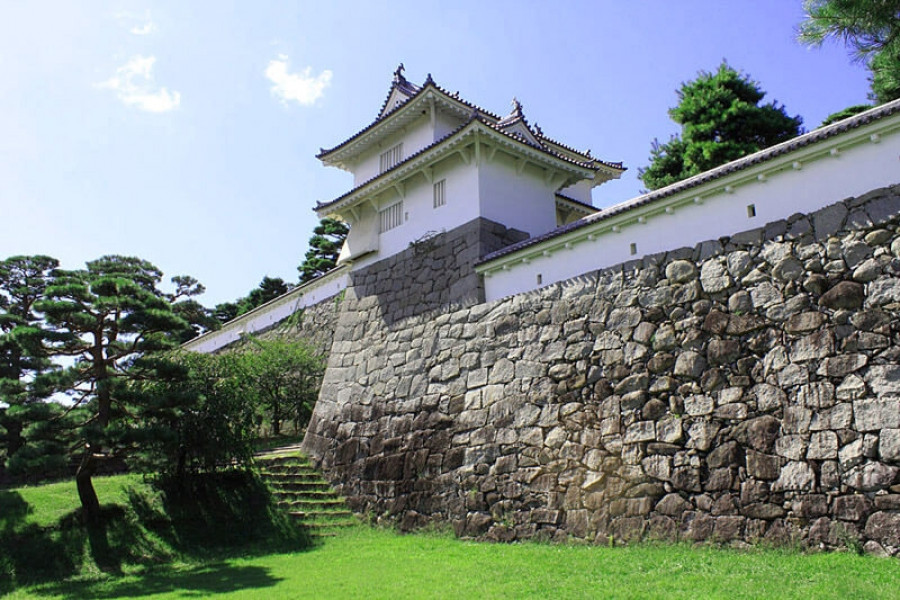
Nanko Park

Nanko Park

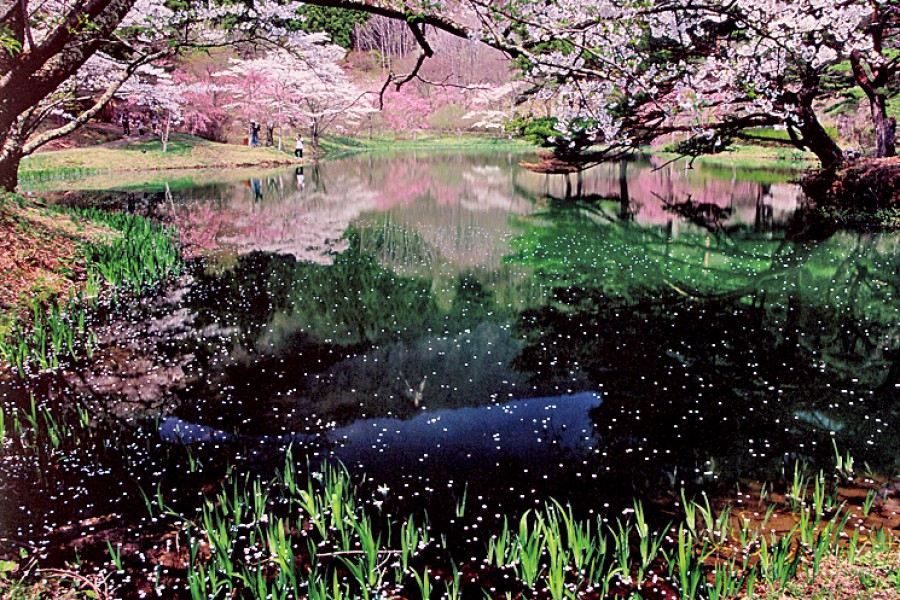
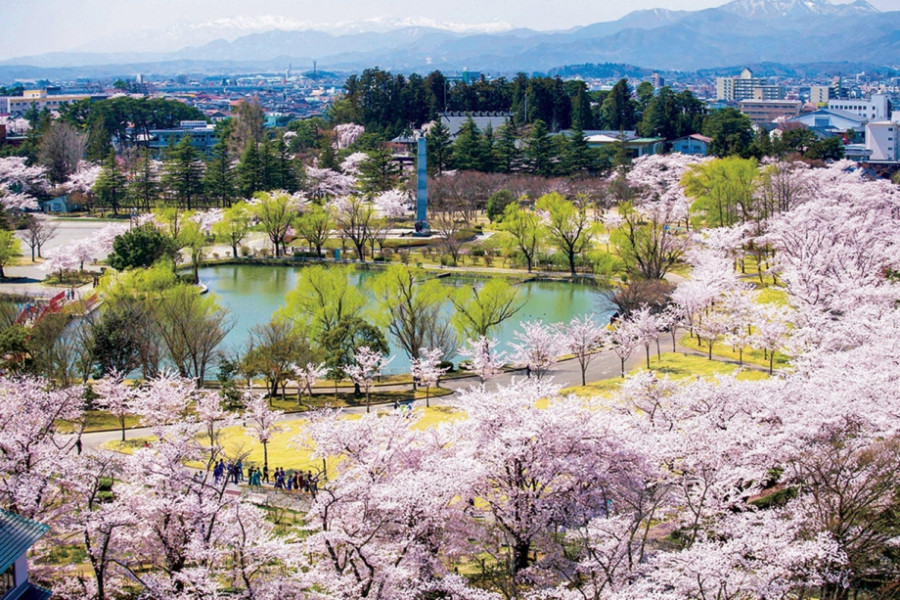
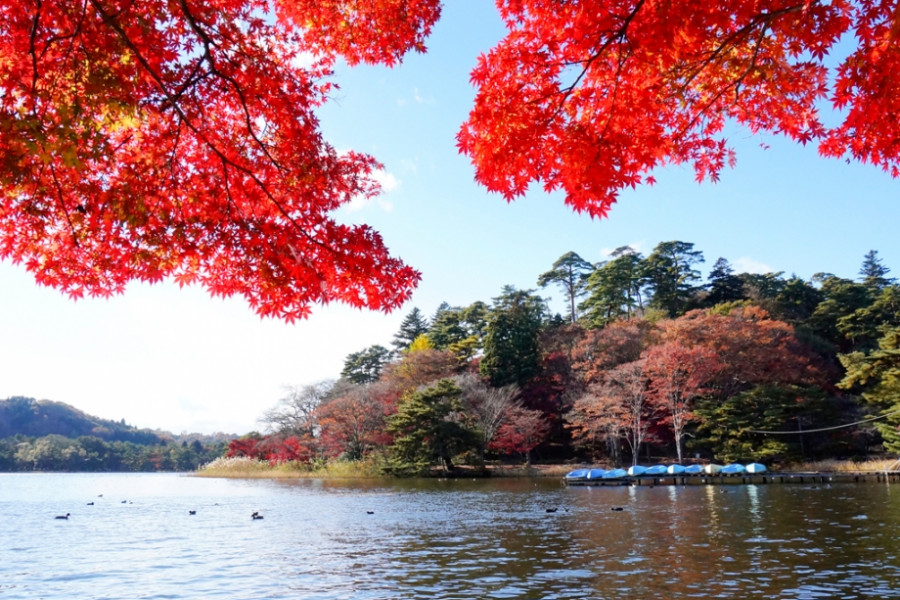
In 1801, Matsudaira Sadanobu, the twelfth Lord of Shirakawa, constructed a recreational area which was to be opened to anybody - regardless of status or family background. This recreational area turned into Nanko Park, which is considered to be the Japan's oldest public park. There are Yoshino cherry blossoms (about 800 trees), azaleas, pine trees, and maple trees at the edge of lake. You can enjoy seasonal scenery such as cherry blossoms in spring, fresh green leaves in early summer, autumn colors, and winter scenery with the beautiful contrast of the Nasu Mountains. The park contains Nanko Shrine, where Sadanobu is enshrined as a deity. Next to Nanko Shrine stands the beautiful Japanese gardens Suirakuen. At Suirakuen, visitors can try traditional Japanese tea served in a tea room, which boasts a spectacular view of the gardens. There are a number of shops, cafés, and restaurants along the edge of Lake Nanko. One of the local specialities to look out for is nanko dango, which are sticky rice balls on a skewer, served with different toppings.

Venue Details

Venue Details
Websitehttp://shirakawa315.com/eng/nanko_park.html
Contact

Shirakawa Tourism and Local Products Association

(+81) 248-22-1147

Best SeasonAll Year
ParkingAvailable (See map for location of Lake Nanko East Parking Lot)
Entrance FeeFree
Access Details
AccessNanko, Shirakawa City, Fukushima Pref. 961-0812
View directions
Getting there

By Car: 15 min from Shirakawa I.C. exit on the Tohoku Expressway; 15 min from Shirakawa Chuo Smart exit (ETC only)

By Bus: 10 min from JR Tohoku Shinkansen Shin-shirakawa Station to Nanko Park bus stop

Nearby

The World Glassware Hall
Nature & Scenery

Mt. Adatara

Mt. Adatara is actually made up of multiple active volcanoes that form a broad mountain. It last erupted in 1996. Poems in the book Chieko-sho by Kotaro Takamura (1883-1956) helped make the mountain famous.The summit of Mt. Adatara stands at an altitude of 1700 m, stretching about 9 kilometers in a north-to-south direction. Views of Mt. Adatara are lovely in and of themselves, but the views that visitors have of the surrounding area once they reach the summit are breathtaking. Chosen as one of Japan’s top 100 mountains, as well as one of the top 100 mountains for flowers, a view spot at an altitude of 1300 m can be accessed by gondola lift. This means that it is relatively easy to climb even for beginners.On summer evenings, a light-up event inspired by the Milky Way and the flowers of Mt. Adatara is held, gracing those scaling the mountain by a gondola lift with a spectacular view. In autumn, visitors are afforded a stunning view of autumn leaves making it a popular place for scenic momiji-gari (autumn leaf viewing).Kurogane-goya Mountain Lodge, which closed in August 2023, was a rest stop for visitors and served as lodging for longer hikes. The lodge’s public hot spring facility used naturally-sourced, cloudy hot spring water. The lodge is being torn down in 2025 and will be rebuilt anew for roughly a 2028 re-open.

The World Glassware Hall
Gourmet & Shopping

Himonoya Sake Brewery

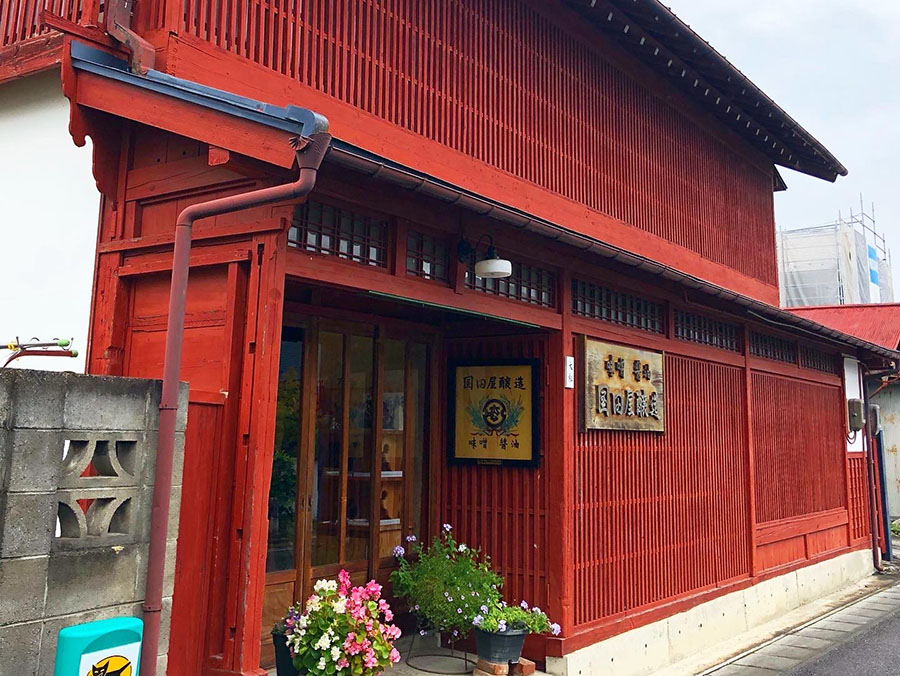
Fukushima’s sake is renowned across Japan, and Nihonmatsu is known in particular as a region with great sake production and high-grade sake producers. Using water from Mt. Adatara, the sake of the area is characterized by a mellow taste and is popular with sake lovers around the world. Himonoya Sake Brewery was established in 1874 and specializes in Senkonari sake; Senkonari is named after the battle standard "Sennari Hyotan (1000 Gourds)" of Toyotomi Hideyoshi, the famous military leader and one of the great unifiers of Japan.The sake at Himonoya is a local secret that many outsiders, even Japanese, don’t know about. To get real sake-brewing experience, be sure to visit on a winter morning, when the sake brewing art begins and most of the day’s tasks are performed. Because Himonoya Sake Brewery operates in a traditional and artisanal manner, it only makes sake during the winter season (a centuries-old rule). The tours and sake tasting offered at this old-fashioned brewery are available by reservation and are a treat to anyone with a taste for Japanese sake, or Nihonshu. These sake brewery tours are free for groups of one to ten people and take only 30 minutes to experience the brewing process. Guests should be legal Japanese drinking age (20 years of age or older) in order to enjoy the free tasting. There are four types of sake to be sampled along the tour - Kinpyo is the most highly recommended, with its sweet aftertaste making it an excellent match for Japanese snacks.

The World Glassware Hall
Nature & Scenery

Miharu Takizakura

Miharu is a small town in central Fukushima Prefecture. The town’s name means “three springs” and it is easy to see how it got such a name. With cherry, plum, and peach trees blossoming in spectacular displays every spring, it is almost as if spring has tripled! But the most famous of the trees in Miharu is the Miharu Takizakura tree, which is a nationally recognized Natural Monument.Over ten centuries old, the beautiful Miharu Takizakura is a flowering cherry tree that spreads out in all directions and makes for a breathtaking vista. The cascading blankets of blossoms are how this tree got the name takizakura, or “waterfall cherry tree.” It is even one of the “three great cherry trees” of Japan (along with Usuzumizakura in Gifu and the Jindaizakura in Yamanashi Prefecture).Miharu Takizakura sits in a sakura hollow in order to protect it from the elements while providing excellent drainage. The heavy boughs of the tree are supported by wooden beams and lend to its elegant form. The Miharu Takizakura begins blooming from mid-April. During the day the sight is whimsical, but visit in the evening and you’ll be treated to an almost haunting beauty as the tree is illuminated.Aside from this huge cherry tree (over 12 meters tall and 18 to 22 meters in spread), the area is also blessed with various wildflowers, including cherry and rapeseed flowers. But, of course, the Miharu Takizakura is what the annual 200,000 visitors are there to see. The view from the base of the sakura is considered to be the most beautiful and the Miharu Takizakura often ranks as the best sakura tree in all of Japan.

The World Glassware Hall
History & Culture

Takayashiki Inari Shrine

Located just east of Koriyama City, Takyashiki Inari Shrine is one of Fukushima's most striking shrine complexes. Roughly one hundred red torii gates line rows of stairs leading to the main shrine building, which features both a grey marble torii in the rear and a small koi pond. A family of chickens roost in a nearby hutch and roam free around the grounds during the day. The shrine is distinctive as an inari shrine thanks to its myriad fox statues, each of which represents a messenger of the kami Inari, said to be the watchful protector over rice farmers.The shrine grounds are free to enter and offer pleasant views over the surrounding countryside.

You might also like

Natsui Senbon-Zakura
Nature & Scenery

Natsui Senbon-Zakura

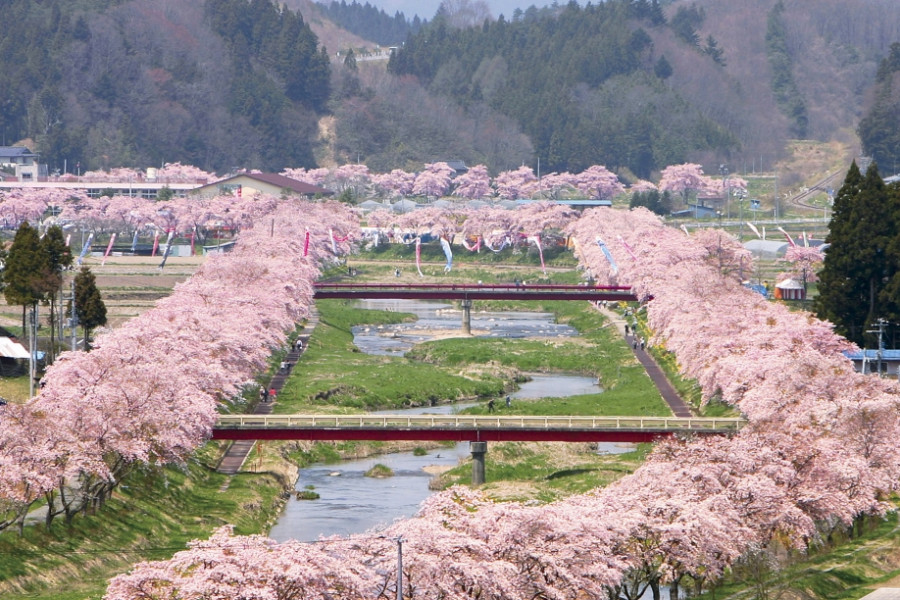
There are 1,000 Yoshino cherry blossom trees planted along both sides of the Natsui River, giving the area the name of 'Natsui Senbon-Zakura', which translates as 'Natsui's 1000 cherry trees'. The view of the river stretching out in the distance is calming. The cherry blossoms actually line the river for a distance of 5 km. Natsui Senbon-Zakura offers good spots for taking pictures. Take a walk along the promenade near the banks of the Natsui River for some beautiful shots of the contrast between the glistening river and the cherry blossoms.

Mt. Adatara
Nature & Scenery

Mt. Adatara

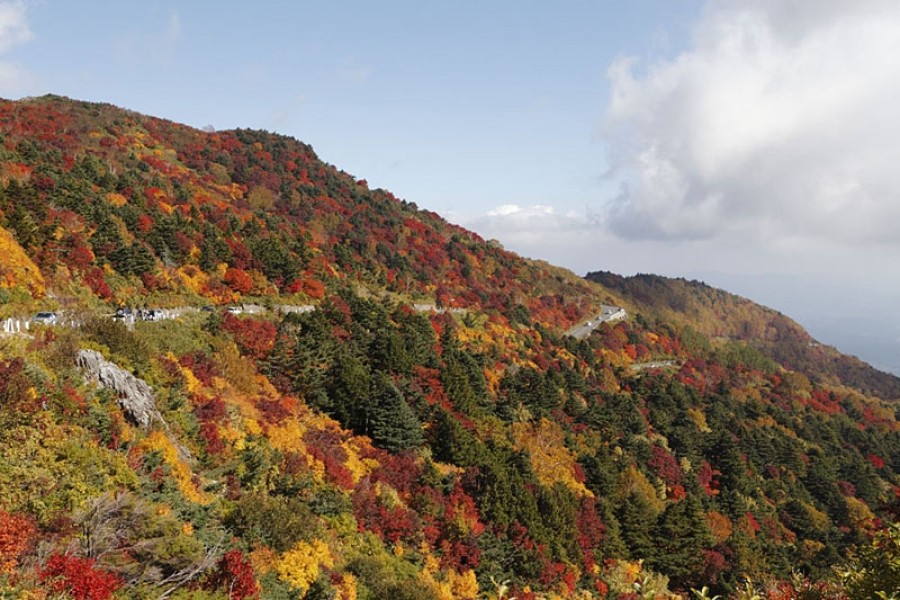
Mt. Adatara is actually made up of multiple active volcanoes that form a broad mountain. It last erupted in 1996. Poems in the book Chieko-sho by Kotaro Takamura (1883-1956) helped make the mountain famous.The summit of Mt. Adatara stands at an altitude of 1700 m, stretching about 9 kilometers in a north-to-south direction. Views of Mt. Adatara are lovely in and of themselves, but the views that visitors have of the surrounding area once they reach the summit are breathtaking. Chosen as one of Japan’s top 100 mountains, as well as one of the top 100 mountains for flowers, a view spot at an altitude of 1300 m can be accessed by gondola lift. This means that it is relatively easy to climb even for beginners.On summer evenings, a light-up event inspired by the Milky Way and the flowers of Mt. Adatara is held, gracing those scaling the mountain by a gondola lift with a spectacular view. In autumn, visitors are afforded a stunning view of autumn leaves making it a popular place for scenic momiji-gari (autumn leaf viewing).Kurogane-goya Mountain Lodge, which closed in August 2023, was a rest stop for visitors and served as lodging for longer hikes. The lodge’s public hot spring facility used naturally-sourced, cloudy hot spring water. The lodge is being torn down in 2025 and will be rebuilt anew for roughly a 2028 re-open.

Irimizu Limestone Cave (Irimizu Shonyudo)
Nature & Scenery

Irimizu Limestone Cave (Irimizu Shonyudo)

Visitors looking for a cool and adventurous experience should consider visiting the Irimizu Limestone Cave (入水鍾乳洞) in Tamura City.Perhaps less known than the nearby Abukuma Cave, the Irimizu Limestone Cave offers visitors the opportunity to venture into its depths—the narrow cave is 900 m in total and is divided into three courses (A, B and C), each more extreme than the previous one.Visitors should bring adequate clothing and shoes, as the inside of the cave is wet and slippery with irregular rocky ground and gushing streams.Course A is the least extreme, and the way into the cave is lit, although there are puddles and wet spots, and you will need to duck in some places since there are short and narrow spots. Course A is 150 m long and takes approx. 30 minutes to complete.Courses B and C go through an area of the cave where there is less conditioning. Visitors have to walk while having water up to their knees and go through slippery and narrow gaps by candlelight or flashlight.Course B is 450 m and takes about 60 minutes to complete, while course C is 300 m and takes about 90 m to complete. Visitors hoping to undertake course C, the most difficult of the three, have to make a reservation before their visit, as the course can only be completed alongside an experienced guide. *Course C is not available and is not taking reservations as of May 2023.The temperature inside the cave is typically between 10 and 15 degrees regardless of the season.There are candles, rubber shoes, flashlights and other items available for renting at the entrance.Prices are as of March 2023.The cave has been designated as a National Natural Treasure, and it’s easy to see why. You’re bound to become a geology enthusiast after experiencing the charms of the cave.

Doaidate Park
Nature & Scenery

Doaidate Park

Approximately 5,000 colorful hydrangeas bloom here every summer. Nicknamed by locals as 'Hydrangea Alley', this is a great place for relaxing or taking photos. Doaidate Park routinely makes lists of best places to see hydrangeas in Tohoku every year thanks to its sheer number of bushes and tranquil atmosphere.There is also a play park for children and an old shrine within the park grounds, while the west side of the park offers excellent views over Mt. Adatara.Parking is available for roughly 40-50 cars by the slope leading to the park entrance.In an average year, the best time to see hydrangeas fully in bloom is between the end of June and beginning of July.

Top