Mt. Iimoriyama

Mt. Iimoriyama

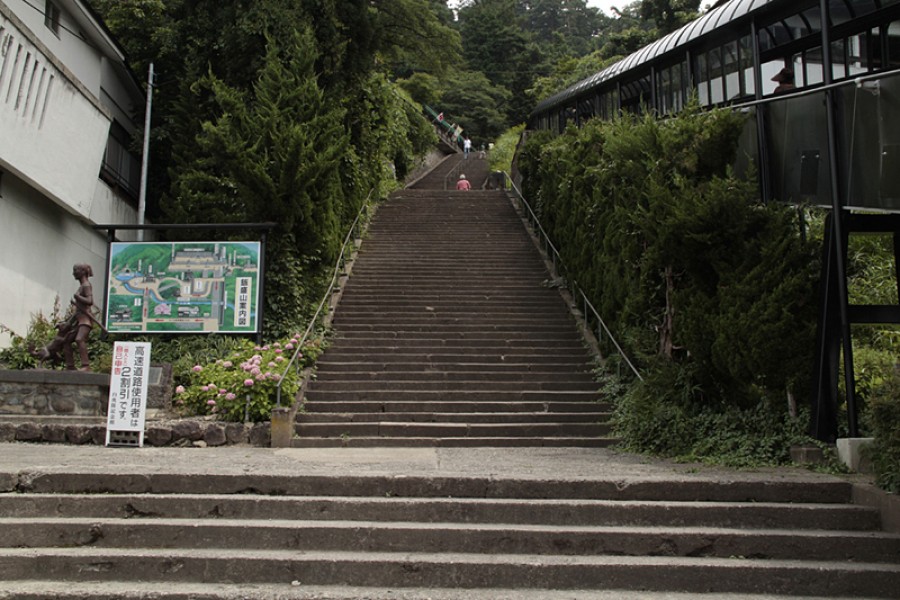
Located less than 4km from Tsurugajo Castle in Aizu-Wakamatsu, Fukushima, Mt. Iimoriyama has had a difficult and somewhat dark past. But despite it’s history, the natural beauty of the place remains untarnished. There are many local food stalls set up near the base of the hill, so it’s a good idea to have a snack before you begin the ascent up the stone steps. Also at the bottom is the Byakkotai Memorial Hall; it’s located next to the path up the mountain so it’s easy to find. Inside, guests can observe various artifacts of war and learn about some of Aizu's history.

Visitors have two choices to get to the top of the hill: hike up the 183 steps to the summit for free; or pay 250 yen to ride the escalator up (150 yen for children). At the summit stand the nineteen graves of the Byakkotai, White Tiger Corps. The story of these young teenage samurai-in-the-making is legendary in Aizu-Wakamatsu City, and all around this prefecture. The Byakkotai boys were part of the defence against the military forces sweeping through the country during the 1868 civil war. They remained loyal to the leader of their domain and Shogun.

On an autumn day during the one-month-long siege on their city, the boys had retreated to Mt. Iimoriyama. From the top of this hill, they caught sight of what they assumed to be Tsurugajo Castle set on fire - a sure sign that the war was lost. In response, they did what they had been taught was the honourable course of action, and took their own lives. In fact, the castle had not been set on fire, and the war was not yet lost. One boy was unsuccessful in his attempt, and was saved by a local woman traversing the hills. His life was saved and his story has become the history we know today. Visitors to Mt. Iimoriyama can stand in the same spot as the boys looking out over the city, or pay respects at the various memorials.

The gravesite at the top of Mt. Iimoriyama was built in remembrance of those nineteen boys. Their story resonated with the leaders of the Axis Powers of World War II; near the gravesite are two historic landmarks donated by Nazi Germany and Italy. Down the northern side of the mountain are Uga-shindo, a shrine built in the late seventeenth century which deified a white snake as a god of abundance and fertility. There is also a lovely temple shaped like a turban shell, Sazaedo Temple, that visitors can actually go inside.

Venue Details

Venue Details
Websitehttp://samurai-city.jp/en/sightseeing/1079
Contact

Aizu-Wakamatsu City Tourism Bureau

(+81) 242-23-8000

Best SeasonAll Year
ParkingAvailable
Entrance FeeFree
Related infoWheelchair rental available.
Wheelchair-accessible toilet available at the Mt. Iimoriyama Tourist Information Center.
Access Details
AccessBentenshita 7, Yahata, Ikki-machi, Aizu-Wakamatsu City, Fukushima Pref. 965-0003
View directions
Getting there

By Car: 15 min drive from the Aizuwakamatsu I.C. exit (Ban-etsu Expressway)

By Bus: 5 min on foot from the Haikara-san / Akabe Loop Bus "Iimoriyama-shita" Bus Stop 

Related trips

  1. Samurai

    Historical Samurai Tour

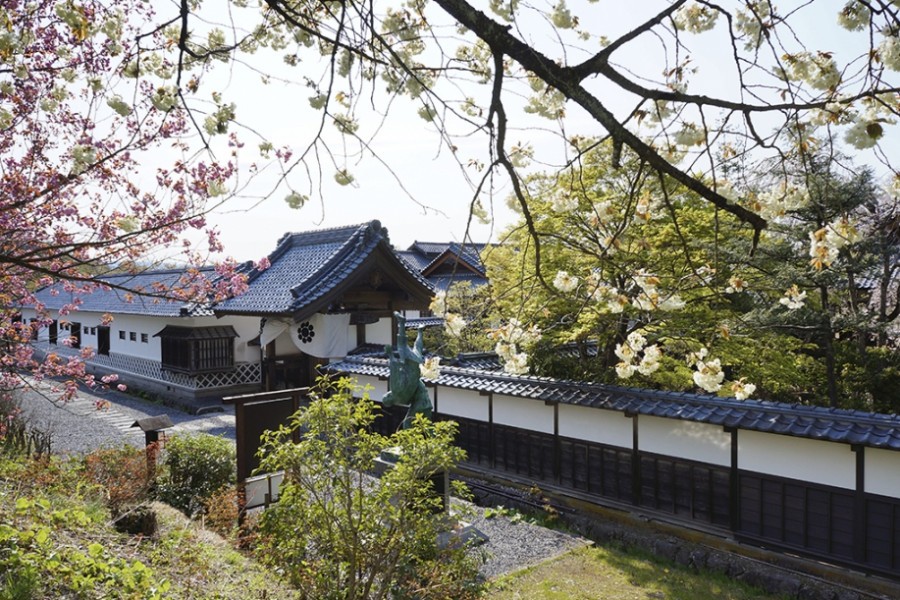
    Enjoy this one-day trip around Aizu-Wakamatsu City, made possible thanks to the local city sightseeing buses that drive between the major sightseeing spots in the city. No matter what time of the year you decide to visit Fukushima, the Aizu-Wakamatsu area is sure to entrance you with its many sights and attractions. See Mt. Iimoriyama, where the Byakkotai samurai brigade tragically took their lives after the supposed fall of their lord and castle. Visit Sazaedo Temple with its double-helix shaped interior and wonder at the peace and tranquility of the temple grounds and history. Move onto Aizu Bukeyashiki where this expansive samurai household has been well-preserved for visitors to walk through and imagine life as it was. Guests will enjoy this scenic home with its lovely gardens. Compare these gardens with those at Tsurugajo Castle and walk the grounds of this majestic castle. Visit the exhibits inside the castle and learn more about the Byakkotai boys, and the fascinating samurai history of the Aizu region. Finally, Nanokamachi-dori Street will welcome you with its charming rustic buildings and shopping sites; wander the narrow streets to find some truly wonderful hidden gems. Finish your day back at Aizu-Wakamatsu Station.  
    Historical Samurai Tour
    1. Adventure

      Diamond Route (4 Days, 3 Nights)

      Have you ever wanted to take a cross-prefecture tour of Japan, from Tokyo to the impeccable countryside of Fukushima? Well, now is your chance to travel from the international hub of Tokyo and see what else Japan and—especially—Fukushima have to offer. Enjoy this cross-country tour of Japan over the span of a few days, so that you can enjoy things at your pace. Start your trip from Tokyo Station and ride a short distance to Asakusa. See one of the busiest shrine-and-temple locations in Tokyo. You’ll love the bustling atmosphere and the street stalls with their many trinkets and souvenirs. Once you’ve finished in Asakusa, head out of the city and make your way for Tochigi Prefecture’s Nikko. Nikko is perhaps most famous for the three monkey statues that people equate with “hear no evil, see no evil, speak no evil”. You’ll see these wonderful statues and more while you stop over in Nikko. From there, travel north to Higashiyama Onsen and enjoy the sights form the train along the way. Higashiyama Onsen is Fukushima’s home to some truly great hot springs and Japanese-style inns. Soak up the hot waters and relax your tired muscles. At Tsuruga-jo Castle, you can walk the pristine gardens and enjoy the castle grounds. Be sure to make note of the red-roof tiles of the castle as well, this is the only castle in Japan that boasts having these deep-red tiles. Inside the castle keep, discover the history of the Aizu samurai through the many exhibits and displayed artifacts. Make your way to Nanokamachi-dori Street and admire the local architecture, which is quite different than that from the rest of the area. Search out local hidden gems along the narrow streets and find the perfect souvenir to take home. Enjoy your time in Tokyo, Tochigi, and Fukushima like never before with this route.  

      Diamond Route (4 Days, 3 Nights)

Nearby

The World Glassware Hall
Museums & Galleries

Mt. Bandai Eruption Memorial Museum

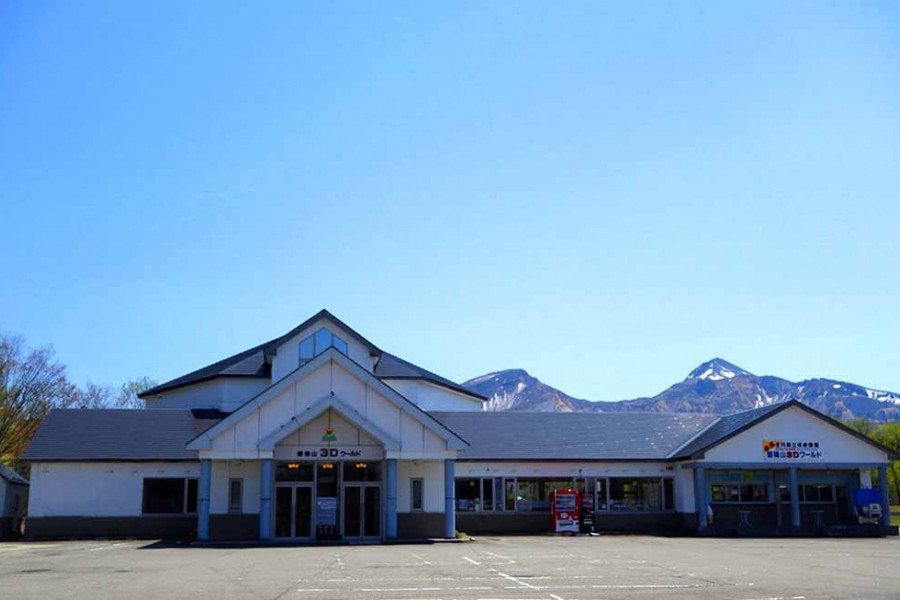
This museum introduces the eruption of Mt. Bandai, and uses large sized models and "body sonic" facilities to give a simulated experience of the eruption in 1888 of Mt. Bandai. The plants and animals that live around Mt. Bandai are introduced using a diorama, and nature observation meetings are held several times a year. This museum has wheelchair access and bathroom facilities.The museum is across the road from Mt. Bandai 3D World, and a combined entrance ticket is available for the two facilities.

The World Glassware Hall
Nature & Scenery

Natural Sparkling Water in Kaneyama Town

Kaneyama Town is a scenic, rural town surrounded by woods. One of the most famous things about Kaneyama Town is its well of naturally carbonated water. Such water is rarely found in Japan. Small bubbles are infused into the water, giving it a gentle and smooth taste. Locals and visitors take empty bottles to the well to fill and take back home. There is a pot at the well that can be used to collect water from the base of the well. Pulling up water from the bottom with a rope definitely makes for a fun and unique experience! Why don’t you try this natural sparkling water while enjoying the beautiful scenery in Kaneyama?

The World Glassware Hall
Gourmet & Shopping

Hot in Yanaizu

Yanaizu Town is best known as the birthplace of the legend of the lucky red cow Akabeko, but it is also known for its famous manju (sweet steamed buns). Hot in Yanaizu is a center with a bit of everything; it sells local products, has sightseeing information, rest areas, and an eatery. They even have an "experience area".It goes without saying that, at Hot in Yanaizu, you can paint your own Akabeko, but you can also make manju with the help of the facilities' kind staff (Read more here). Hot in Yanaizu have staff that can speak English, but please make sure to contact them in advance, as you might not be able to do the experience without placing a booking.Please take your time & enjoy the slow pace of Japanese countryside life in Yanaizu Town.

You might also like

Sazaedo Temple
History & Culture

Sazaedo Temple

Sazaedo is a Buddhist temple built in 1796. Its architecture is similar in shape to the shell of a horned turban (‘sazae’ in Japanese), hence its name "Sazaedo". The inside of the temple consists of a double-helix slope, meaning that visitors who come to pray will not meet anybody coming from the opposite direction. This one-way system makes Sazaedo extremely unique.In 1995, it was appointed as a National Important Cultural Property, and in 2018 it was showcased in Michelin Green Guide (1 star, interesting place to visit).

Shingu Kumano Shrine Nagatoko
History & Culture

Shingu Kumano Shrine Nagatoko

Built in 1055, the Nagatoko is Shingu Kumano Shrine's worship hall and translates to “long floor”. It is designated as a Nationally Important Cultural Asset. Its thatched roof main structure was built between the Heian period and the Kamakura period and is supported by 44 massive pillars, each one 45 cm in diameter. It is a large, open stage with no walls, said to have been used for ascetic training by priests, as well as kagura dance festivals. Housed inside a nearby large wooden frame is the shrine bell, which visitors to the shrine are welcome to hit with a wooden rod. There is also a famous copper pot in which, allegedly, rice was rinsed before being offered to the gods; the pot was designated as an Important Cultural Property in 1959. This treasure is housed at the shrine along with many others and is on display for visitors along with national and prefectural designated cultural assets. Also not to be missed is the lion statue in the center of the treasure hall. It is known as a guardian of wisdom: a local legend says that if you can pass under the belly of the lion, your wisdom will blossom. It is a popular place for students to visit before the exam season and even politicians before election season. Come autumn, the magnificent 800-year-old ginkgo tree at the site is bathed in yellow, contrasting beautifully with the Nagatoko. This ancient tree has also been designated as a Natural Monument of Kitakata City. In November each year, you can even see a special illumination of the ginkgo tree for a limited time.

Maezawa L-shaped Farmhouses
History & Culture

Maezawa L-shaped Farmhouses

The deep snows of the Aizu region meant that, in the past, cut off from other areas for months at a time, its residents had to use all their wits just to make it through the winters. These L-shaped farmhouses known as "magariya" conceal a number of the innovations developed by this local people.As you can see in the layout of the house, the long earth floor stretches out towards the road. Long ago, horses were indispensable in farming, but the deep snow of winter meant that keeping them tied up in external stables was cruel. Therefore, stables were built into the house, meaning that the unfloored working area inevitably became larger. Having this area far from the road made getting to the road through the snow more difficult, as up to a meter can fall overnight. Accordingly, with the aim of reducing work, locating this working area as close as feasible to the road ended up with the house being laid out in an L-shape.Many of these houses were built in Maezawa and throughout Tateiwa Village, as a way of living with horses in the deep snows of the Aizu region.The houses have become more and more comfortable over time, with the "magariya" design lasting until the present day. While this magariya-style farmhouse used to be built everywhere that saw heavy snow, they are gradually disappearing. Accordingly, the Maezawa magariya have been designated as historical cultural assets.In 1985, the village began actively preserving these houses, and this area now attracts many visitors. One of the magariya buildings have been repurposed into a museum in the village where visitors can learn about life in Maezawa.

The Grave of the Matsudaira Family
History & Culture

The Grave of the Matsudaira Family

The gravesite was constructed in 1657 when Masayori, the heir of the first Aizu lord Hoshina Masayuki, passed away. Tombs for the second lord Masatsune through the ninth lord Takamori, as well as their wives and children, stand side by side. A Buddhist funeral was conducted for the second lord, but the Shinto style was used for all the other lords. This gravesite is one of Japan’s top daimyo family graves, and is known for its history and scale. The Grave of the Matsudaira Family has also been nationally recognized as an Important Historic Site.

Top