Lake Numazawa Festival

Lake Numazawa Festival

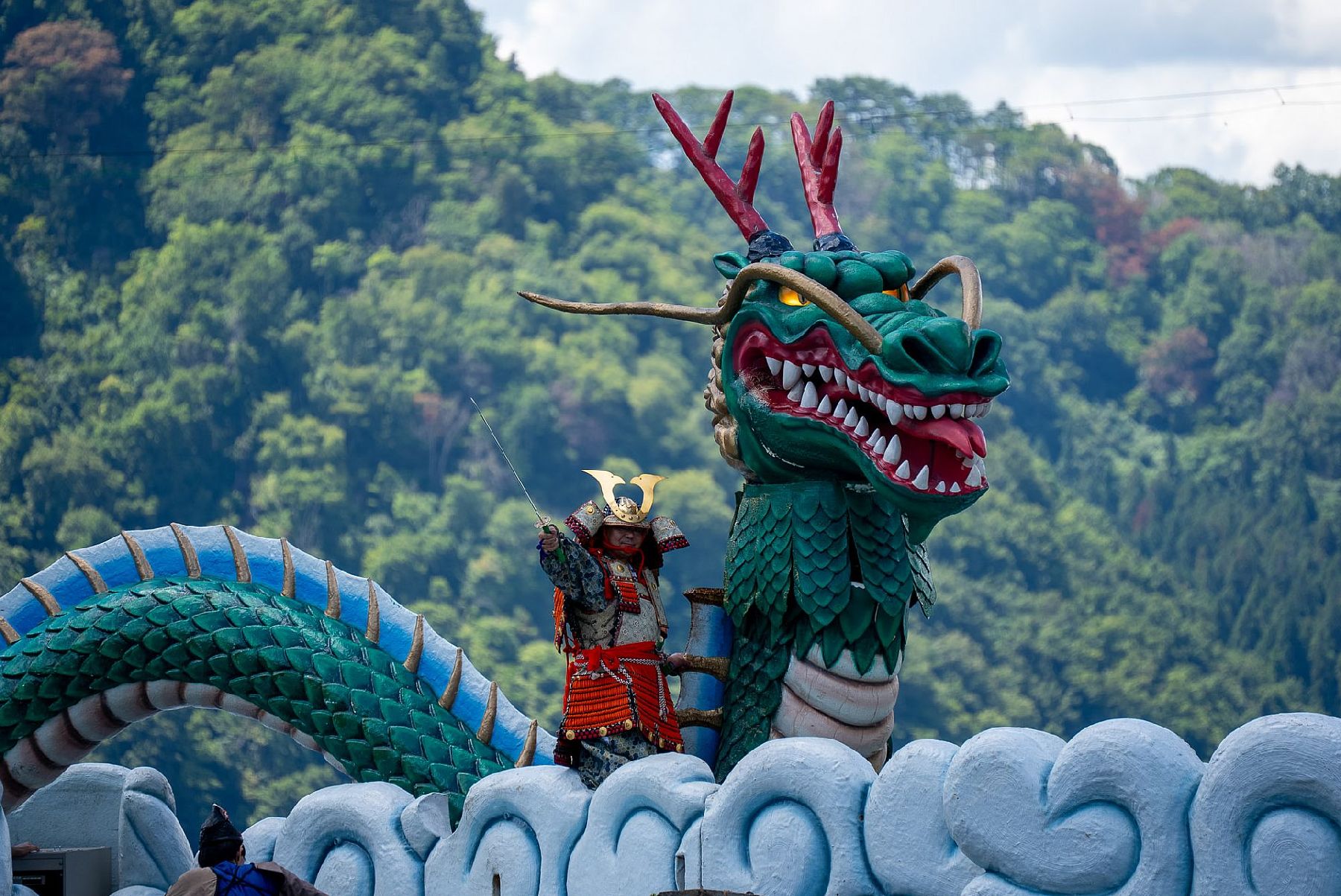
Lake Numazawa Festival is held on the first Saturday and Sunday of August every year at Lake Numazawa in Kaneyama Town. It is said that over 800 years ago, a man killed a giant snake (dragon) that lived at the bottom of Lake Numazawa in order to protect Kaneyama Town. Over the course of the 2 days, local people act out this folktale at the lakeside. Come and visit to enjoy some local shows, watch firework displays on the Saturday night, and swim in the lake!

As a rough framework, fireworks typically launch around 8pm on the Saturday night, coinciding with the arrival of the great snake, and the samurai warriors arrive to perform around 12pm (noon) on the Sunday.

Visitors arriving by car should park according to instructions from staff in the large auxiliary car park - this is close enough to the lake to be a short walk, but shuttle buses also run regularly between the two locations, the journey taking about 2-3mins.

Venue Details

Venue Details
Websitehttp://www.kaneyama-kankou.ne.jp/en/event/event.html
Contact

Kaneyama Town Tourism and Local Products Association

(+81) 241-42-7211

Best Season
  • Summer
Related infoSaturday event times tend to be 1:00 PM - 9:00 PM, with the Sunday event running from 10:00 AM - 3:00 PM (Please check the official event page for up-to-date information)
Access Details
AccessLake Numazawa, Kaneyama Town, Onuma-gun, Fukushima Pref.
View directions
Getting there

By Car: 60 min drive from central Aizu-Wakamatsu City (via the Ban-etsu Expressway)

By Train: 10 min by taxi from Hayato Station on the JR Tadami Line

Fukushima Festival Guide

Nearby

The World Glassware Hall
Cultural Experiences

Mitsuishi Shrine (Three Stones Shrine)

The Mitsuishi Shrine (Three Stones Shrine) is located a short 10-minute walk from Tadami Station in Tadami Town. Ichinoiwa, Ninoiwa and Saniwa are the three large stones that have spritual significance.  Ichinoiwa (the first stone) is thought to improve intelligence, Ninoiwa (the second stone) is thought to improve eyesight, and Saniwa (the third stone) is thought to improve connections with others, particularly romantic love. The Saniwa is a popular place to visit for those who are hoping to get married someday. To reach the shrine there is a short hike through dense forest, so it is recommended that visitors wear shoes that are easy to walk in.

The World Glassware Hall
Cultural Experiences

Paint Your Own Akabeko

Bookings for the akabeko painting can be made on the official reservation page.What is 'Akabeko'?The akabeko legend started at Enzoji Temple in Yanaizu Town, in the Aizu region. The construction of this temple began in the year 807, but due to a huge earthquake at the end of the seventeenth century, it had to be repaired in 1617. It was during the reconstruction of the temple that the akabeko became a folk legend.It is said that moving the wood and other supplies necessary for the reconstruction work was incredibly difficult because materials had to be transported from various villages upstream of the Tadami River. The materials were heavy and the journey to the temple was long. Cattle were used to transport materials, but many struggled to bear their loads.Then, out of nowhere, appeared a cow with a red coat. (It should be noted that, in the past, the word ‘red’ was used to describe the color ‘brown’, so it is likely that it was a brown cow.) The red cow supported the other cows and helped the priests who were constructing the temple until it was completed. Then, it suddenly vanished.'Akabeko' means 'red cow' in the local dialect.A number of statues of the cow were built inside the temple grounds so that the people of Yanaizu could express their gratitude to the akabeko.In the years following, there was a range of legends about the akabeko, with stories such as families who owned akabeko being rid of sickness upon stroking the cows. They continued to hold their status of bringers of good luck and strength. Families bought or made akabeko toys for their young children to play with.Akabeko Painting ExperiencesIn recent history, the Aizu tradition of painting akabeko began. It is said that this tradition started as something to do for children visiting Aizu-Wakamatsu City as part of school trips. This was when the story of the Akabeko evolved once more, into its newest papier-mâché form. The stripes on the face and back of the papier-mâché Akabeko are said to represent strength and perseverance.There are a number of workshops in Aizu-Wakamatsu City where you can paint your own Akabeko. Most workshops offer the standard red, white, and black paint. These talismans for good health make very cute and lightweight souvenirs to take home for family and friends – or keep for yourself! Those who prefer to buy a ready-painted Akabeko will be able to find it at most souvenir shops.BookingIf you would like to book an akabeko painting experience at the Tsurugajo Kaikan (a shopping complex located next to Tsurugajo Castle), please access this page.

You might also like

Karamushi Ori-no-Sato Snow Festival
Events & Festivals

Karamushi Ori-no-Sato Snow Festival

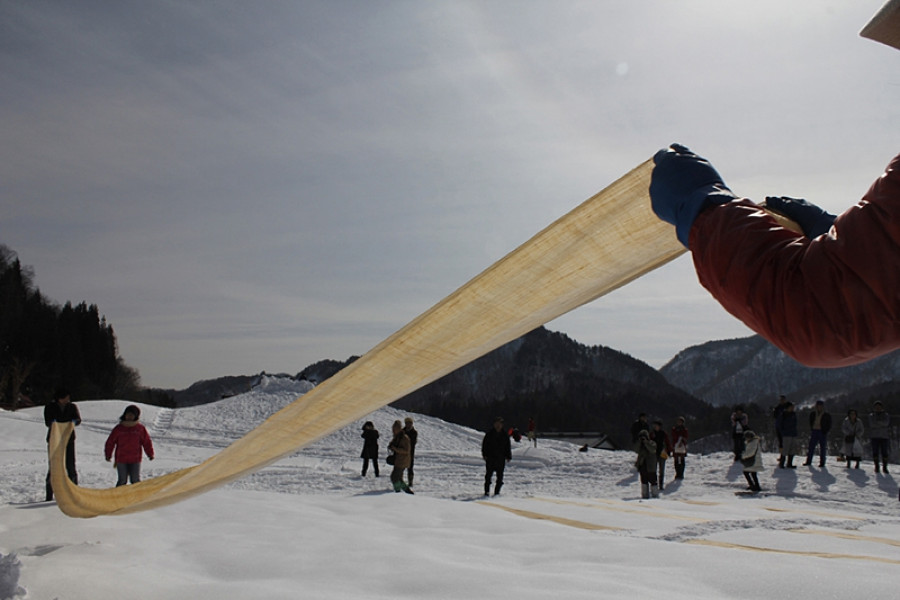
Winter in Showa Village wouldn’t be complete without heavy snowfall – every year around 2 meters of snow piles in the village! Showa Village’s local people has adapted their way of working around the harsh conditions of winter over the generations by utilizing the long winter months to create crafts from weaving thread made of ramie (made from nettles). This photo shows an important part of this process – the bleaching of the fabric. Visitors can even experience making coasters made from ramie using traditional methods at Orihime Koryukan Building, located at Michi-no-Eki Karamushi Ori-no-Sato (Roadside Station)!The date of the 2021 Karamushi Ori-no-Sato Festival will be at the end of February 2021, and is currently being decided.

Higashiyama Onsen Bon Odori
Events & Festivals

Higashiyama Onsen Bon Odori

The Higashiyama Onsen Bon Odori, a traditional summer dance festival, restarted in 2024 after a five-year absence and is typically held Friday to Monday on the first weekend of August.The festival involves long snaking lines of people dancing to the traditional song 'Aizu Bandaisan', which anyone can join since the dance only involves a few steps. The song is played from a 14-metre-high wooden watchtower built once a year in the Yukawa River below, adorned with over 1,000 lanterns.The history of the festival traces back to 1944, when it was designed to cheer up children evacuating to a ryokan in Higashiyama Onsen during the war.The onsen town is also worth a visit the rest of the year and makes an excellent base for exploring the samurai city of Aizu-Wakamatsu.

Aizu-Tajima Gion Festival
Events & Festivals

Aizu-Tajima Gion Festival

This festival - recognised as a Significant Intangible Folk Cultural Asset - has a history of over 800 years and is held over three days (22-24 July) every year. The highlight of the festival is watching a procession of women dressed in beautiful traditional Japanese wedding apparel, making their way to the shrine at the heart of the town. This takes place on the morning of 23 July.In the afternoons and evenings, floats are marched through the streets bearing local schoolchildren performing traditional kabuki theatre.

Aizu Painted Candle Festival
Events & Festivals

Aizu Painted Candle Festival

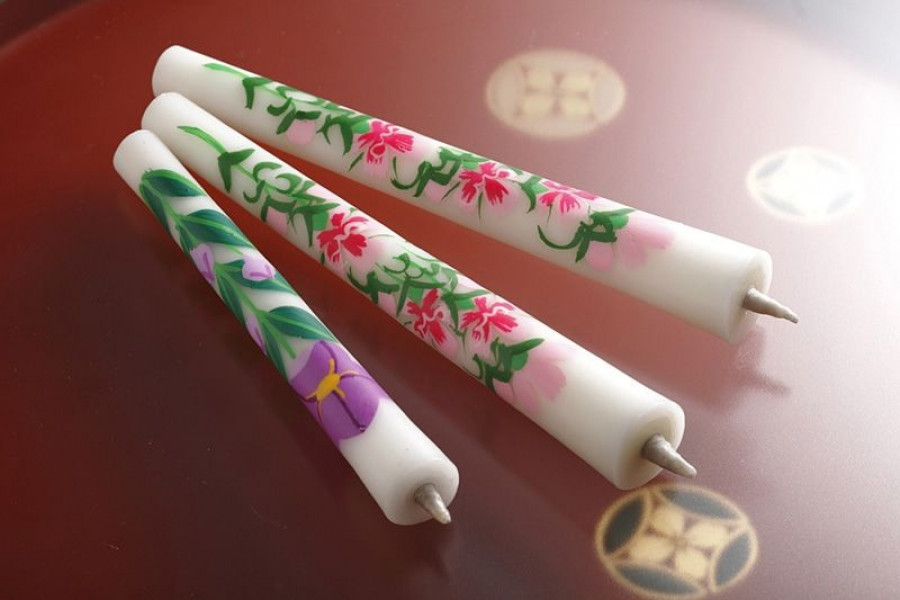
Aizu Painted Candles are one of Aizu’s most well-loved traditional crafts. Aizu Painted Candle Festival was started in order to let people all over Japan (and all over the world) know about this traditional craft, and to give people an appreciation for the work that is needed to make every single candle. Take in the picturesque snowy scenery in Aizu-Wakamatsu City by candlelight this winter. Aizu Painted Candle Festival takes place at Tsurugajo Castle and Oyakuen Garden on the second Friday and Saturday of February.The 2026 festival will be held on Friday 13th and Saturday 14th February, 2026.

Top