Kannonji-gawa River Cherry Trees

Kannonji-gawa River Cherry Trees

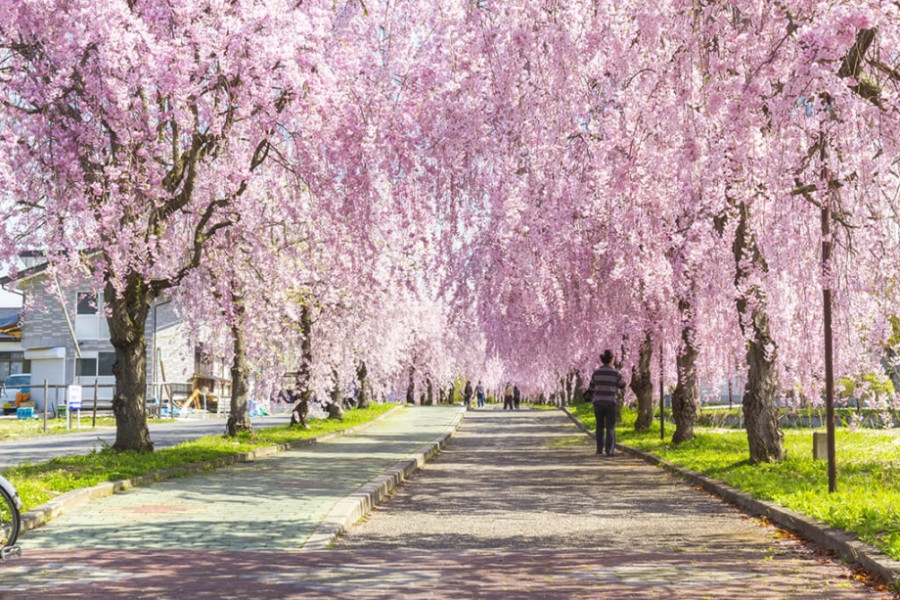
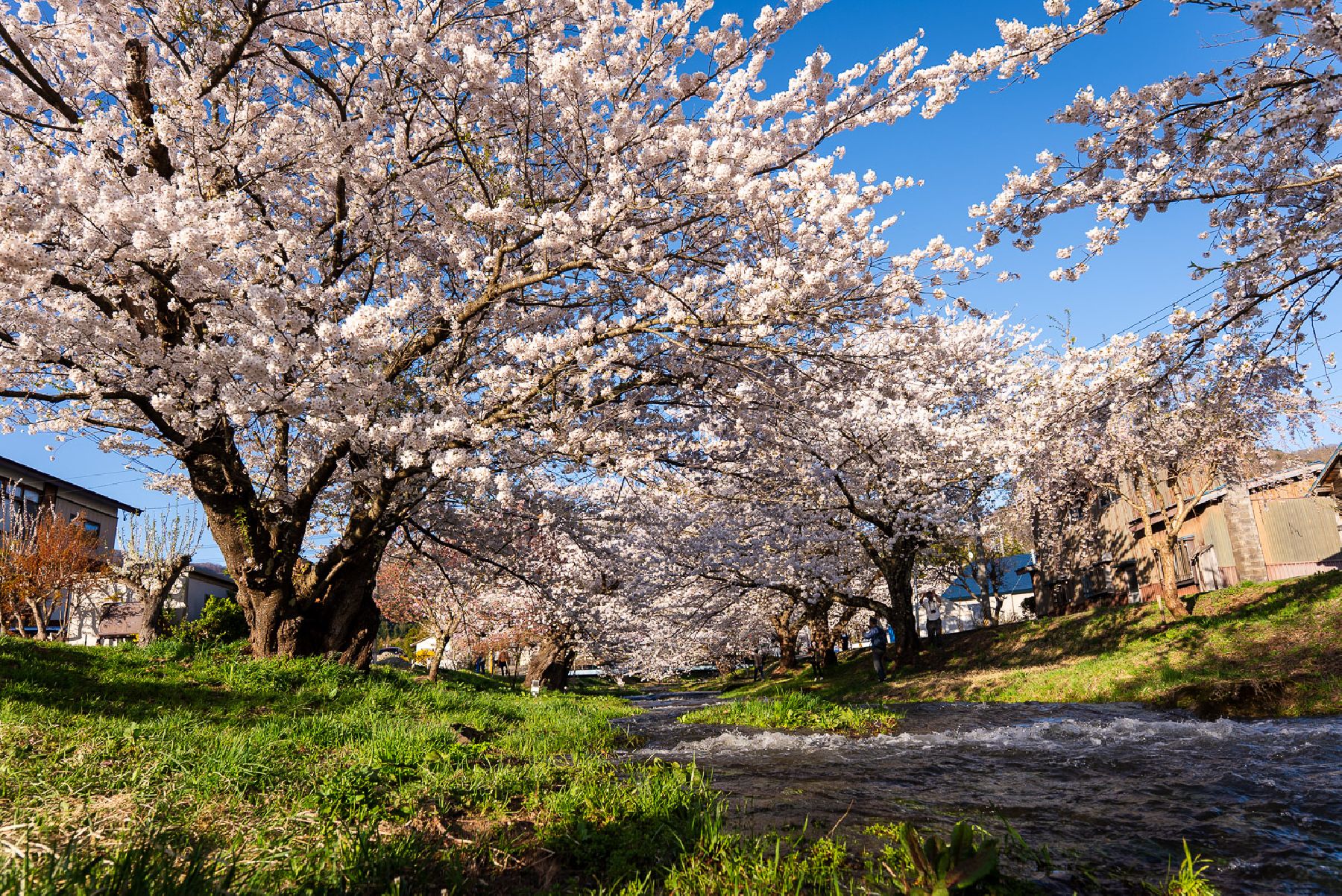
Only a one-minute walk north of Kawageta Station (JR Ban-etsu West Line) is this beautiful 1 km-path along the banks of the Kannonji-gawa River. In the spring the path transforms into a spectacular tunnel of Yoshino cherry trees and weeping cherry trees. Kannonji-gawa River is perhaps the most fantastic place to see cherry blossoms in Fukushima Prefecture; the calming river and the lovely petals falling like snow are a sight that can’t be beat. The lush green bank contrasting with the pale pink blossoms creates an unforgettable scene.

Altogether there are about 200 trees growing along the Kannonji-gawa River on both banks. Additionally, the river maintains its natural curves and bends as it hasn’t undergone any work to adapt its shape to the city surrounding it. It’s one of Fukushima’s most splendid and respected natural landscapes. Currently, the Kannonji-gawa River cherry trees rank number 11 of the best places to see cherry blossoms in the entire Tohoku region!

While enjoying the delicate blossoms and the sweet, fresh air, visitors to Kannonji-gawa River can also enjoy some of the tasty food from street vendors available only during the cherry blossom season. We’d really recommend a springtime picnic right on the river bank with various yatai (food stand) delicacies. Be sure to come back during the evening when the trees are illuminated, and the river transforms into a magical dreamscape.

Venue Details

Venue Details
Websitehttps://bandaisan.or.jp/ib/en/
Contact

Inawashiro Tourism Association

(+81) 242-62-2048

Best Season
  • Spring
Entrance FeeFree
Related infoBest time to see cherry blossoms: Late April
Access Details
AccessAlong the Kannonji-gawa River, Kawageta, Inawashiro Town, Yama District, Fukushima Pref. 969-2663
View directions
Getting there

By Car: 10 min from Inawashiro Bandaikogen I.C. off the Ban-etsu Expressway

By Train: 3 min walk from Kawageta Station (JR Ban-etsu West Line)

Nearby

The World Glassware Hall
Nature & Scenery

Oze National Park

Oze is home to a plethora of beautiful flowers. These include the Asian skunk cabbage that blossoms in the marshes as the snow melts, and the bright yellow of the Nikko Kisuge, which is reflected in the marshes just when the surrounding mountains become green. The nature of Oze is symbolized by its beautiful flowers, and together with the mountains, lakes, marshes, rivers, forests, and wildlife that lives in this region, create a stunning sight. Chozo Hirano opened up the area around 100 years ago, and because of the protection of its magnificent nature up until now, Oze has become a symbol of nature conservation in Japan. The beautiful nature of Oze presents a different face throughout the seasons, and all continue to charm us. Key points of the sightseeing spot/ recommended points for tours:  In order to both preserve the precious nature of Oze, and to be able to come face-to-face with its splendor, we recommend that you visit on weekdays, and take your time to encounter the nature of Oze. Oze has the Ozenuma Visitor Center and the Oze-Yamanohana Visitor Center as locations from which you can both appreciate Oze's nature, and learn about the environment. At the visitor center, you can learn from displays that explain in an easy-to-understand the formation of the nature in Oze, points to see, and the most up-to-date information about the natural environment. This lets you more fully enjoy the appeal of the nature of Oze.Visits are even more enjoyable when you know more; therefore we recommend visits with a guide who can tell you more about the nature and charm of Oze. We urge visitors to make use of the certified guides who have a wealth of knowledge about Oze's nature, culture, and history, and who can ensure your visit is safe.

The World Glassware Hall
Nature & Scenery

Natural Sparkling Water in Kaneyama Town

Kaneyama Town is a scenic, rural town surrounded by woods. One of the most famous things about Kaneyama Town is its well of naturally carbonated water. Such water is rarely found in Japan. Small bubbles are infused into the water, giving it a gentle and smooth taste. Locals and visitors take empty bottles to the well to fill and take back home. There is a pot at the well that can be used to collect water from the base of the well. Pulling up water from the bottom with a rope definitely makes for a fun and unique experience! Why don’t you try this natural sparkling water while enjoying the beautiful scenery in Kaneyama?

The World Glassware Hall
Nature & Scenery

Goshiki-numa Ponds

The Goshiki-numa ponds of Urabandai are a cluster of five volcanic lakes at the foot of Mt. Bandai. When Mt. Bandai erupted in 1888, Goshiki-numa - which translates as "Five-Colored Ponds - were formed.In actuality dozens of lakes were created due to the 1888 eruption, but the Goshiki-numa Ponds are the most famous. It was thanks to the eruption that the lakes each took on rich color; the various minerals found in each lake give them a unique color and create a mystical aura.The colors of the Goshiki-numa Ponds also change throughout the year depending on weather and time of day, a truly mysterious phenomenon. The lakes have become a popular tourist destination. The five main lakes are Bishamon, Aka, Ao, Benten, and Midoro, and their colors range from a lime green to deep turquoise to a topaz blue. A scenic walking route guides visitors around the ponds. At 3.6 km in length, this walking route - which will take you past many of the ethereal colors - takes about 70 minutes to complete.If you’d like a view of all five lakes at once, why not take the 4 km walking trail from Bishamon-numa (largest of the five lakes) up to nearby Lake Hibara. Alternatively, if hiking is not on your itinerary, enjoy a simple rowboat out on Bishamon-numa. It’s especially lovely in autumn as the color of the autumn leaves reflects on the deep green surface of the lake. In winter, there are even snowshoe trekking tours offered. The color of the lakes looks particularly vivid in winter, seeing as the minerals in some of the lakes stop them from freezing over, meaning you can see their colors contrasted with the white of the snow.Be sure to stop by the Urabandai Visitor Center, which is a large and well-equipped facility. You can find great information here about tours as well as the various geography, wildlife, and even the history of the area. It’s a great chance to learn more about the ecosystem that makes up the Goshiki-numa Ponds.

You might also like

Inawashiro Herb Garden
Nature & Scenery

Inawashiro Herb Garden

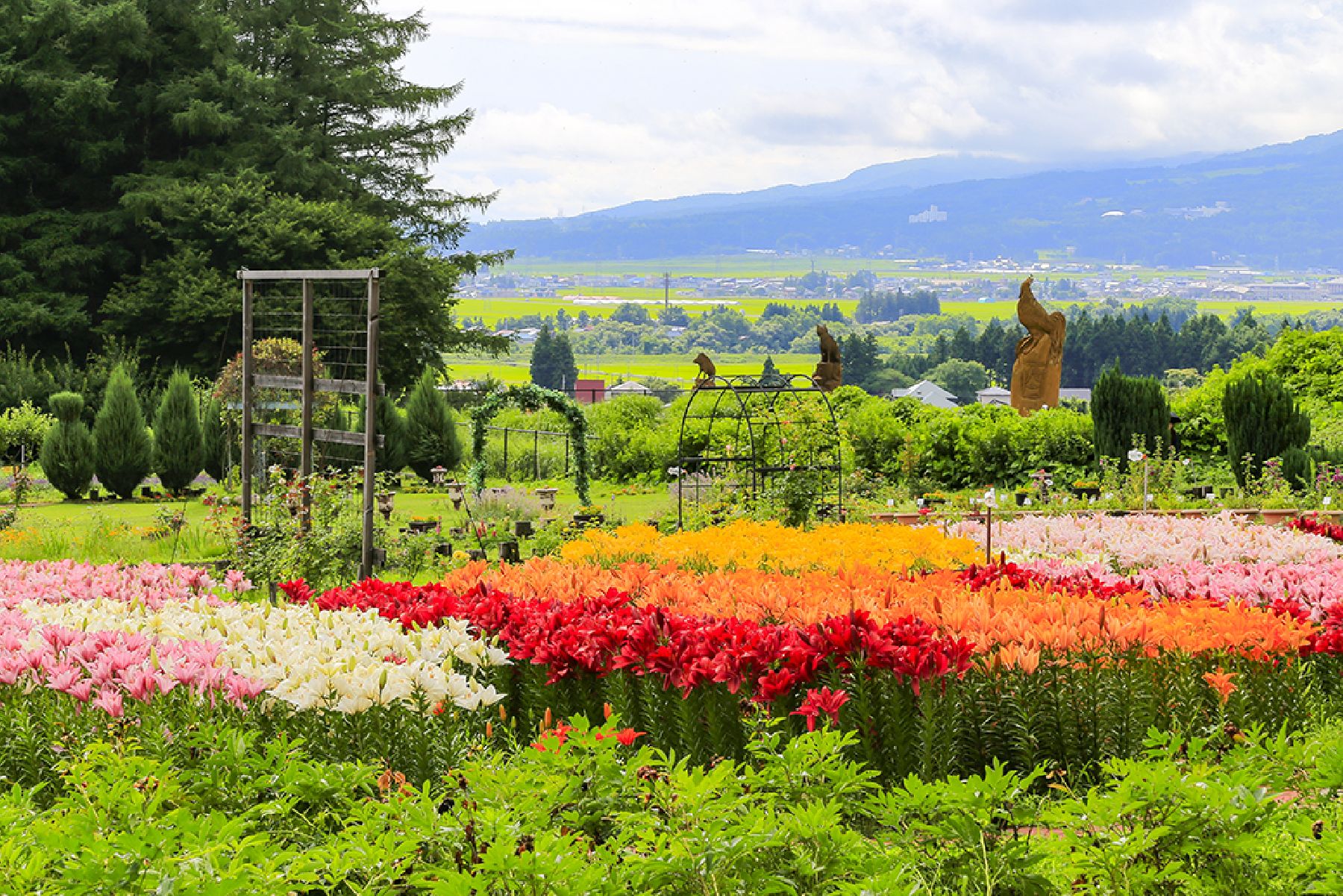
The breeze from the nearby Lake Inawashiro, seasonal flowers, and art displays of the Inawashiro Herb Garden await your visit!The outdoor garden area is around 100,000 square meters and is filled with various herbs, flowers, and plants that bloom at different times on the year, creating a unique visitor experience that changes with the seasons. The park has around 500 varieties or herbs, flowers, and plants including lavender, mint, chamomile, nanohana blossoms, poppies, sunflowers, cosmos, and kochia! There is an indoor greenhouse area, so, even on rainy days, visitors have plenty of greenery and flowers to see! In addition to the herbs, flowers, and plants you will also find seasonal decorations and original art displays that are created and updated for guests to enjoy.The outdoor garden area of the Inawashiro Herb Garden also features 5 m-tall wooden statues carved by a Canadian artist, Glen Greenside. The 12 statues, one for each zodiac sign, were carved over the course of twelve years as part of a now-discontinued annual chainsaw festival that took place at the garden.Inside, at the shop, visitors can find products and snacks that are made from various herbs and flowers.
Goshiki-numa Ponds
Nature & Scenery

Goshiki-numa Ponds

The Goshiki-numa ponds of Urabandai are a cluster of five volcanic lakes at the foot of Mt. Bandai. When Mt. Bandai erupted in 1888, Goshiki-numa - which translates as "Five-Colored Ponds - were formed.In actuality dozens of lakes were created due to the 1888 eruption, but the Goshiki-numa Ponds are the most famous. It was thanks to the eruption that the lakes each took on rich color; the various minerals found in each lake give them a unique color and create a mystical aura.The colors of the Goshiki-numa Ponds also change throughout the year depending on weather and time of day, a truly mysterious phenomenon. The lakes have become a popular tourist destination. The five main lakes are Bishamon, Aka, Ao, Benten, and Midoro, and their colors range from a lime green to deep turquoise to a topaz blue. A scenic walking route guides visitors around the ponds. At 3.6 km in length, this walking route - which will take you past many of the ethereal colors - takes about 70 minutes to complete.If you’d like a view of all five lakes at once, why not take the 4 km walking trail from Bishamon-numa (largest of the five lakes) up to nearby Lake Hibara. Alternatively, if hiking is not on your itinerary, enjoy a simple rowboat out on Bishamon-numa. It’s especially lovely in autumn as the color of the autumn leaves reflects on the deep green surface of the lake. In winter, there are even snowshoe trekking tours offered. The color of the lakes looks particularly vivid in winter, seeing as the minerals in some of the lakes stop them from freezing over, meaning you can see their colors contrasted with the white of the snow.Be sure to stop by the Urabandai Visitor Center, which is a large and well-equipped facility. You can find great information here about tours as well as the various geography, wildlife, and even the history of the area. It’s a great chance to learn more about the ecosystem that makes up the Goshiki-numa Ponds.

Top