Iizaka Kenka Matsuri (Iizaka Fighting Festival)

Iizaka Kenka Matsuri (Iizaka Fighting Festival)

The 2025 festival took place from Friday 3rd to Sunday 5th October, 2025. The main event, featuring the clashing of the stalls, took place on the Saturday 4th, starting around 20:30, at Hachiman Shrine in Iizaka Onsen.


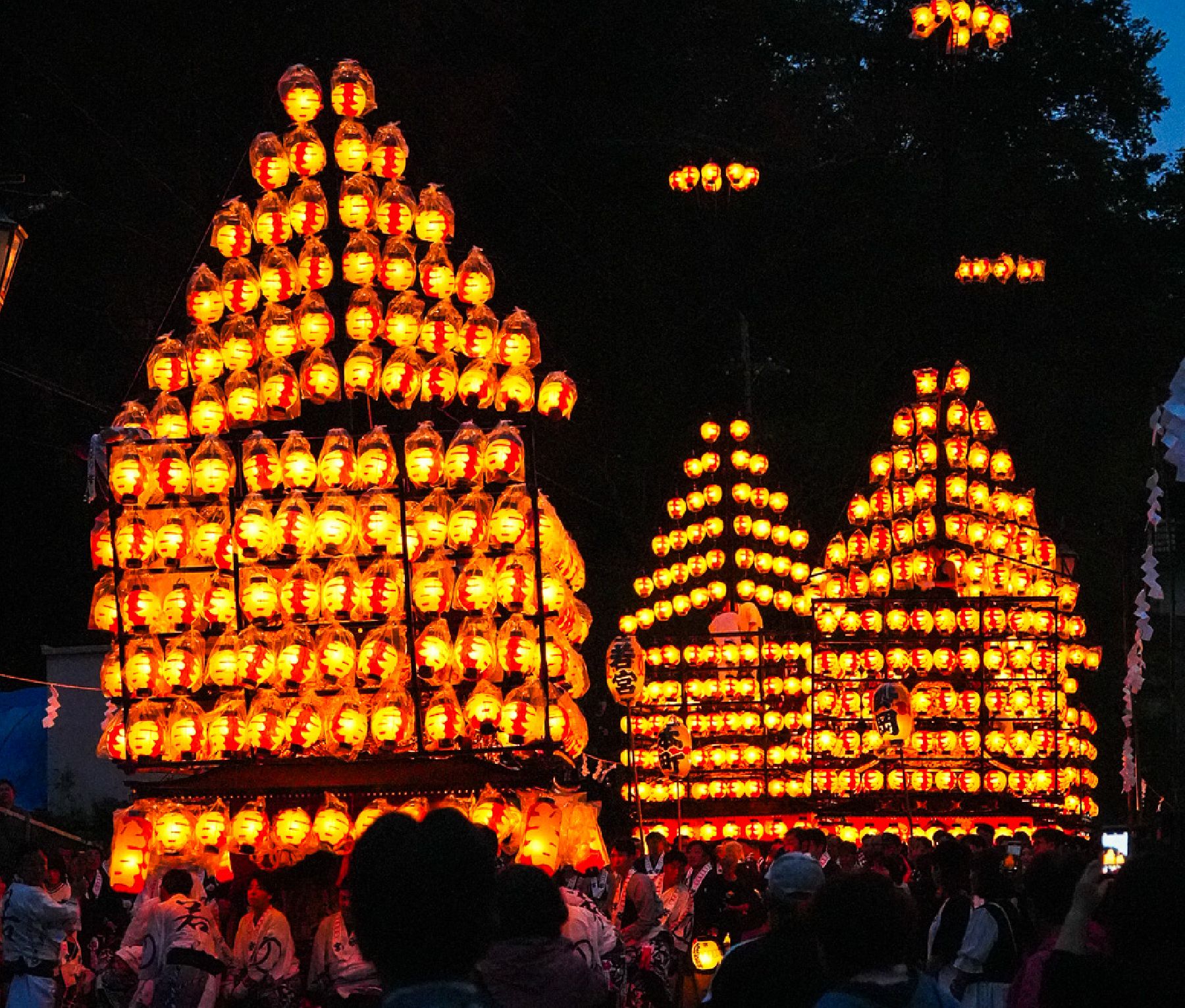
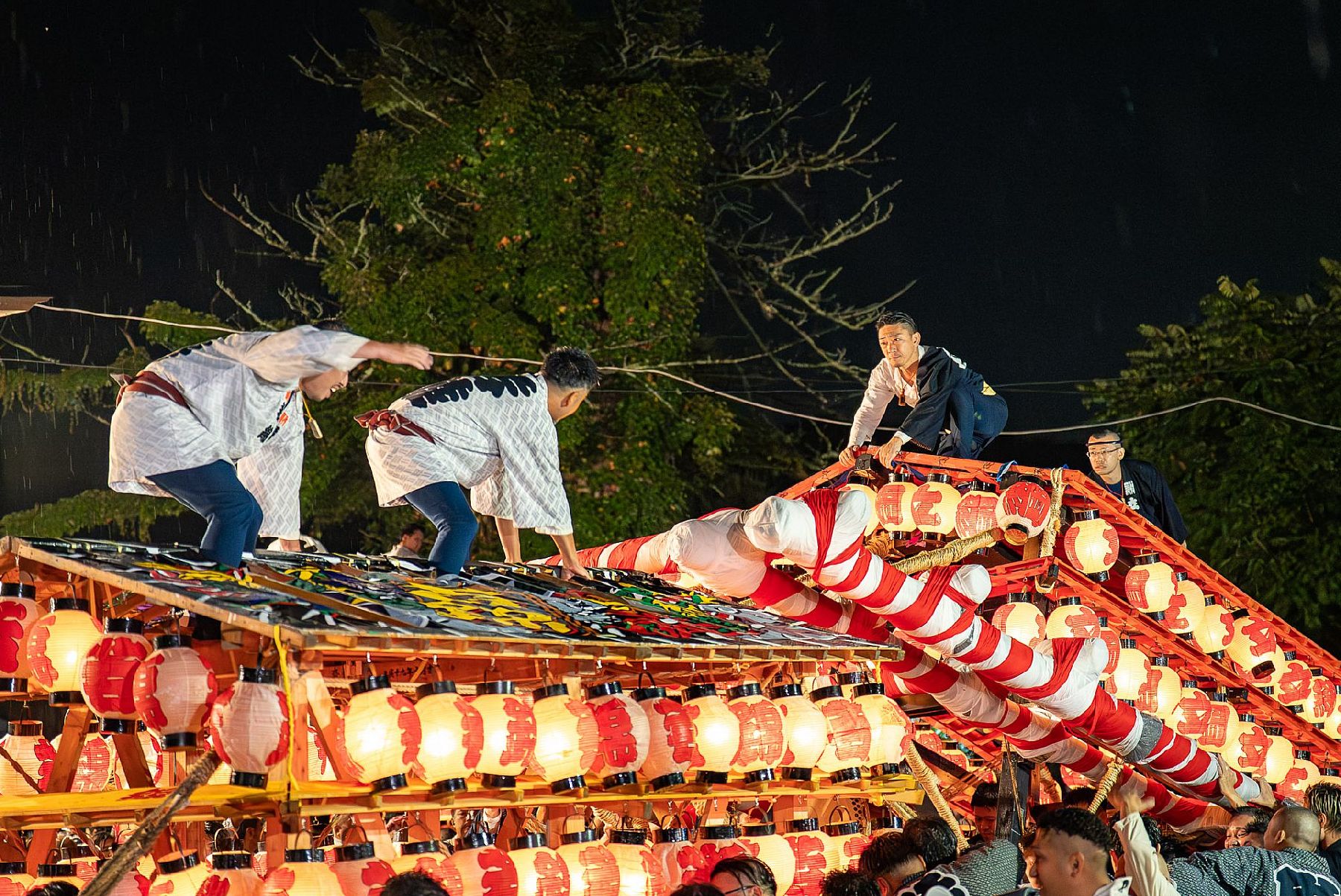
One of the three major fighting festivals in Japan, the Iizaka Fighting Festival has a tradition three hundred years in the making. It's said that Iizaka's annual harvest festival was beset by young men bashing floats against one another to prolong the festivities, and over time this became a core part of the event. This festival is so vibrant that throughout the town you can hear the beat of Japanese drums like an earthquake as huge floats crash together in battle. Hachiman Shrine becomes the main stage for the festival, after the floats are paraded around the streets.

The main day of the festival, in which the floats clash in front of the shrine, takes place on the Saturday, and is the only day to see the main showpiece of the festival. Although the action starts at 8.30pm, many people choose to go to the shrine much earlier, since the shrine grounds get very busy once the floats enter.

Venue Details

Venue Details
Websitehttps://iizaka.info/event-schedule/
Contact

Fukushima City Tourism & Convention Association

(+81) 24-563-5554

Best Season
  • Autumn
Entrance FeeFree
Related infoHeld every year on the first Friday, Saturday, and Sunday of October.
*Saturday is the only day during the festival when you can see the floats crashing into each other.
Access Details
AccessHachiman Shrine, 1 Yawata, Iizaka-machi, Fukushima City, Fukushima Pref. 962-0866
View directions
Getting there

By Train: Hachiman Shrine is a short walk from Iizaka Onsen Station on the Fukushima Kotsu Iizaka Line.

Nearby

The World Glassware Hall
Outdoor Activities

Ebisu Circuit

Ebisu Circuit is a multi-course motorsport facility in the hills above Nihonmatsu City. Rather than a single racetrack, it is a collection of separate courses built across a mountainside, connected by access roads and surrounded by forest. It was developed by Nobushige Kumakubo, a professional drifter who wanted a place dedicated to practice and grassroots driving. Over time, it became closely associated with drifting in particular, both domestically and internationally.The complex is divided into several courses, each with their own unique style and character. Kita (North Course) is one of the busiest areas, with cars running along a back section that brings car speeding past the spectator wall. Nishi (West Course), traditionally associated with grip driving, includes a short layout well-known for long drift trains.Higashi (East Course), usually a grip circuit, is opened for drifting during festival periods and also houses the main circuit office. The Touge (mountain pass) course winds through a narrower hilly section with tighter bends and noticeable elevation changes.Ebisu has also become a destination for overseas drivers. Many travel specifically to experience the different course layouts, enjoy the informal practice culture and chat with other drift enthusiasts. It is common to see privately owned cars ranging from lightly modified street builds to dedicated drift machines. The atmosphere during regular days is focused on driving rather than spectacle, with participants rotating through sessions and making adjustments between runs.Three times a year, the circuit hosts the Ebisu Drift Matsuri. The festival, typically held in spring, summer, and autumn, opens multiple courses for extended sessions over several days. Drivers move between tracks, often running late into the evening, and tandem drifting is a big attraction. Unlike formal competitions, the emphasis is on participation and meeting fellow drivers. For many visitors, the festival represents the most concentrated expression of Ebisu’s identity: a large group of drivers sharing the same mountain, rotating through its varied layouts, and focusing almost entirely on drifting. Learn more about the festival with our total guide.For visitors looking to experience drifting themselves, the Drift Taxi experience lets you ride as a passenger in a special drifting car while a professional driver speeds around the circuit. Booking and more information here.

The World Glassware Hall
Cultural Experiences

Design Your Own Shirakawa Daruma

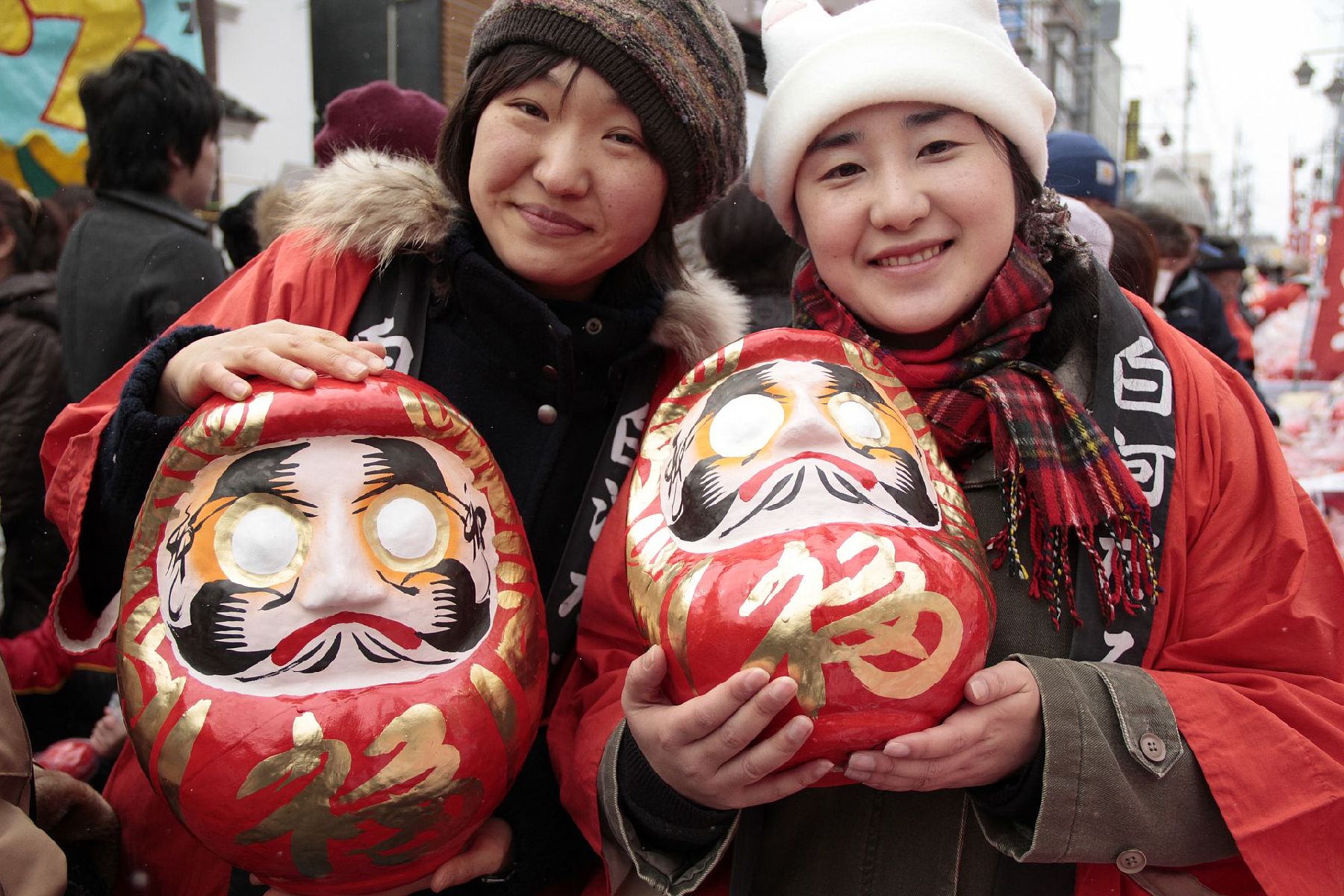
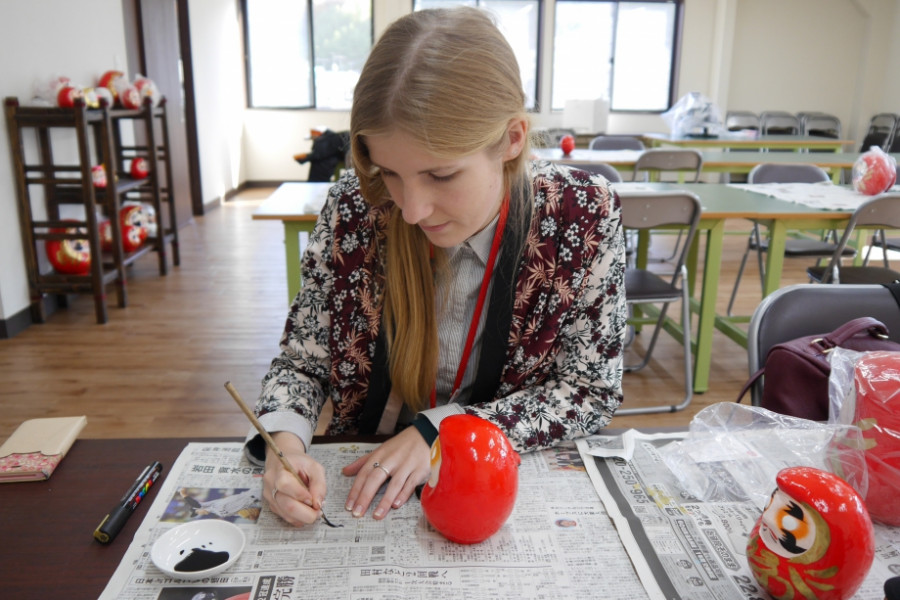
There are records of Shirakawa Daruma (Japanese traditional dolls) being sold as far back as the feudal reign of the Niwa Domain in 1627. Current Shirakawa Daruma are known as “Shirakawa Tsurugame Shochikubai Daruma.” The faces of these dolls are painted to incorporate various animals and plants, with the eyebrows representing cranes, the mustache representing a turtle, the ears representing pines and plum trees, and the beard representing bamboo or pine trees. All of these images are thought to bring good luck. The daruma is known to be a very classical, lucky talisman, started by Matsudaira Sadanobu, the lord of Shirakawa, when he hired the renowned painter Tani Buncho to paint the now famous face on the daruma doll. Once every year a large Shirakawa Daruma Market is held to celebrate and sell the beloved daruma dolls. You can paint your own daruma at the two daruma workshops in town!

The World Glassware Hall
Cultural Experiences

Handmade Japanese Washi Paper Craft Experience

Kami-Kawasaki Washi paper has a history of over 1,000 years. It was given the name "Kami-Kawasaki Washi" because of its origin in Nihonmatsu City's Kami-Kawasaki district. Since the name of districts changes with the years, during Japan's Heian Period, it was known as "Michinoku-gami "("paper made in Michinoku").Kami-Kawasaki Washi paper has been used regularly as shoji paper (paper for sliding doors). Many people are charmed by the warmth and simple beauty of Kami-Kawasaki Washi. Paper mulberry, a type of tree used for making the paper, is grown locally. The traditional production method, from producing the raw ingredients to making the paper, is continued in Nihonmatsu City even today.Sticking to traditional production methods ensures that the finished paper has a luxuriant warmth and refinement, and is strong and durable. At present, a variety of products, such as dyed paper, folkcraft paper, and paper crafts, are produced, all of which maintain the paper's original texture. Although the demand for shoji paper is declining, there is still demand for products such as wallpaper and lamp shades. In this way, Kami-Kawasaki Washi remains important to us everyday.  At the Washi Traditional Crafts Gallery - located at Michi-no-Eki Adachi (Roadside Station) - visitors can make washi postcards, paper fans, and other items.

You might also like

Cosquín en Japón
Events & Festivals

Cosquín en Japón

Cosquín en Japón is an Argentinian and Latin American folk music festival held yearly in Kawamata town in central Fukushima Prefecture.People who love Latin American folk culture, including musicians, singers, and enthusiasts, come together to enjoy the music and dance performances at the festival. The event is open to both amateur and professional performers, and, over the years, the number of participating groups has increased from 13 in its first year to more than 100 in 2023.The festival, held since 1975, takes place at the Kawamata Town Central Community Center (川俣町中央公民館に会場) over two or three days. It is organized by Norte Japón (North Japan Latin American Music Federation).The festival name means ‘Cosquín in Japan’ in Spanish, and pays tribute to Argentina's most important National Folklore Festival, held each year in the town of Cosquín in the province of Córdoba.A variety of rhythms and artistic styles from Latin America are represented at the festival. Its main focus is Argentinian and Andean folk music, which is played with instruments such as the quena, charango, acoustic guitar, and bombo.You can attend the festival for free without needing to register beforehand.

Taimatsu Akashi (Torch Festival)
Events & Festivals

Taimatsu Akashi (Torch Festival)

With a history stretching back over 400 years, the Taimatsu Akashi torch festival in Sukagawa City is one of the three major fire festivals in Japan. As the night grows darker and the bonfires flare brightly here and there around the venue, groups of local junior high and senior high school students march through the town carrying 30 8-meter-long wooden torches called Hon-taimatsu, which they created by themselves, followed by a group of young men carrying the huge wooden torch called the Dai-taimatsu (10 meters long and weighing about 3 tons), and a group of women carrying a smaller wooden torch called the Hime-taimatsu (6 meters long and weighing 1 ton). These torches are carried to the top of Mt. Gorozan.There is also a wooden frame depicting Sukagawa Castle and a group of samurai warriors. As the drummers from Oushu Sukagawa Taimatsu-Daiko Hozonkai powerfully beat their Taimatsu-Daiko drums, the torches and the wooden frame are lit with a sacred fire carried up by a group of runners from Nikaido Shrine. The whole mountain looks as if it is on fire. The combination of fire and the beating of the drums is reminiscent of the days in the Warring States period. Local students form chanting squads to cheer on their torch as it burns - this main section with the flaming torches takes around an hour.In recent years, this traditional event has become well known as a participatory festival, allowing neighborhood associations, local elementary school pupils, and tourists to join the parade to Mt. Gorozan, each carrying a thin torchwood called a Sho-taimatsu (10 cm in diameter).2024 ROUTE MAP IN ENGLISHThe schedule for the 2024 festival was as follows:11:00 Midorigaoka Park Grass SquareFood and drink corner 13:00-16:00     tetteSmall torch making cornerNote: After making your torch, you can join the small torch procession at 17.15. 13:00-16:00     Taimatsu Street Sukagawa Shinkin Bank Head Office (Parking Lot)Commemorative photo with warriors in armorFree Sengoku Nabe (pork soup) while stocks lastSale of agricultural productsShizuoka City Specialty Products CornerTaimatsu Akashi Historic Site and Battlefield Walk Meeting Point (15:15)Karate demonstration 13:30-14:10     In front of Yoshida Clinic on Taimatsu StreetTorch presentation 14:00   Torch Street Miyasakicho areaSukagawa First Junior High School torch parade start 17:30-17:45     Nikaido ShrineSacred fire offering ceremony (receiving the sacred fire to light the torch) 17:00 (scheduled)       Myoken Children's ParkLocal organisations torch procession starts 17:15-18:00     Miharashibashi Parking Lot  General torch procession startsPlease participate with small torches made at the small torch crafting corner.Small torches will also be available for purchase (500 yen each, limited to 100) 18:00-19:45     Mt. Goro Special StageTaiko drum performances 18:30   Mt. Goro main festival areaThe large torch and 20 main torches are lit in sequence.

Usokae Festival
Events & Festivals

Usokae Festival

At Usokae Festival, held in Iizaka Onsen Town, visitors buy lucky, hand-carved, wooden birds called ‘Usokae’. ‘Usokae’ translates as ‘changing lies’. Visitors who buy an Usokae bird must think of a ‘lie’ – i.e. something they don’t want to happen – which will in turn be changed to good luck to make sure that thing doesn’t occur by the birds by the end of the year. For example, you could think “I won’t pass my school exam” when you buy the bird, and by the end of the year, the bird will help you pass it! This is a unique local festival, and the hand-carved Usokae birds make very charming gifts too!

Ebisu Drift Matsuri (Ebisu Drift Festival)
Events & Festivals

Ebisu Drift Matsuri (Ebisu Drift Festival)

See our total guide to the festival for details on ticket prices, things to do in the area and more.The Ebisu Circuit is a famous car racing track in Nihonmatsu, containing several drift schools. Three times a year, it holds the Ebisu Drift Matsuri (Ebisu Drift Festival), a thrilling event that gathers car drifting fans from across Japan and abroad.The festival usually goes from Saturday morning to Sunday afternoon, during which participants can drift all day and night in the designated courses for a set fee. There are typically three Drift Festivals a year: Spring Drift Festival (ドリフト春祭り): Usually held in April or May Summer Drift Festival (ドリフト夏祭り): Usually held in August Autumn Drift Festival (ドリフト秋祭り): Usually held in NovemberEbisu Drift Matsuri in 2026 (dates may be subject to change): Spring: May 9th & 10th (Sat/Sun) Summer: August 22nd & 23rd (Sat/Sun) Autumn: November 14th & 15th (Sat/Sun)Participating in the Drift Festival is a perfect opportunity to get the most out of a visit to the Ebisu Circuit. For instance, using the racing courses at the Circuit would normally require a reservation, but, during the event, participants are free to use the course of their liking between the available options. Because of that, cars run right next to each other, making the already exciting prospect of drifting even more adrenaline-packed!To participate, you can register on the website before the event. Even if you cannot drive, you can make your way there to watch the incredible maneuvers of drifters as they screech their way through the courses. A big allure of the festival is the atmosphere of being among drivers and car enthusiasts.For updated information, please refer to the official site of the Ebisu Circuit (in Japanese).For things to do in Nihonmatsu while you're in town, check our article about the area.

Top