Ageishi no Fudozakura (Fudo Cherry Blossoms of Ageishi)

Ageishi no Fudozakura (Fudo Cherry Blossoms of Ageishi)

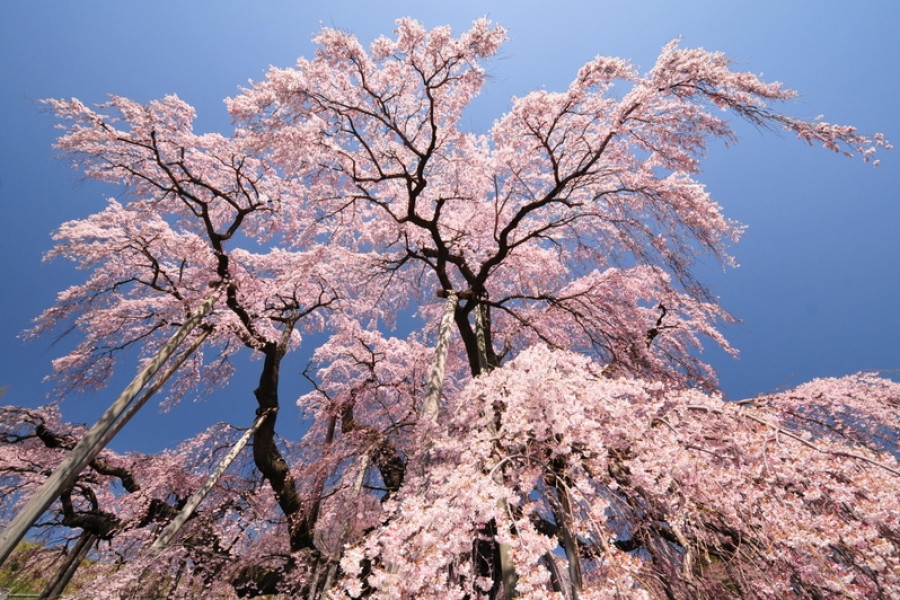
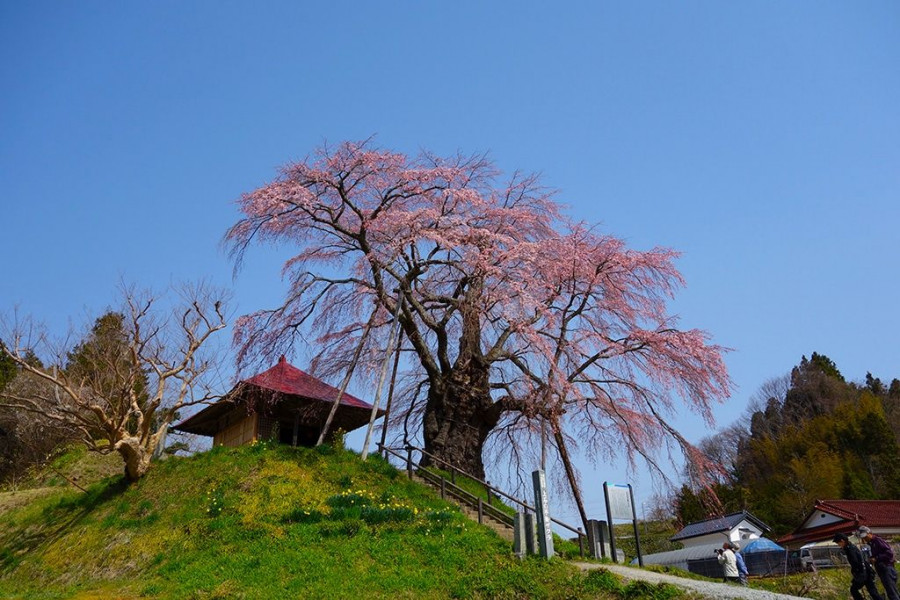
This tree is located on the grounds of a temple dedicated to the Buddhist deity Acala (known as Fudo Myoo in Japan), and is thus known locally as the Fudo Cherry Blossoms. The tree is about 350 years old and is considered to be a descendant of the Miharu Takizakura, a famous cherry tree located in nearby Miharu Town.

Photography tip: Angle your camera so you capture both the cherry blossoms and the yellow canola flowers.

Venue Details

Venue Details
Websitehttps://www.kanko-koriyama.gr.jp/tourism/detail5-1-418.html(Automated translation available)
Contact

Koriyama City Tourism Association

(+81) 24‐924-2621

Best Season
  • Spring
ParkingAvailable
Entrance FeeFree
Related infoBest viewing period: From mid-April to late April
Access Details
AccessTate, Ageishi, Nakata-machi, Koriyama City, Fukushima Prefecture.
View directions
Getting there

By Car: 25 min from Koriyama-Higashi I.C. exit off the Ban-etsu Expressway.

By Train: From Koriyama Station (JR Tohoku Main Line / Shinkansen), take the bus bound for Yanagibashi or Ono to Takakuradate bus stop, and then walk for 30 min.

Nearby

The World Glassware Hall
Nature & Scenery

Miharu Takizakura

Miharu is a small town in central Fukushima Prefecture. The town’s name means “three springs” and it is easy to see how it got such a name. With cherry, plum, and peach trees blossoming in spectacular displays every spring, it is almost as if spring has tripled! But the most famous of the trees in Miharu is the Miharu Takizakura tree, which is a nationally recognized Natural Monument.Over ten centuries old, the beautiful Miharu Takizakura is a flowering cherry tree that spreads out in all directions and makes for a breathtaking vista. The cascading blankets of blossoms are how this tree got the name takizakura, or “waterfall cherry tree.” It is even one of the “three great cherry trees” of Japan (along with Usuzumizakura in Gifu and the Jindaizakura in Yamanashi Prefecture).Miharu Takizakura sits in a sakura hollow in order to protect it from the elements while providing excellent drainage. The heavy boughs of the tree are supported by wooden beams and lend to its elegant form. The Miharu Takizakura begins blooming from mid-April. During the day the sight is whimsical, but visit in the evening and you’ll be treated to an almost haunting beauty as the tree is illuminated.Aside from this huge cherry tree (over 12 meters tall and 18 to 22 meters in spread), the area is also blessed with various wildflowers, including cherry and rapeseed flowers. But, of course, the Miharu Takizakura is what the annual 200,000 visitors are there to see. The view from the base of the sakura is considered to be the most beautiful and the Miharu Takizakura often ranks as the best sakura tree in all of Japan.

The World Glassware Hall
Nature & Scenery

Bandai-Azuma Lake Line

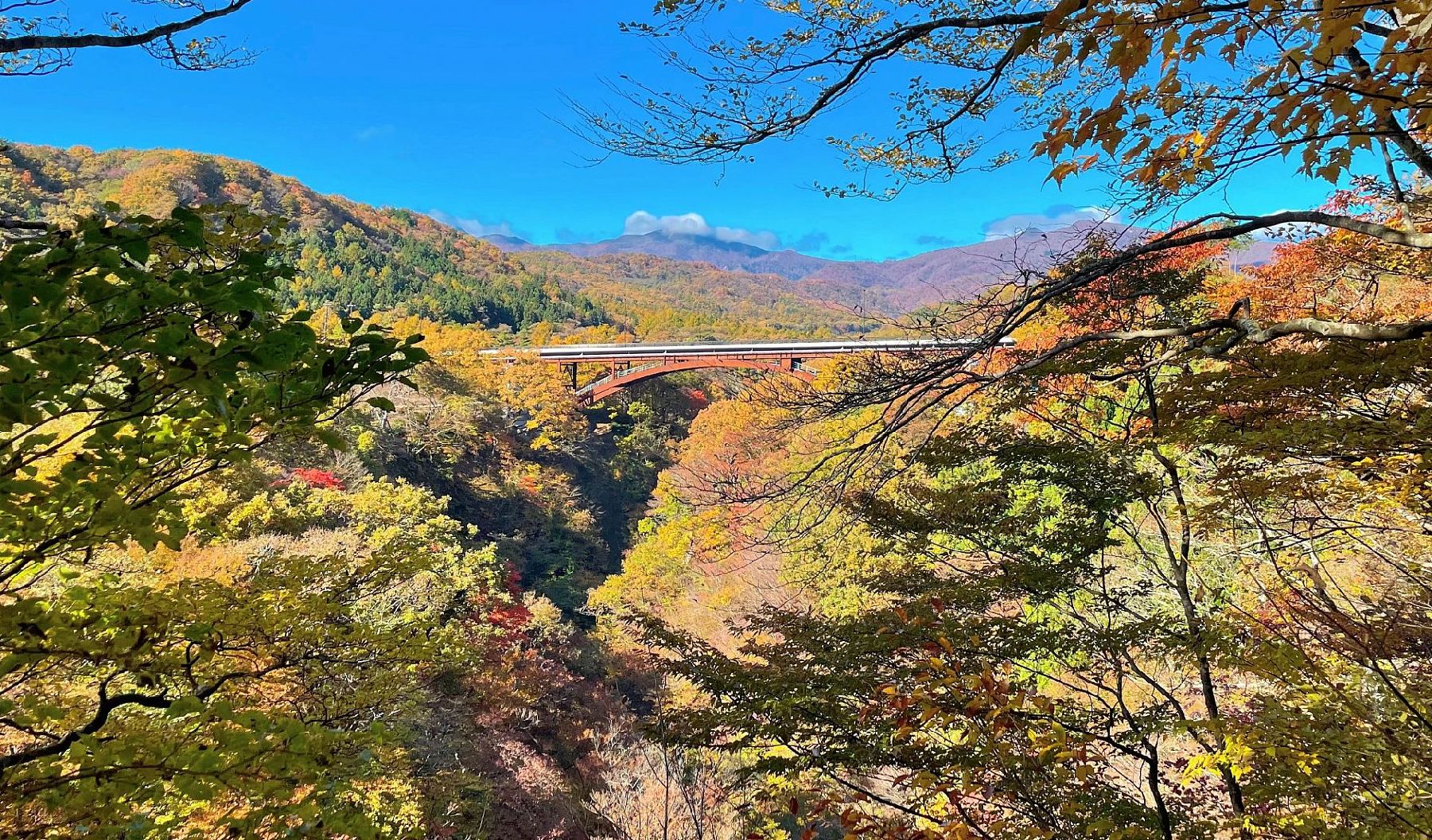
Bandai-Azuma Lake Line is a sightseeing road that runs for 13.1 km, connecting Inawashiro Town and Kitashiobara Village. Outstanding backdrops of hundreds of lakes, including Lake Akimoto, Lake Onogawa, and Lake Hibara can be seen from along the road. The Nakatsugawa Valley, which lies half-way along the route, offers a wonderful view of a combination of rock surfaces polished by strong water currents and woodland greenery. A rest-house area with washrooms stands near the valley and visitors can enjoy trekking along the walking trails from the season of fresh green leaves through to the end of the season of red and yellow foliage. The valley is particularly famous as one of the most scenic foliage-viewing spots in Japan with many photographers visiting from both inside and outside of the prefecture. Enjoy a beautiful drive through this landscape when the new leaves of spring are fresh and green or when the autumn beauty of the valley glistens with red and yellow foliage of beeches, buckeyes, and maples.

You might also like

Mogi Station
Nature & Scenery

Mogi Station

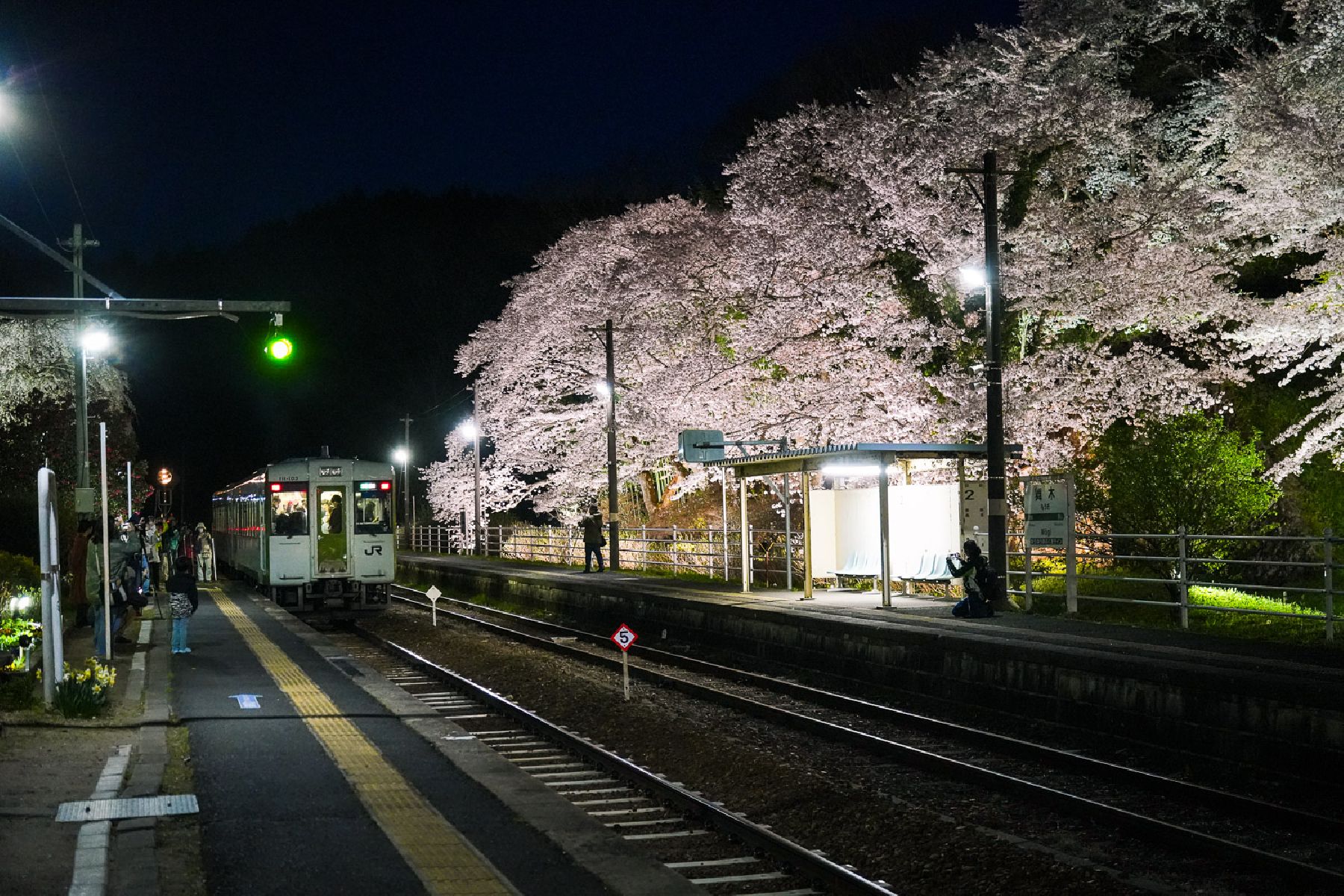
Mogi Station is a small, unassuming train stop that transforms drastically in spring. Every year around mid-April, the bank of over 30 cherry trees south of the station bursts into full bloom, turning the area into a picturesque array of pink, white and blue. The blossoms are illuminated at night once darkness falls, drawing visitors and photographers from across the region.Only the final train of the day, arriving at 21:30 from the direction of Miharu, pulls into platform two, with the background of the blooming cherry trees. For many photographers and train enthusiasts, this is the shot they visit to get. Despite its modest size, Mogi Station has quietly earned its place as one of the most photogenic, if lesser-known, hanami spots in the region.

Mt. Shinobu (Shinobuyama)
Nature & Scenery

Mt. Shinobu (Shinobuyama)

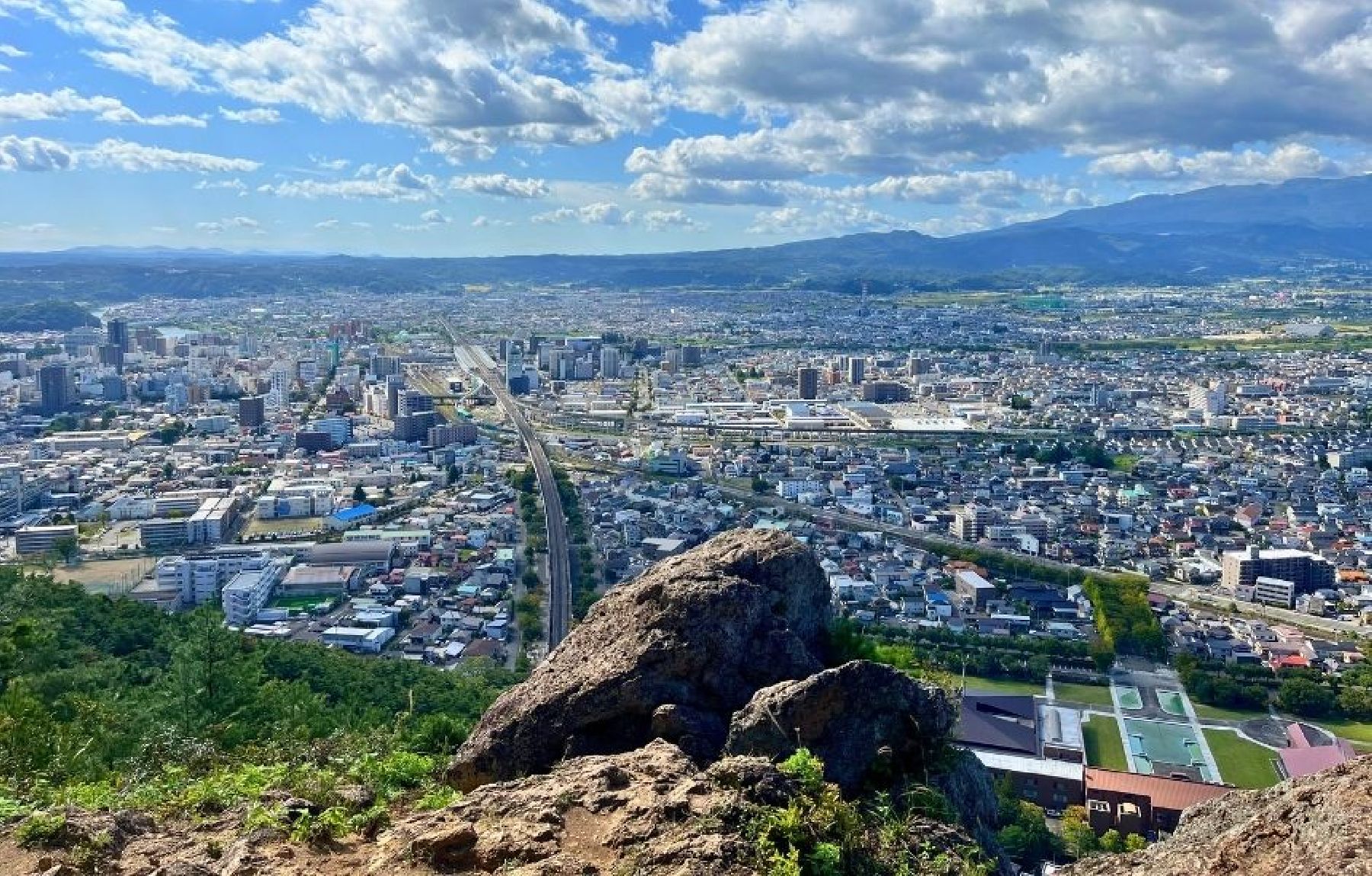
Mt. Shinobu, with a total altitude of 275 meters, is one of the most recognisable landmarks of Fukushima City. It is estimated that it formed about 500,000 years ago when the Fukushima basin caved in and Mt. Shinobu became an isolated hill, which later became the object of multiple local poems, stories, and legends.Visitors can hike up Mt. Shinobu for unobstructed views of the cityscape. Hikers of all levels can try climbing Mt. Shinobu, as its peak can be reached in a few hours and many parts of it can be reached by car.Each year in April, there is a spring festival with cherry blossom night illuminations that attract hordes of visitors. Summer and autumn are also great times to follow the hiking routes on Mt. Shinobu.A spiritual power spot for locals, Haguro Shrine can be found at the top of the central peak, where there is also a giant straw sandal that weighs about 2 tons and is 12 meters in length and is believed to be among the biggest in Japan. The sandal is paraded along Fukushima City each year in August during the Waraji Festival. Also in Mt. Shinobu, you can find the Shinobuyama Neko Inari Jinja (‘cat shrine’), and the Gokoku Shrine, along with several parks.For stunning views of the city, including the Shinkansen bullet train tracks, head to the Karasugasaki Observation Deck on the western side. Located nearby are the Fukushima Prefectural Museum of Art and the Fukushima Prefectural Library.
Bandai-Azuma Skyline
Nature & Scenery

Bandai-Azuma Skyline

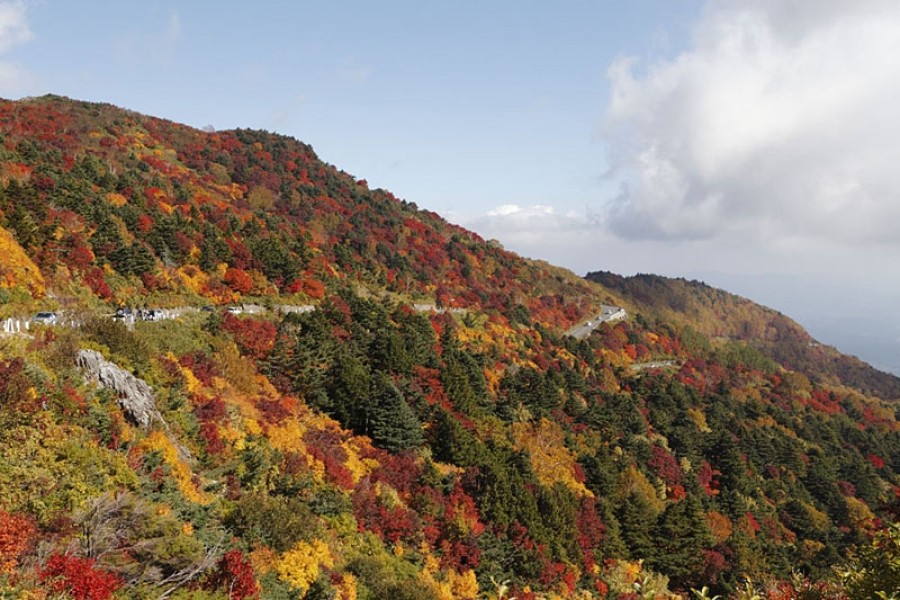
There is a special bus running from Fukushima Station to the Jododaira plateau while the mountain is open. Please visit the Jododaira Sky Access page for more details.This sightseeing road that runs from Fukushima City's Takayu Onsen to the Tsuchiyu Pass, commanding panoramic views of the surrounding landscape.The spectacular views that stretch out at an average altitude of 1,350 meters attract visitors time and time again, and Bandai-Azuma Skyline has been selected as one of the 100 Best Roads in Japan.In spring, tourists can enjoy flower viewing while at the same time taking in the otherworldly winter scenery of the "Snow Corridor".In summer, the Nemoto Shakunage (Rhododendron brachycarpum), a species of alpine rose, and other alpine plants display their colorful flowers and fresh, brilliant green leaves. During autumn, the drive warms as roads become enclosed by fiery seasonal leaves.There are also many hot springs in the vicinity of the Skyline where visitors can enjoy a bath and relax stiff muscles while out on a daytrip.The roadway passes next to the crater of Mt. Azuma-Kofuji. Visitors can easily park their car at the nearby guest center and enjoy a short hike up to the crater’s rim.The Bandai-Azuma Skyline Roadway has been selected as one of the top 100 roads in Japan, and unlike many others, this one is free to use. There are rest stops along the way for the hungry traveler; the most popular is Jododaira, as it’s home to a rest house and an observatory.Be sure to plan ahead though, from mid-November to early April the roadway is closed due to heavy winter snowfall.

Fujita River Cherry Blossoms
Nature & Scenery

Fujita River Cherry Blossoms

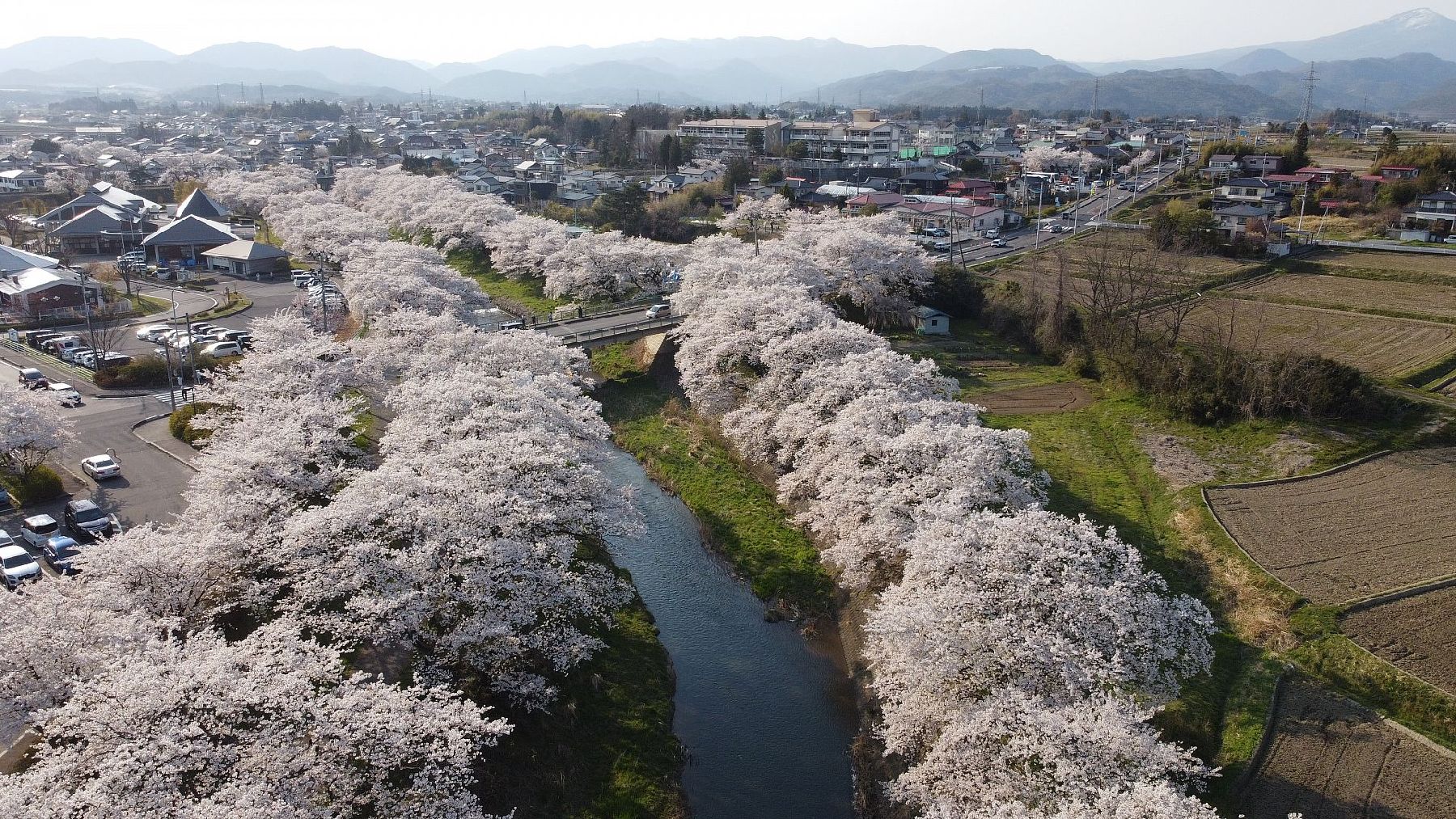
Somei Yoshino cherry blossom trees bloom along both sides of the Fujita River for three kilometers, centering around Horinouchi Bridge near Kikuta Station. The long stretch of leafy foliage features several banks suitable for picnics under the cherry blossoms, which bloom typically in mid-April. (For reference: though blooming periods can change year-to-year, the 2025 blossoms were at full bloom around 15th April.)The riverside is served by nearby Kikuta Station on the Ban-Etsu Line, or there are large car parks near the river walk.

Top