Yunokami Onsen Station

Yunokami Onsen Station

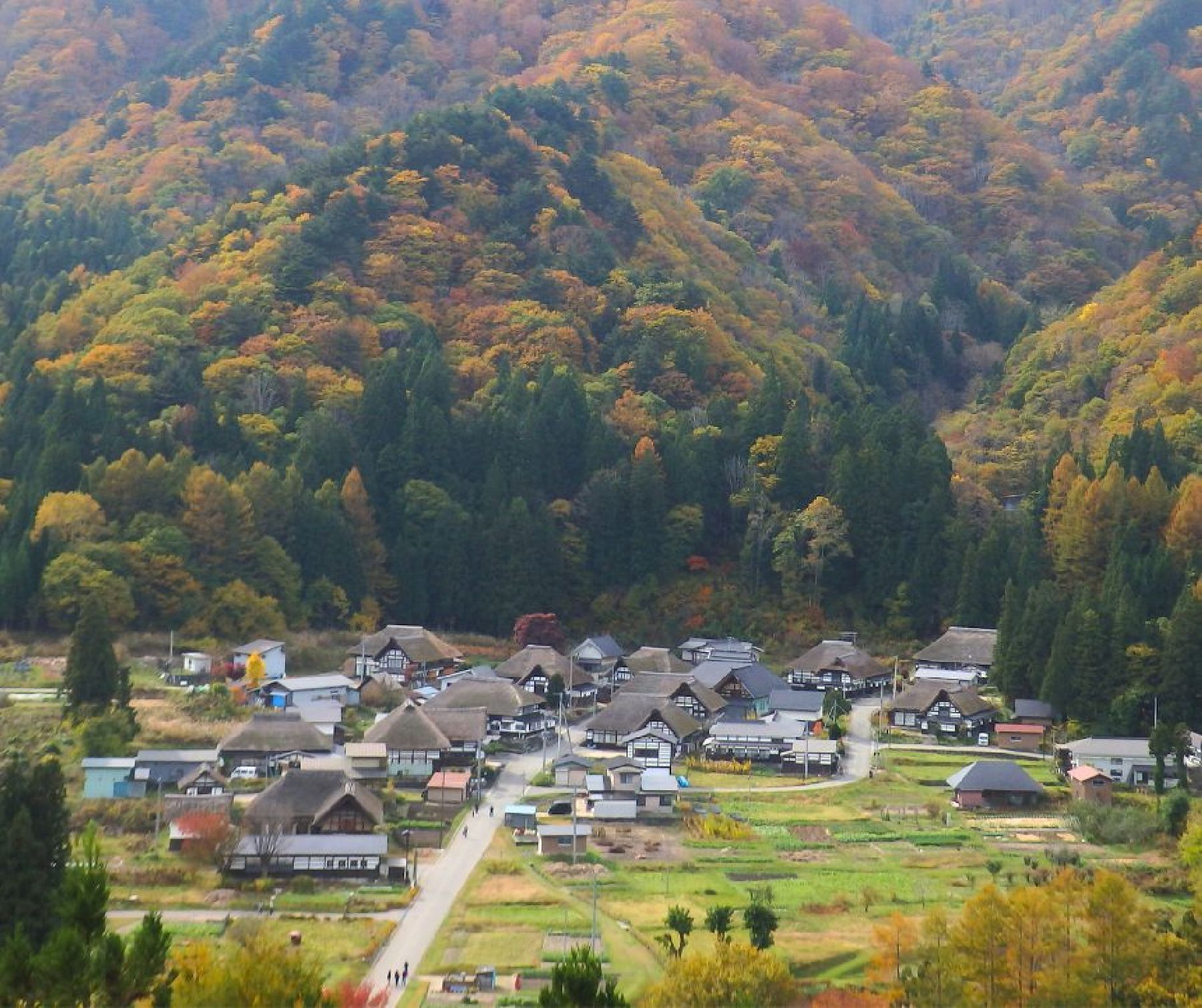
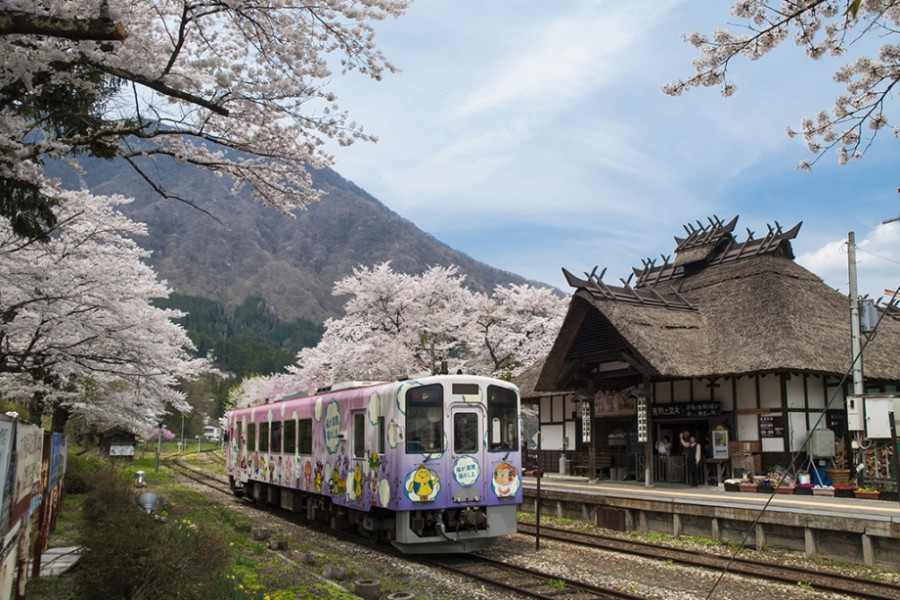
Yunokami Onsen Station is one of only 2 train stations with a thatched roof in Japan. The station is known for its great location as a cherry blossom viewing spot with a unique atmosphere. There is an irori (sunken fireplace) where tourists can warm themselves up in winter, and a foot bath sourced from natural hot spring water just next to the station. Yunokami Onsen town is a popular place to stay the night for those visiting destinations such as Ouchi-juku and To-no-hetsuri are located in the same area.

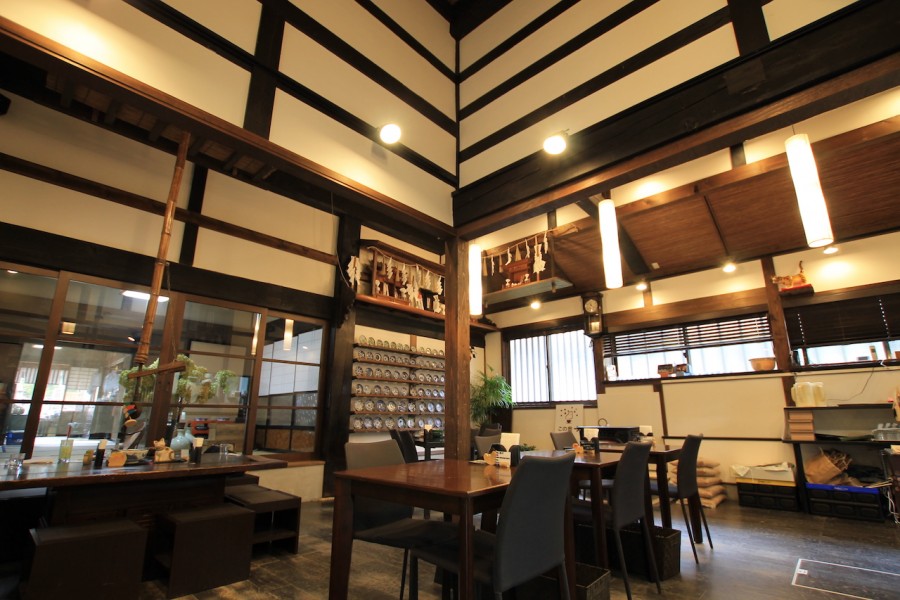
There is a small cafe and shop inside Yunokami Onsen Station selling lunch sets for 500 yen.

Venue Details

Venue Details
Websitehttp://shimogo.jp/sightseeing/yunokamionsen/(Japanese)
Contact

Shimogo Town Tourism Association

(+81) 241-69-1144

Best SeasonAll Year
ParkingAvailable
Access Details
AccessYunokami, Shimogo Town, Minamiaizu District, Fukushima Pref. 969-5206
View directions
Getting there

By Car:

  • 50 min by car from the Aizuwakamatsu I.C. exit off the Ban-etsu Expressway
  • 15 min by car from Ouchi-juku

By Train:

  • Get off at Yunokami Onsen Station (Aizu Railway Line). It takes 1 hour to arrive at Yunokami Onsen Station from Aizuwakamatsu Station

Nearby

The World Glassware Hall
Nature & Scenery

To-no-hetsuri Crags

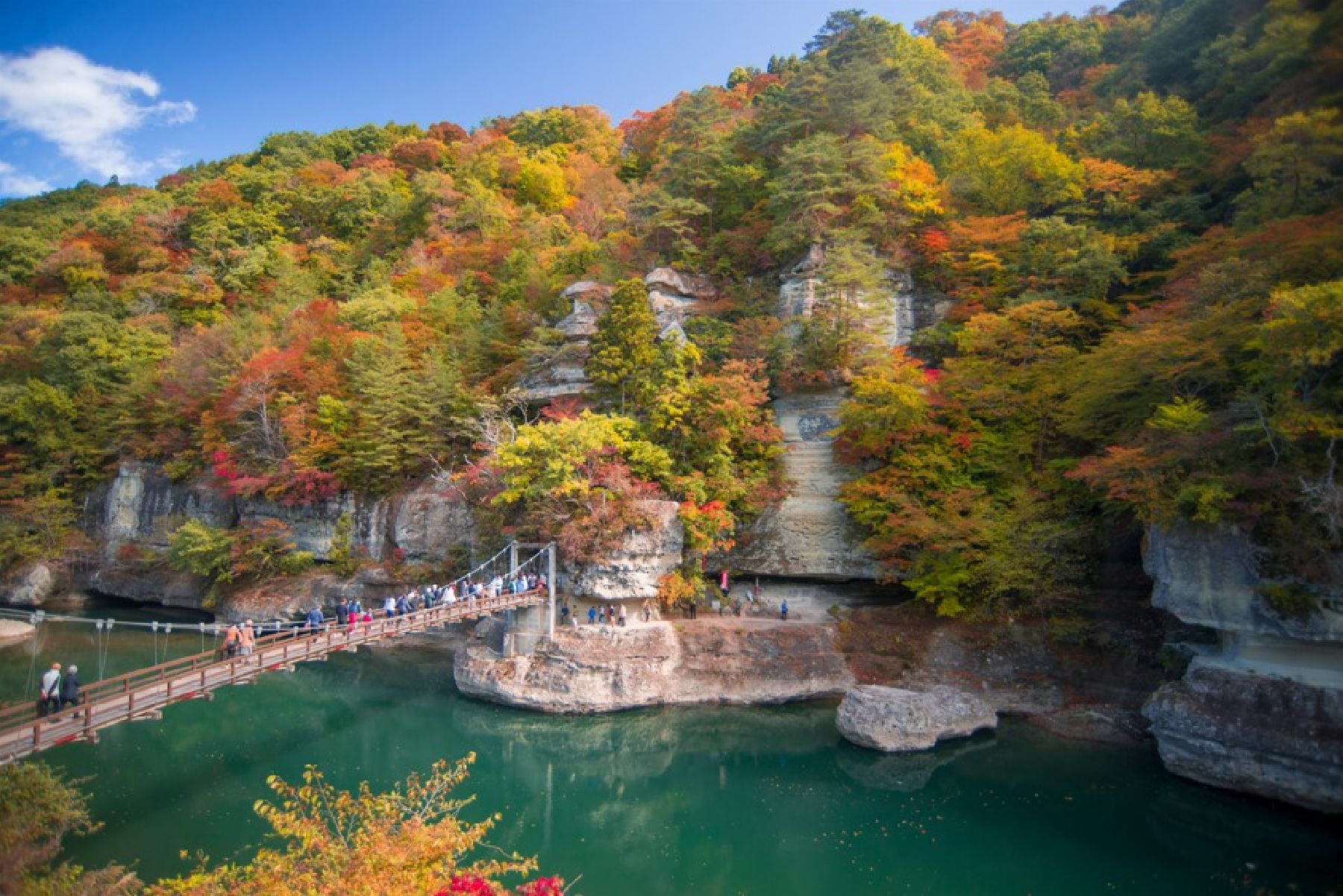
A national natural monument, To-no-hetsuri Crags consists of tower-shaped cliffs overlooking Okawa River. Hetsuri is an Aizu word meaning "a cliff overlooking a river" or "a steep slope" in the local dialect.These strange-shaped cliffs are thought to be made of various types of rocks formed around 28 million years ago and feature deep cracks along the vertical joints. Thanks to trees growing between the white multi-layered rocks the view in autumn is quite spectacular. In spring and summer, the lush greens create a beautiful carpet down the rocks; in winter, the heavy snows make To-no-hetsuri Crags look otherworldly.The 200-meter long, natural cliff formation has alternating types of rocks that also include a relatively soft strata, which have been eroded by rain and wind, resulting in distinctive and eye-catching dips and curves in the rock face that resemble a forest of towers. Each of these tower-like rocks has its own name: Eagle Tower, Hawk Tower, Lion Tower, House Tower, Turret Tower, Nine-Ring Tower, Elephant Tower, Goma (fire ritual) Tower, Eboshi (tall hat worn by male aristocrats in the Heian Period) Rock, Folding Screen Rock, Stage Rock, and Sumo Arena Rock.Visitors to the area of To-no-hetsuri Crags can best enjoy the dynamic scenery by crossing the nearby suspension bridge. The suspension bridge offers a breathtaking sight of the river and cliff sides. At the foot of the cliff there is also a small shrine dedicated to the Bodhisattva of Wisdom. Another great way to enjoy To-no-hetsuri Crags is from the observatory neighboring the area where guests can view a panoramic scene of Okawa River, To-no-hetsuri Crags, and the suspension bridge. After enjoying the beautiful sight, head over to the local shopping area for restaurants and souvenirs.
The World Glassware Hall
Nature & Scenery

Nakatsugawa Valley

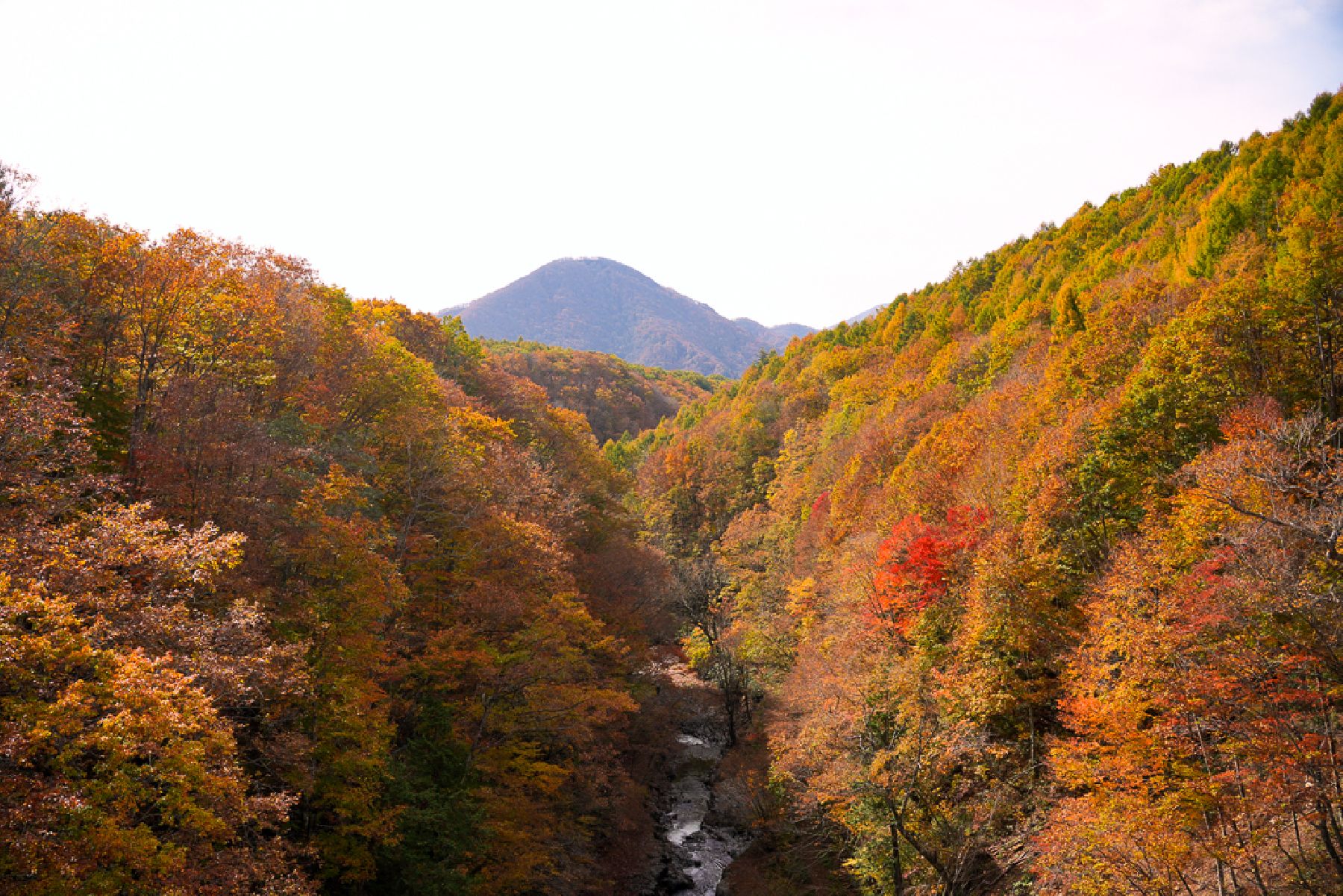
Nakatsugawa Valley is famous for its beautiful fall foliage. The Nakatsugawa River is a clear stream flowing down from Bandai Kogen (Bandai Highland) to Lake Akimoto. In autumn, the leaves of the many trees, such as maples, alders, and wild cherry trees, turn brilliant and bold colors. The valley can be reached via the lakeside cycling road or by following the trail from the Nakatsugawa Valley Rest House Lake Line Parking Area. Take a relaxing stroll along the ravine while breathing in the mountain air full of healthy negative ions.Many people park on the road closest to the bridge, but for most people it's easier to park at the Rest House and walk the short trail (less than 5 minutes) down to the bridge. There is also a shop and a canteen-style restaurant at the Rest House.

The World Glassware Hall
Gourmet & Shopping

Honke Kanouya

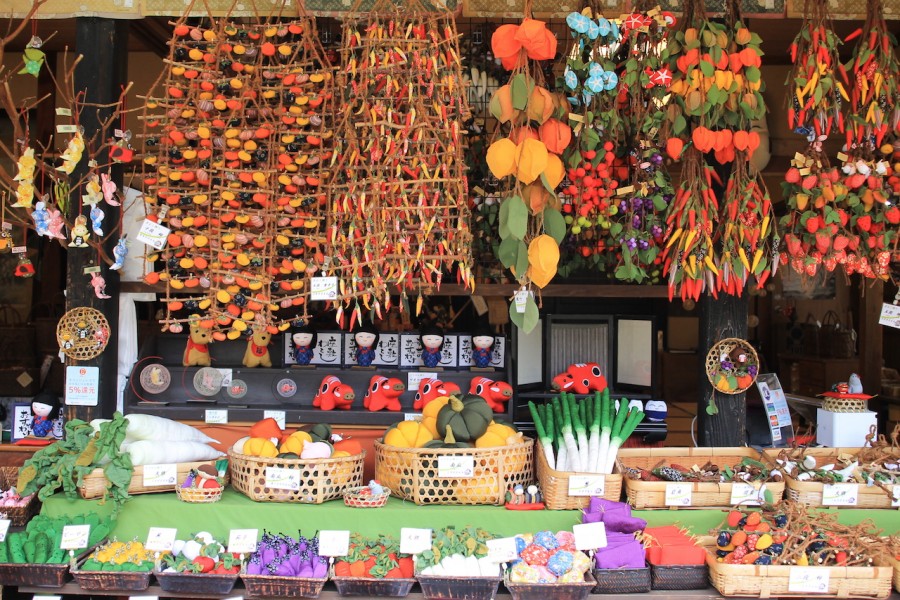
Among the simple color palette of Ouchi-juku, Honke Kanouya will draw your eyes with their brightly-colored collection of goods. Lining the store front is a wide assortment of items like vegetable-shaped beanbags to ornaments to decorations to fabric accessories. All these crafts are handmade. The eye-catching goods make great souvenirs for family and friends alike! Recommended items include the Aizu-made fabric accessories and selected seasonal vegetables beanbags.  

You might also like

Sazaedo Temple
History & Culture

Sazaedo Temple

Sazaedo is a Buddhist temple built in 1796. Its architecture is similar in shape to the shell of a horned turban (‘sazae’ in Japanese), hence its name "Sazaedo". The inside of the temple consists of a double-helix slope, meaning that visitors who come to pray will not meet anybody coming from the opposite direction. This one-way system makes Sazaedo extremely unique.In 1995, it was appointed as a National Important Cultural Property, and in 2018 it was showcased in Michelin Green Guide (1 star, interesting place to visit).

Maezawa L-shaped Farmhouses
History & Culture

Maezawa L-shaped Farmhouses

The deep snows of the Aizu region meant that, in the past, cut off from other areas for months at a time, its residents had to use all their wits just to make it through the winters. These L-shaped farmhouses known as "magariya" conceal a number of the innovations developed by this local people.As you can see in the layout of the house, the long earth floor stretches out towards the road. Long ago, horses were indispensable in farming, but the deep snow of winter meant that keeping them tied up in external stables was cruel. Therefore, stables were built into the house, meaning that the unfloored working area inevitably became larger. Having this area far from the road made getting to the road through the snow more difficult, as up to a meter can fall overnight. Accordingly, with the aim of reducing work, locating this working area as close as feasible to the road ended up with the house being laid out in an L-shape.Many of these houses were built in Maezawa and throughout Tateiwa Village, as a way of living with horses in the deep snows of the Aizu region.The houses have become more and more comfortable over time, with the "magariya" design lasting until the present day. While this magariya-style farmhouse used to be built everywhere that saw heavy snow, they are gradually disappearing. Accordingly, the Maezawa magariya have been designated as historical cultural assets.In 1985, the village began actively preserving these houses, and this area now attracts many visitors. One of the magariya buildings have been repurposed into a museum in the village where visitors can learn about life in Maezawa.

Mitsuya District Warehouses & Climbing Kiln
History & Culture

Mitsuya District Warehouses & Climbing Kiln

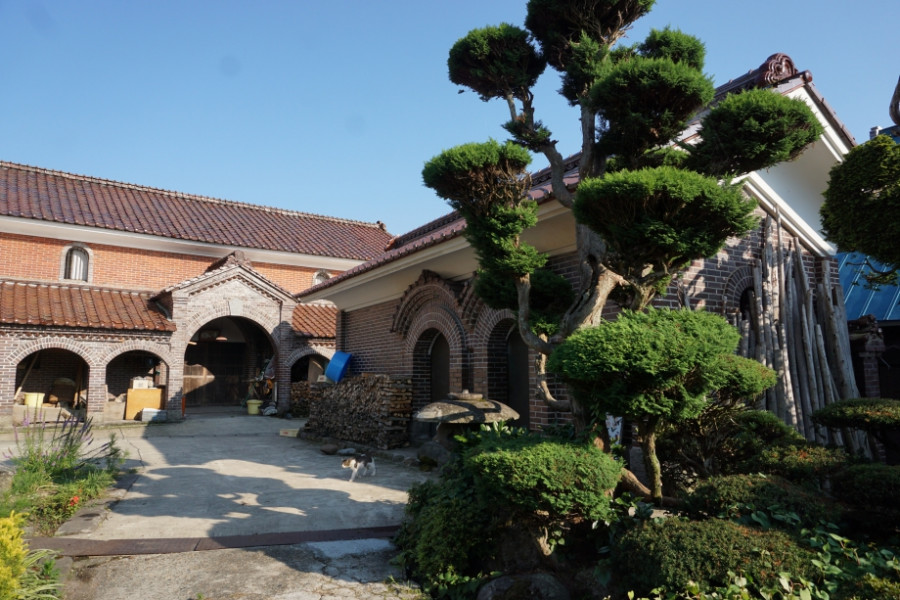
Be transported back to the elegant Taisho Period at Kitakata’s Mitsuya District. Kitakata is famous as being a town of charming red brick kura (Japanese warehouses). The rich texture and distinctive color of the warehouse bricks are an integral part of Kitakata’s townscape. In the year Meiji 23 (1890), the connecting kilns of Mitsuya District were opened. As well as roof tiles, bricks made here were also painted a deep red color, giving the area a unique atmosphere and classic scenery. The area was registered as an Industrial Modernization Heritage Site by the Ministry of Economy, Trade and Industry. The large red brick climbing kiln, located inside the Wakana Family's home, is truly a sight to behold. This district has even been written about on the Michelin Travel website.

Top