Lake Numazawa Festival

Lake Numazawa Festival

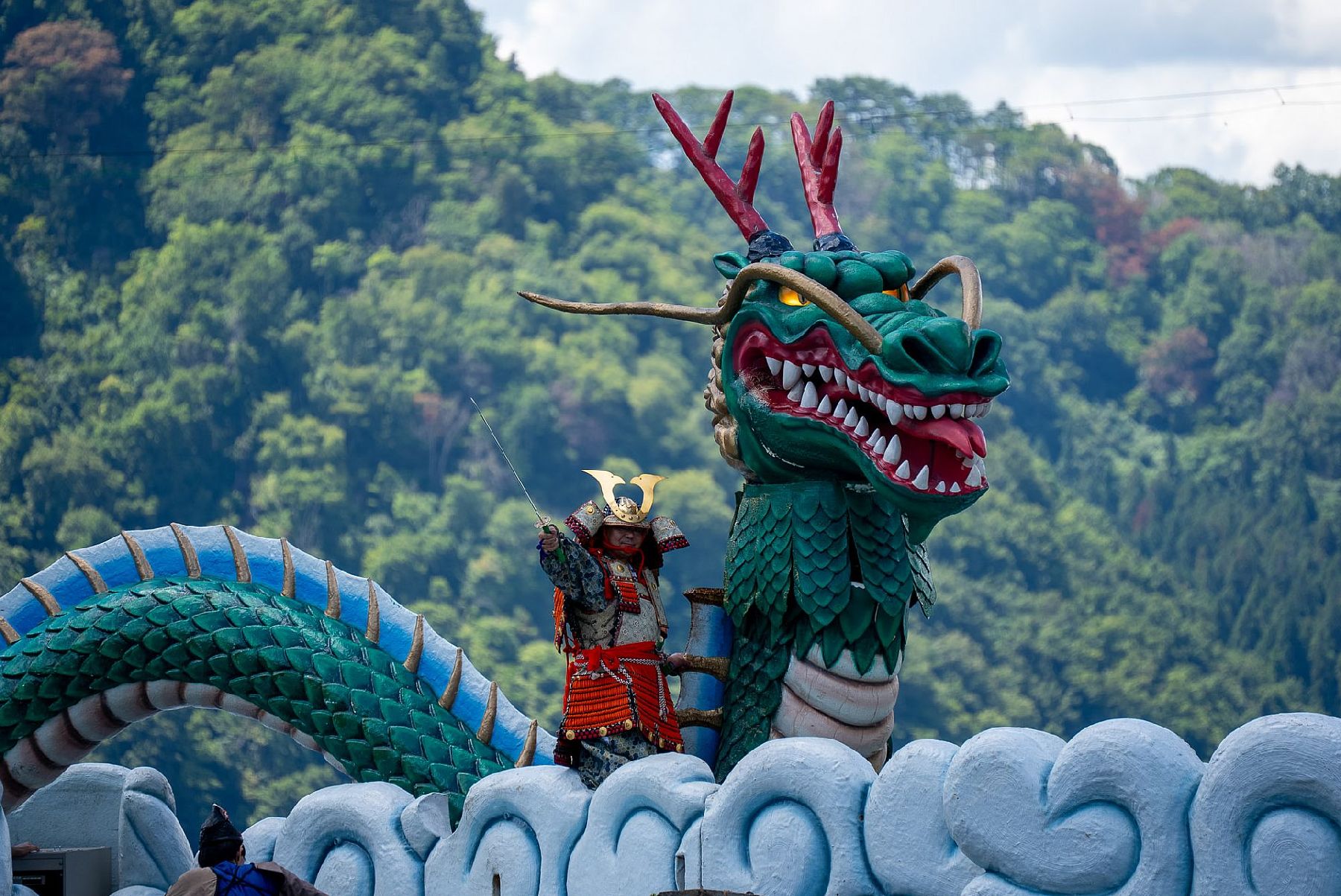
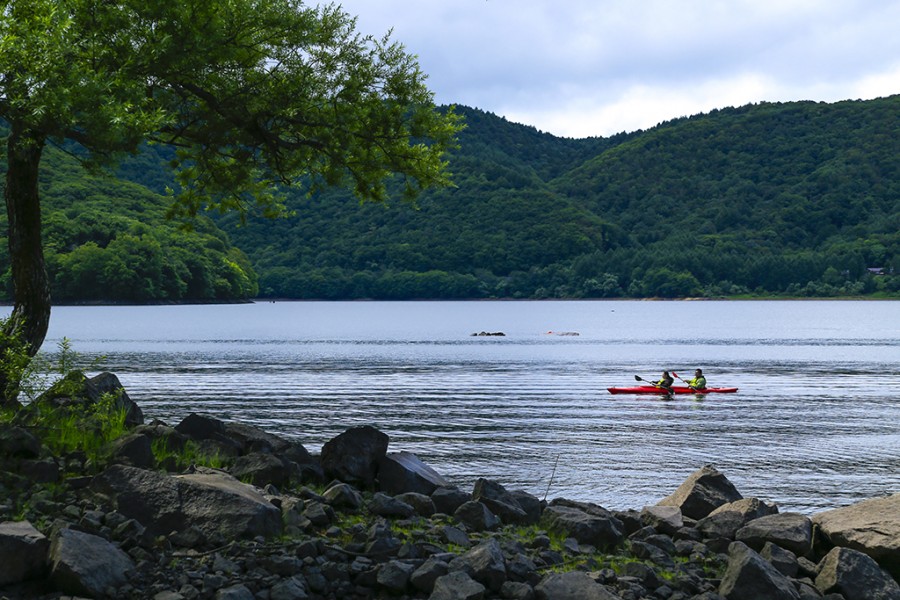
Lake Numazawa Festival is held on the first Saturday and Sunday of August every year at Lake Numazawa in Kaneyama Town. It is said that over 800 years ago, a man killed a giant snake (dragon) that lived at the bottom of Lake Numazawa in order to protect Kaneyama Town. Over the course of the 2 days, local people act out this folktale at the lakeside. Come and visit to enjoy some local shows, watch firework displays on the Saturday night, and swim in the lake!

As a rough framework, fireworks typically launch around 8pm on the Saturday night, coinciding with the arrival of the great snake, and the samurai warriors arrive to perform around 12pm (noon) on the Sunday.

Visitors arriving by car should park according to instructions from staff in the large auxiliary car park - this is close enough to the lake to be a short walk, but shuttle buses also run regularly between the two locations, the journey taking about 2-3mins.
Venue Details

Venue Details
Websitehttp://www.kaneyama-kankou.ne.jp/en/event/event.html
Contact

Kaneyama Town Tourism and Local Products Association

(+81) 241-42-7211

Best Season
  • Summer
Related infoSaturday event times tend to be 1:00 PM - 9:00 PM, with the Sunday event running from 10:00 AM - 3:00 PM (Please check the official event page for up-to-date information)
Access Details
AccessLake Numazawa, Kaneyama Town, Onuma-gun, Fukushima Pref.
View directions
Getting there

By Car: 60 min drive from central Aizu-Wakamatsu City (via the Ban-etsu Expressway)

By Train: 10 min by taxi from Hayato Station on the JR Tadami Line

Fukushima Festival Guide

Nearby

The World Glassware Hall
Cultural Experiences

Mitsutaya

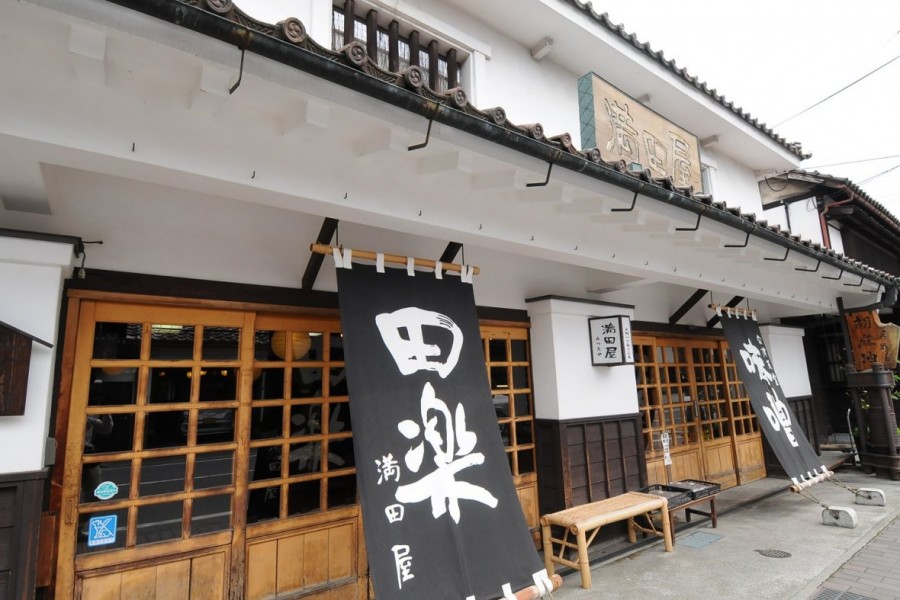
Mitsutaya is a speciality restaurant with roots dating back to the end of the Edo Period (around 1835). The restaurant is situated in a renovated miso storehouse. It is therefore fitting that the restaurant is famous for a local Aizu meal called 'miso dengaku'. Miso dengaku refers to skewered vegetables and meat which are topped with a miso paste before being cooked over an open flame. The skewers are cooked one by one. Skewer ingredients include konjac, deep-fried tofu, sticky, savory rice balls called 'shingoro mochi', and more. Each small dish is coated in miso for an unforgettable and savory flavor.  

You might also like

Ouchi-juku Hange Festival
Events & Festivals

Ouchi-juku Hange Festival

Held every year on July 2, the Ouchi-juku Hange Matsuri (‘mid-summer festival’) is a charming festival with hundreds of years of tradition behind it. The festival takes place at the traditional Edo period post town of Ouchi-juku, about 40 minutes south of Aizu-Wakamatsu City. It features a vivid parade featuring men in black eboshi caps carrying around the mikoshi (portable shrine), as well as the famous red-faced Tengu, supernatural creatures seen as spiritual guardians.Originally held to venerate the spirit of Prince Mochihito, an emperor’s son said to have taken refuge here after the Genpei War, the festival is now a broader community event that prays for household safety and strong harvests.Blessings are invoked at 12:00pm at Takakura Shrine, with the parade starting from 12.30pm and winding its way slowly through the village until about 3pm. They take breaks at several points, so it’s even possible to duck into a nearby soba restaurant for lunch. (A great time to try negi-soba, the Ouchi-juku speciality of soba eaten with a long onion!)  

Nanokado Hadaka Mairi Festival
Events & Festivals

Nanokado Hadaka Mairi Festival

Every year on January 7, the Naked Man Festival (Nanokado Hadaka Mairi) is held at Enzoji Temple, Yanaizu Town. During this traditional event - which draws many tourists every year - local men clad in loincloths make the challenging climb of 113 steps to Enzoji Temple, where they climb to the top of the temple via a long rope. Members of the public can participate, although registration in advance is required.The festival traces its roots back to an ancient legend, telling of a princess who received a wish-granting jewel from a river dragon to tide against crop failures and illness, and a community who banded together on the night of the 7th to prevent the dragon spirit from taking it back. To this day the festival is a rowdy display of hope and community.

Top