Koori Town's Peach Blossoms

Koori Town's Peach Blossoms

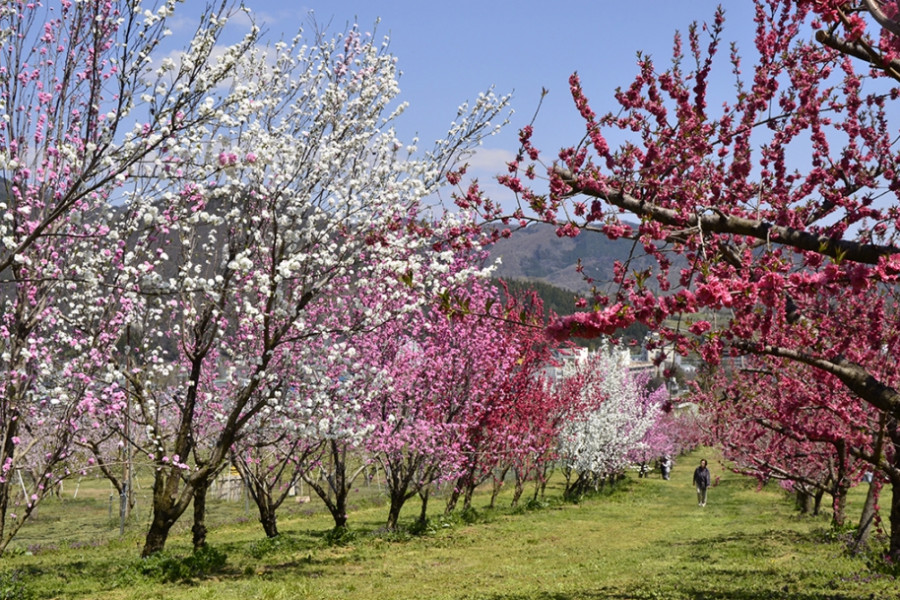
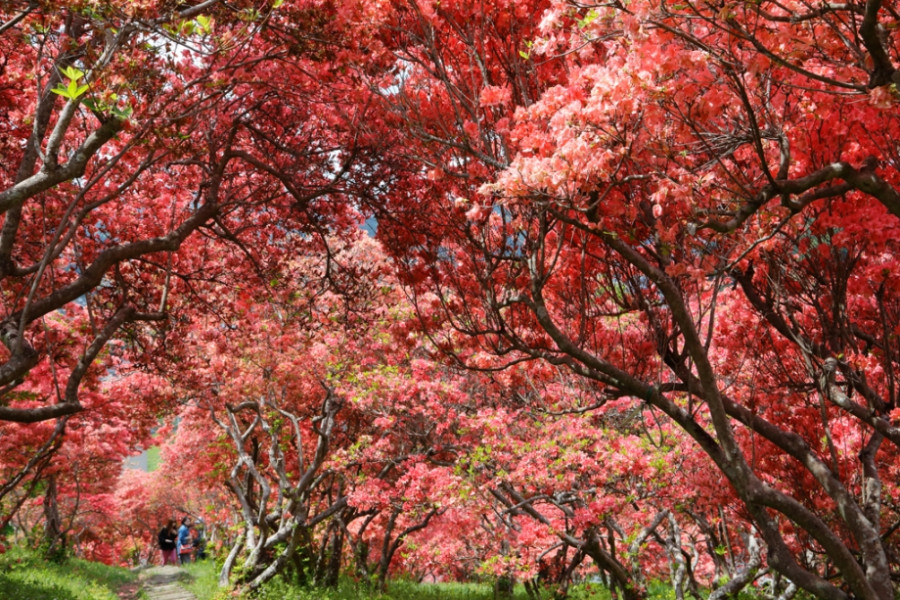
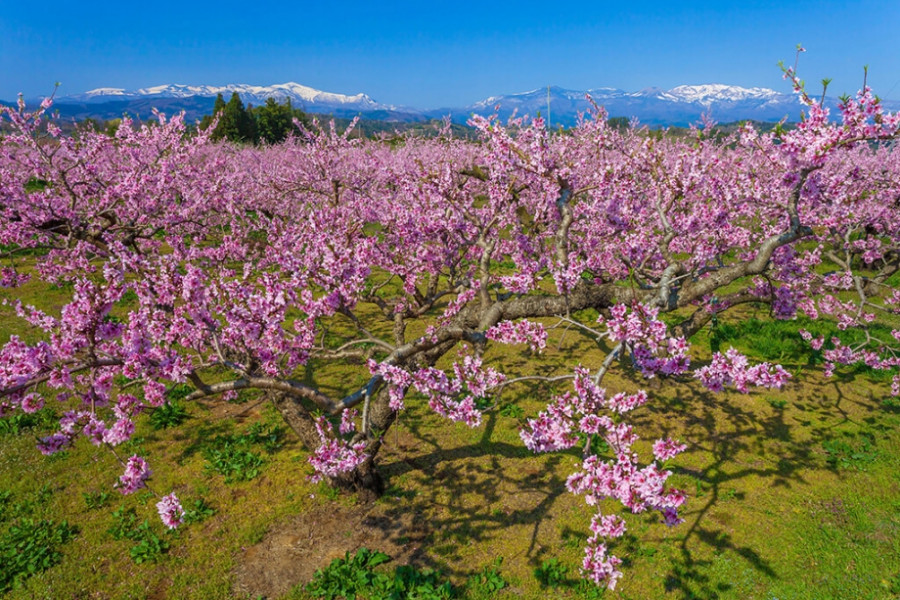
Koori Town, home to some 236 acres of peach orchards, is a wonderful place to view peach blossoms when spring rolls around.

24,000 trees fill the 120 hectares of peach orchards located along the banks of the Abukuma in Koori Town's Danzaki area - many of these are located along a road known locally as 'the Peach Line'.

When these flowers all open their petals in unison, the landscape is transformed into a sea of pink, truly a utopian vista. Their Majesties the Emperor and Empress (the Crown Prince and Princess at the time) walked through this orchard on April 26 1996 - an event which is commemorated with a memorial tablet that stands along the Peach Line.

Visitors to the peach orchards on the banks of the Abukuma river will be treated to views of Mt. Handa, the symbol of Koori Town.

The best time to visit the peach orchards is mid-April.

Venue Details

Venue Details
Websitehttps://www.town.koori.fukushima.jp/kankou/index.html(Japanese)
Contact

Koori Town Industrial Development Section

(+81) 24-582-2126

sangyoshinko@town.koori.fukushima.jp

Best Season
  • Spring
Access Details
AccessAlong the Abukuma River, Koori Town, Fukushima Pref.
View directions
Getting there

By Car: 10 min from Kunimi I.C. exit off the Tohoku Expressway

By Train: 40 min walk from Koori Station on the JR Tohoku Main Line

Nearby

The World Glassware Hall
Nature & Scenery

Mt. Azuma-Kofuji

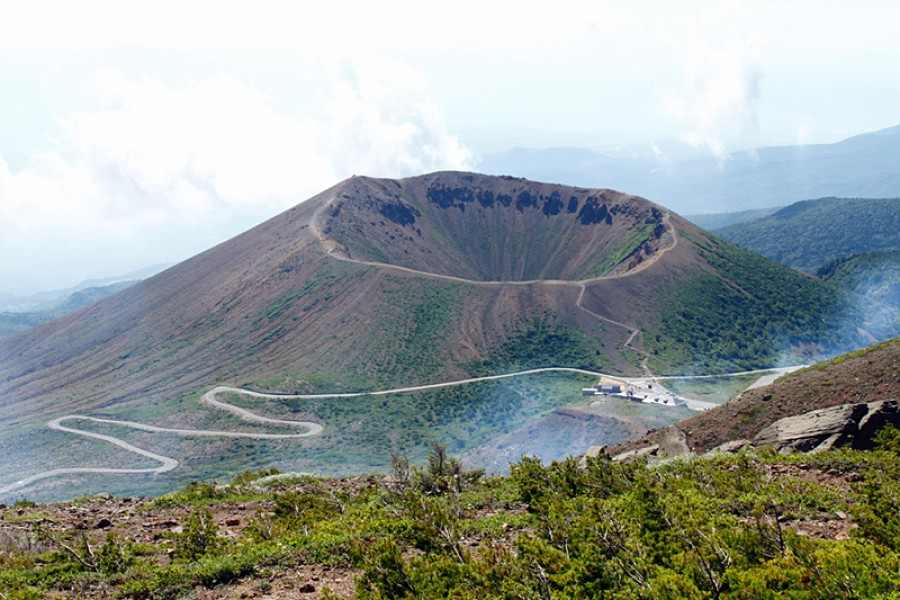
There is a special bus running from Fukushima Station to the Jododaira plateau while the mountain is open. Please visit the Jododaira Sky Access page for more details.Every year in spring, as the snow melts away, it leaves behind the shape of a giant white rabbit on the side of Mt. Azuma-Kofuji. This is called the “seeding rabbit”, and it signals to the people of Fukushima that the farming season has come.From April to November each year, you can experience the beauty of the awe-inspiring natural landscape of Mt. Azuma-Kofuji.Mt. Azuma-Kofuji is an active volcano with an appealing symmetry to it and a soft conical shape; because of these classic features, it was named Kofuji ('little Fuji'), after the iconic Japanese mountain.Thanks to its volcanic ground, the area has given birth to many nearby onsen areas perfect for relaxing, such as Tsuchiyu Onsen and Takayu Onsen.Mt. Azuma-Kofuji is a great destination for those who decide to drive through the area as the Bandai-Azuma Skyline happens to pass just below the crater of Mt. Azuma-Kofuji. Along the roadway is the Jododaira Visitor Center, which offers visitors a place to park, rest up, get a snack, and maybe even buy souvenirs. It is the perfect spot to take a break and explore one of the many short hiking routes to stretch out your muscles after a long car ride. From there, it is just a short hike up to the crater, and there are plenty of other great trails. Circle the crater of Mt. Azuma-Kofuji on a relaxed 40-minute walk and—if you are lucky—enjoy gorgeous views of Fukushima City, Mt. Bandai, and the Urabandai area. But do watch your step as the ground can be uneven and even slippery on grey days. The mountain is open from spring to autumn every year.
The World Glassware Hall
Gourmet & Shopping

TATAMI VILLAGE

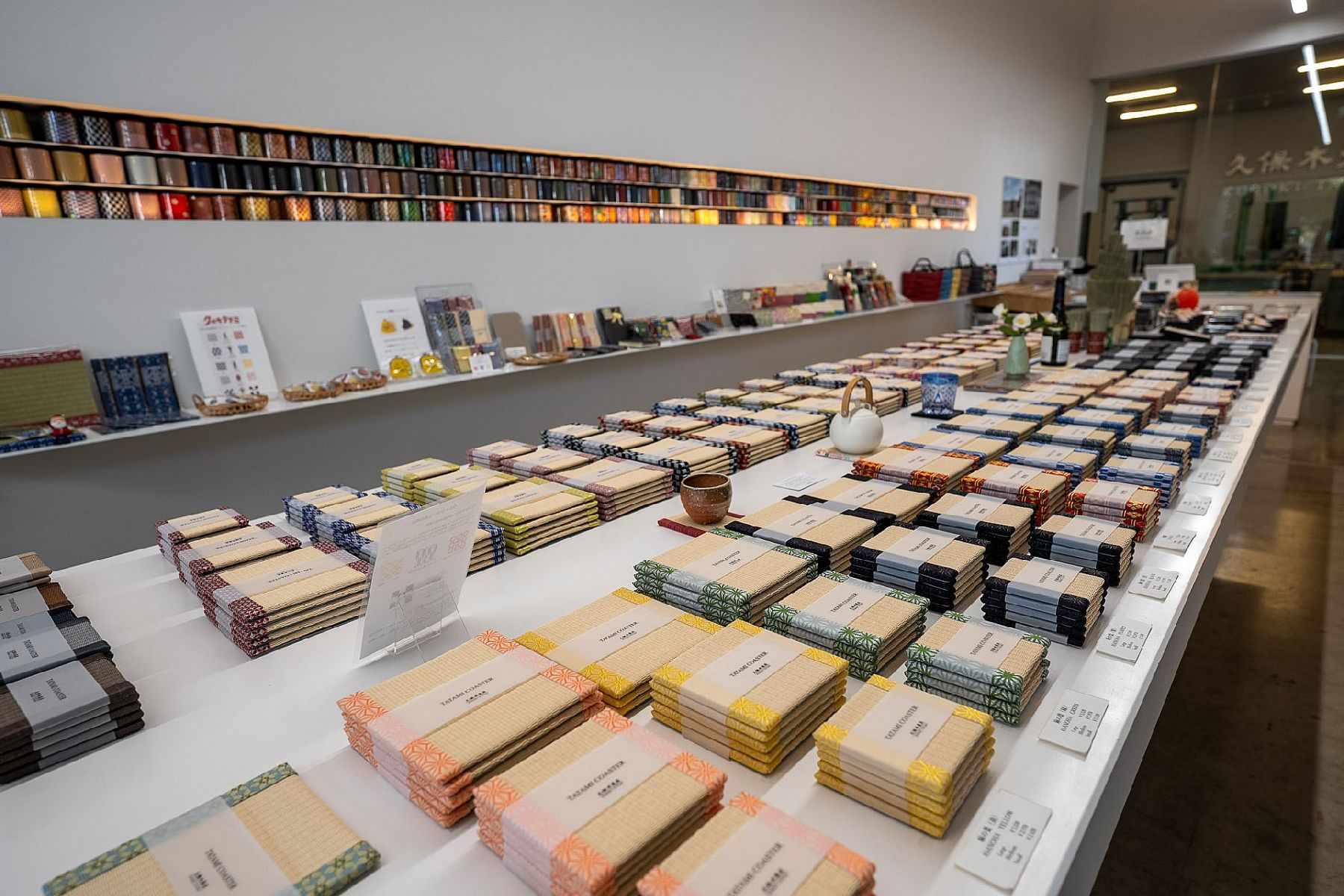
TATAMI VILLAGE (Kuboki Tatami Shop) is a shop, cafe, and workshop in Sukagawa City in Southern Fukushima prefecture. The Kuboki Tatami business was founded in 1740 in Sukagawa and is currently run by the 15th generation of the same family. ‘Tatami’ is a kind of woven mat made with rush grass frequently used as flooring in traditional Japanese-style rooms. Kuboki Tatami is not only dedicated to flooring, but also makes tatami coasters, smartphone mats, and accessories made with tatami-heri (a kind of ribbon used to fasten the sides of a tatami mat).At Tatami Village, visitors can make a tatami coaster to take home as a souvenir (reservations here), with the experience and tour taking about an hour to ninety minutes. Additionally, the cafe on site serves matcha and seasonal sweets, and features a modern, bright space that uses tatami elegantly.

The World Glassware Hall
Gourmet & Shopping

Kura Café Sen no Hana

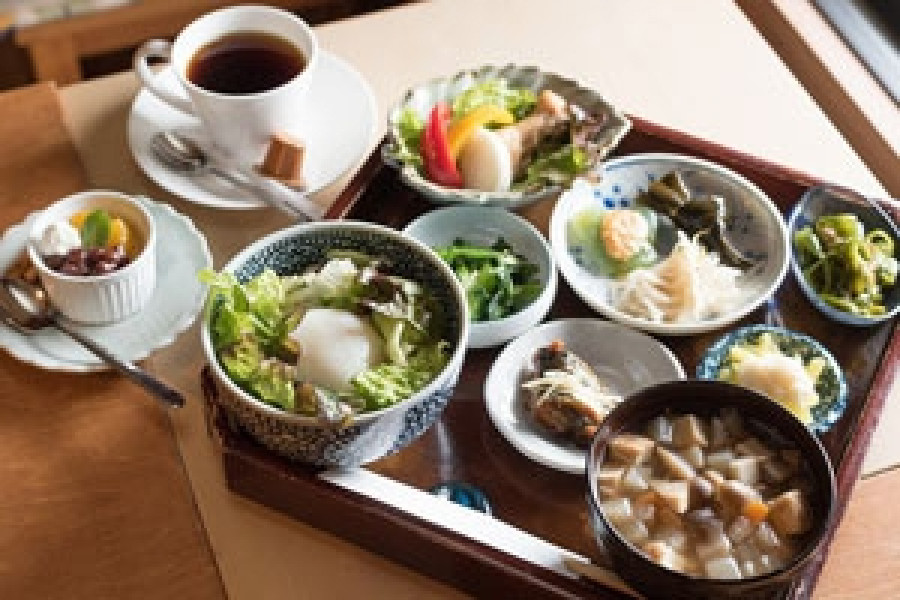
The Kura Café Sen no Hana is located on the grounds on Kunitaya Miso Factory in a remodeled kura (storehouse). Try the local flavors of Fukushima cuisine with their lovely lunch items featuring locally Nihonmatsu-produced miso and soy sauce. There are also many other menu items to appreciate, such as amazake, Mongolian-style tea, and coffee. The inside of the shop is also calming and decorated with local pressed flowers.Open from 11:00 a.m. to 6:00 p.m. (with a break from 2:00 to 3:00 p.m.), the Kura Café Sen no Hana is sure to give your taste buds a treat. Their fair prices and delicious cuisine make them popular with locals and visitors alike.The amazake, a nonalcoholic drink made from koji, or fermentation starter, is popular with guests. As for food, the zaku zaku soup is a traditional soup of chunky cubed vegetables which is eaten on special occasions like festivals and ceremonies, it is a famous Nihonmatsu specialty. But if you’re wanting to go for dinner, make sure you’re there before the last order at 5:30 p.m. (4:30 p.m. on Sundays). Next door to the Kura Cafe Sen no Hana, guests can also visit the Kunitaya Miso Factory. The redwood lattice of the exterior is especially attractive. In addition to the tours, the Factory also sells miso, soy sauce, and koji, which is used to make Fukushima’s famous 'sagohachi' pickles.All the products for sale are made at the Kunitaya Miso Factory and use pure water from Mt. Adatara and locally grown ingredients. It’s a great way to get the fresh flavors of Fukushima Prefecture. There are also seasonal products available, so be sure to have a look!

The World Glassware Hall
Nature & Scenery

Hanamomo-no-Sato Park

From early April right up to the start of May, 40 varieties of blossoming peach trees present a feast for the eyes for visitors to Hanamomo-no-Sato Park. There are over 300 peach trees spread across the 8,000 square meters of land. From blossoms with a single layer of petals, to the elaborate Yae-zakura and Kikuzaki Sakura flowers, there is a huge variety in the shapes and colours of cherry blossoms to be discovered and enjoyed at Hanamomo-no-Sato Park. As well as being free to visit, Hanamomo-no-Sato Park is conveniently located; just 20 minutes on foot from Iizaka Onsen Station.

You might also like

Kaiseizan Park
Nature & Scenery

Kaiseizan Park

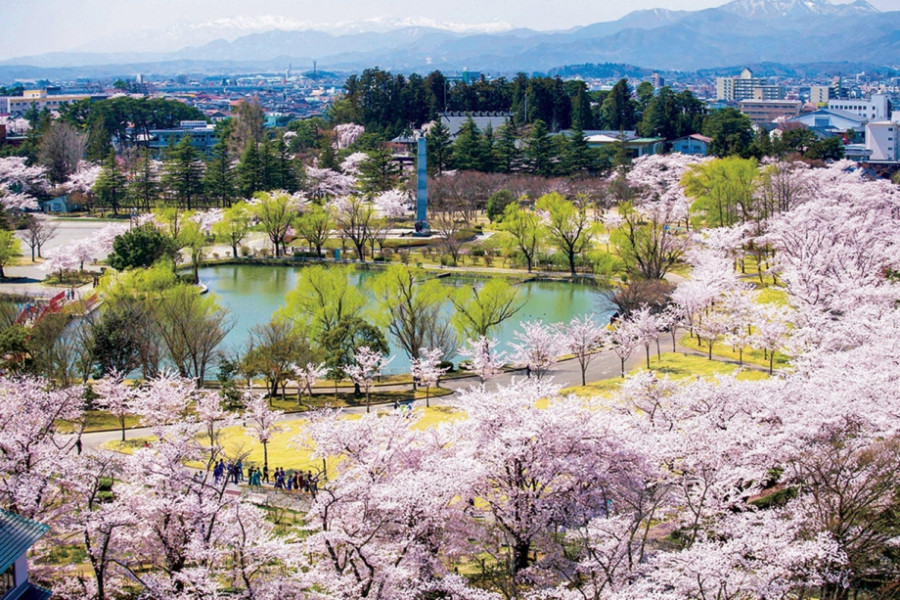
Koriyama’s Kaiseizan Park is a wide realm in the city. Home to around 1300 cherry trees, it is one of the prefecture’s most prominent cherry blossom spots. The impressive trees are lit up in the evening during cherry blossom season, making for fantastic views. The park has a baseball field, an athletics field, and an event venue. Additionally, it is home to one of Fukushima's Chansey's Lucky Parks, making it a popular destination among Pokémon fans. Located nearby is the Kaiseizan Daijingu Shrine.There is also a 3,000-square-meter rose garden that blooms in spring (typically from mid-May to late June) and in the fall (usually from mid-September to late October). Exact blooming dates vary each year.No matter the season, there is something to enjoy at Kaiseizan Park year-round.

Natsui Senbon-Zakura
Nature & Scenery

Natsui Senbon-Zakura

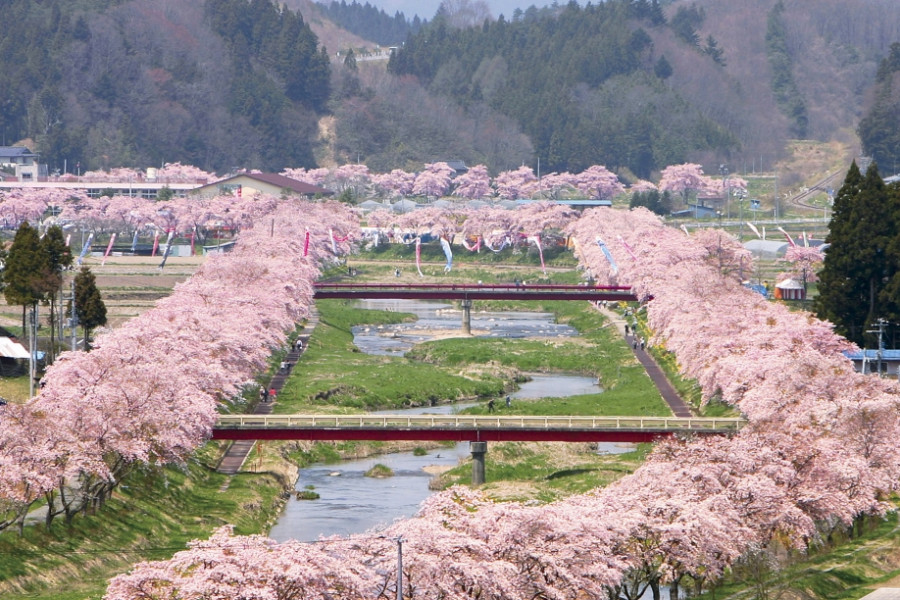
There are 1,000 Yoshino cherry blossom trees planted along both sides of the Natsui River, giving the area the name of 'Natsui Senbon-Zakura', which translates as 'Natsui's 1000 cherry trees'. The view of the river stretching out in the distance is calming. The cherry blossoms actually line the river for a distance of 5 km. Natsui Senbon-Zakura offers good spots for taking pictures. Take a walk along the promenade near the banks of the Natsui River for some beautiful shots of the contrast between the glistening river and the cherry blossoms.

Bandai-Azuma Skyline
Nature & Scenery

Bandai-Azuma Skyline

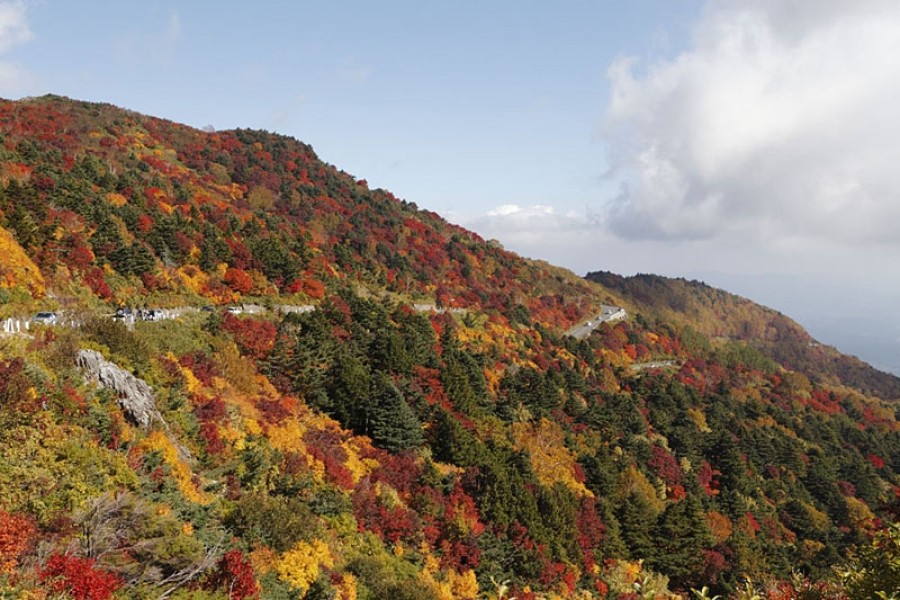
There is a special bus running from Fukushima Station to the Jododaira plateau while the mountain is open. Please visit the Jododaira Sky Access page for more details.This sightseeing road that runs from Fukushima City's Takayu Onsen to the Tsuchiyu Pass, commanding panoramic views of the surrounding landscape.The spectacular views that stretch out at an average altitude of 1,350 meters attract visitors time and time again, and Bandai-Azuma Skyline has been selected as one of the 100 Best Roads in Japan.In spring, tourists can enjoy flower viewing while at the same time taking in the otherworldly winter scenery of the "Snow Corridor".In summer, the Nemoto Shakunage (Rhododendron brachycarpum), a species of alpine rose, and other alpine plants display their colorful flowers and fresh, brilliant green leaves. During autumn, the drive warms as roads become enclosed by fiery seasonal leaves.There are also many hot springs in the vicinity of the Skyline where visitors can enjoy a bath and relax stiff muscles while out on a daytrip.The roadway passes next to the crater of Mt. Azuma-Kofuji. Visitors can easily park their car at the nearby guest center and enjoy a short hike up to the crater’s rim.The Bandai-Azuma Skyline Roadway has been selected as one of the top 100 roads in Japan, and unlike many others, this one is free to use. There are rest stops along the way for the hungry traveler; the most popular is Jododaira, as it’s home to a rest house and an observatory.Be sure to plan ahead though, from mid-November to early April the roadway is closed due to heavy winter snowfall.

Top