Hanamomo-no-Sato Park

Hanamomo-no-Sato Park

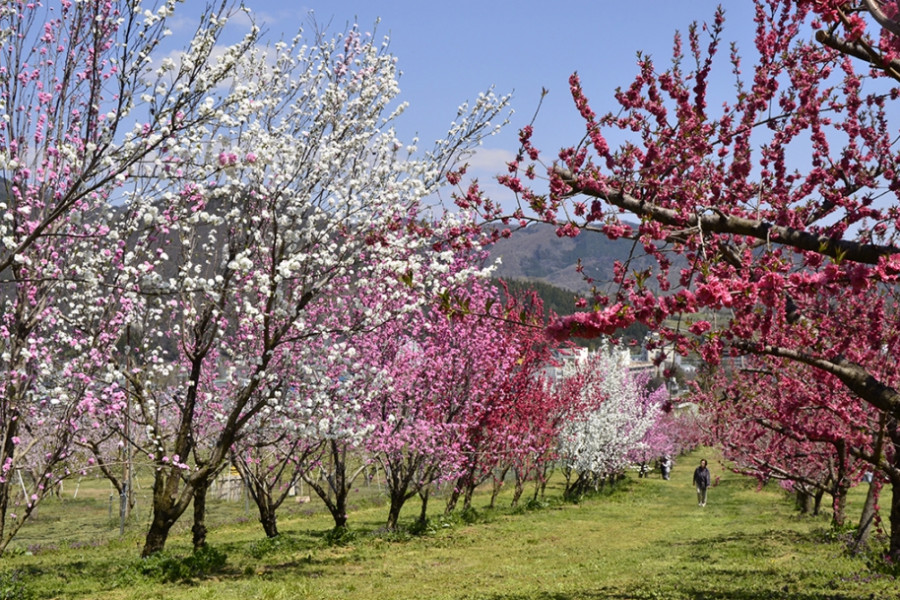
From early April right up to the start of May, 40 varieties of blossoming peach trees present a feast for the eyes for visitors to Hanamomo-no-Sato Park. There are over 300 peach trees spread across the 8,000 square meters of land.

From blossoms with a single layer of petals, to the elaborate Yae-zakura and Kikuzaki Sakura flowers, there is a huge variety in the shapes and colours of cherry blossoms to be discovered and enjoyed at Hanamomo-no-Sato Park.

As well as being free to visit, Hanamomo-no-Sato Park is conveniently located; just 20 minutes on foot from Iizaka Onsen Station.

Venue Details

Venue Details
Websitehttps://fukushima-guide.jp/discover/hanamomo-no-sato/
Contact

Fukushima City Tourism & Convention Association

(+81) 24-563-5554

fukushima.guide@f-kankou.jp

Best Season
  • Spring
Entrance FeeFree entrance
Related infoBest Season: Early-April to Early-May
Access Details
AccessHigashidateshita, Iizaka Town, Fukushima City, Fukushima Pref. 960-0201
View directions
Getting there

By Car: 10 min from the Fukushima Iizaka I.C. exit off the Tohoku Expressway.

By Train: Take the Fukushima Kotsu Iizaka Line from Fukushima Station. Get off at Iizaka Onsen Station. From there, the park is a 20 min walk.

By Taxi: 25 min taxi-ride from Fukushima Station.

Nearby

The World Glassware Hall
Nature & Scenery

Majyo-no-hitomi (The Witch’s Eye Lake)

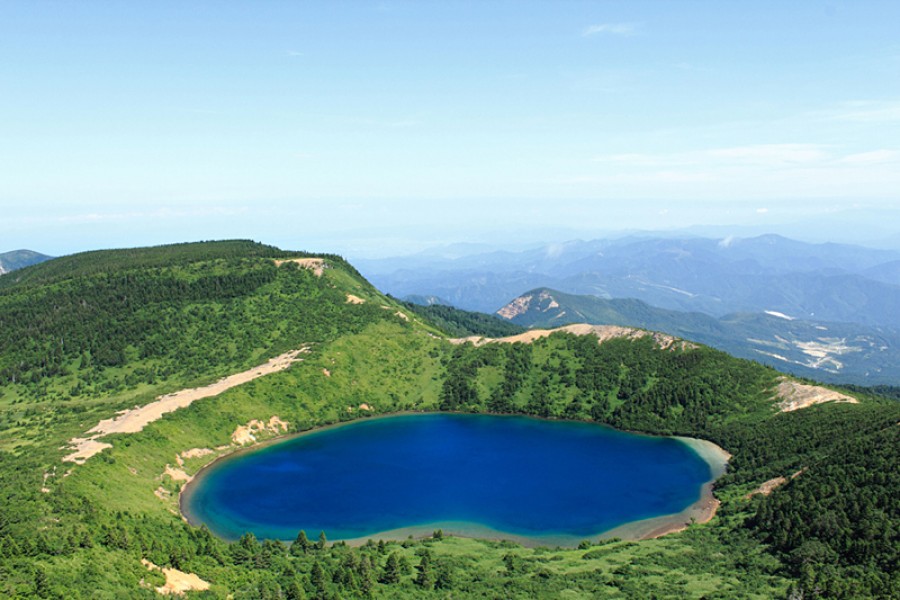
Majyo-no-hitomi, or The Witch's Eye Lake, is a volcanic lake that was formed during a volcanic eruption many years ago. Unique minerals in the water cause the lake to appear different colors, giving the lake its official name of Goshiki-numa (Five Colored Lake), but most often it is a bright blue. The nickname of “Witch's Eye” comes from the unique appearance of the lake that is visible in late spring when the snow melts enough so that only a white ring remains around the lake to form the white of what appears to be an enormous single eye.This lake viewpoint can be reached by an intermediate hike up Mt. Issaikyo that begins at the Jododaira Visitors Center, stop by for a map and safety information before hiking.

The World Glassware Hall
Nature & Scenery

Abukuma Cave

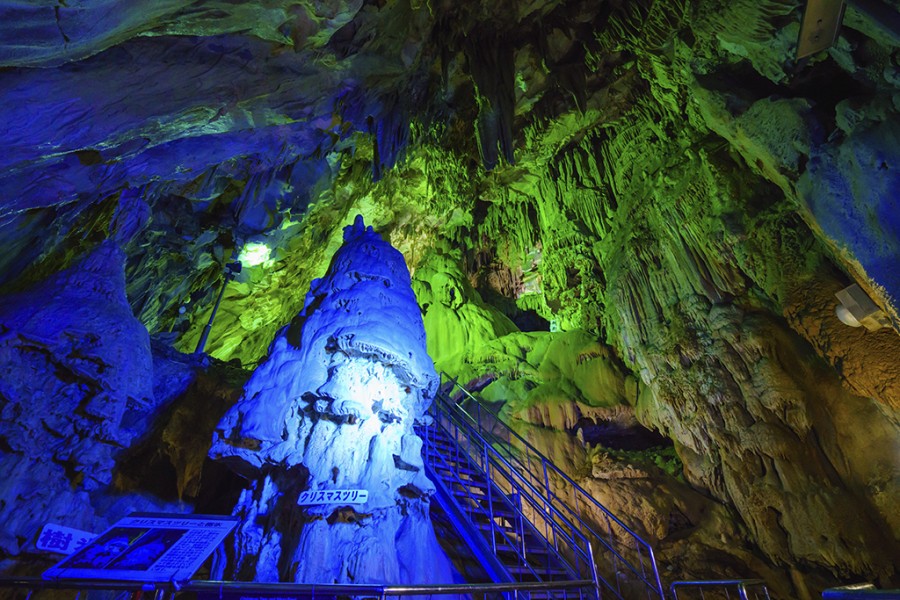
A world of mystical beauty created over millions of years, Abukuma Cave is said to have the greatest variety and the largest number of stalactites in the whole of Asia. It takes about an hour to explore the inner world of the cave and the terrain is easy to navigate on foot.Abukuma Cave is a limestone cave that was discovered in 1969. Inside, visitors can walk the 600-meter-long path to explore and view the beautiful cave formations. Visitors can’t help but be impressed by the beauty of these natural creations formed over the course of 80 million years. The largest hall in the cave, called Takine Goten (Takine Hall), and Tsuki no Sekai (The Moon World), is illuminated with dramatic stage lighting and is particularly impressive.Also not to be missed are the rare cave formations called boxwork, you can identify them by their unique shape; thin blades of minerals coming off the walls and ceilings forming a honeycomb or box-like pattern. Abukuma Cave is the only cave in Japan with boxwork that is open to the public. Another notable stop along the cave path is the Christmas Tree and Silver Frost; both are impressive stalagmites that resemble festive holiday trees. The Christmas Tree is over two meters tall and said to be the largest example in all of Asia.There is an additional thrilling adventure course; experience crawling through narrow passages and climbing a ladder to spectacular views over the cave! This 120-meter-long course runs parallel to the main passage, but please note that visitors may have to crawl on their hands and knees at times.When you have finished exploring the mysterious depths and come back to the surface you can find plenty of restaurants and souvenir shops. Visit from mid-June to July to see the neighbouring hillside covered in 50,000 lavender plants.

You might also like

Mt. Adatara
Nature & Scenery

Mt. Adatara

Mt. Adatara is actually made up of multiple active volcanoes that form a broad mountain. It last erupted in 1996. Poems in the book Chieko-sho by Kotaro Takamura (1883-1956) helped make the mountain famous.The summit of Mt. Adatara stands at an altitude of 1700 m, stretching about 9 kilometers in a north-to-south direction. Views of Mt. Adatara are lovely in and of themselves, but the views that visitors have of the surrounding area once they reach the summit are breathtaking. Chosen as one of Japan’s top 100 mountains, as well as one of the top 100 mountains for flowers, a view spot at an altitude of 1300 m can be accessed by gondola lift. This means that it is relatively easy to climb even for beginners.On summer evenings, a light-up event inspired by the Milky Way and the flowers of Mt. Adatara is held, gracing those scaling the mountain by a gondola lift with a spectacular view. In autumn, visitors are afforded a stunning view of autumn leaves making it a popular place for scenic momiji-gari (autumn leaf viewing).Kurogane-goya Mountain Lodge, which closed in August 2023, was a rest stop for visitors and served as lodging for longer hikes. The lodge’s public hot spring facility used naturally-sourced, cloudy hot spring water. The lodge is being torn down in 2025 and will be rebuilt anew for roughly a 2028 re-open.
Top